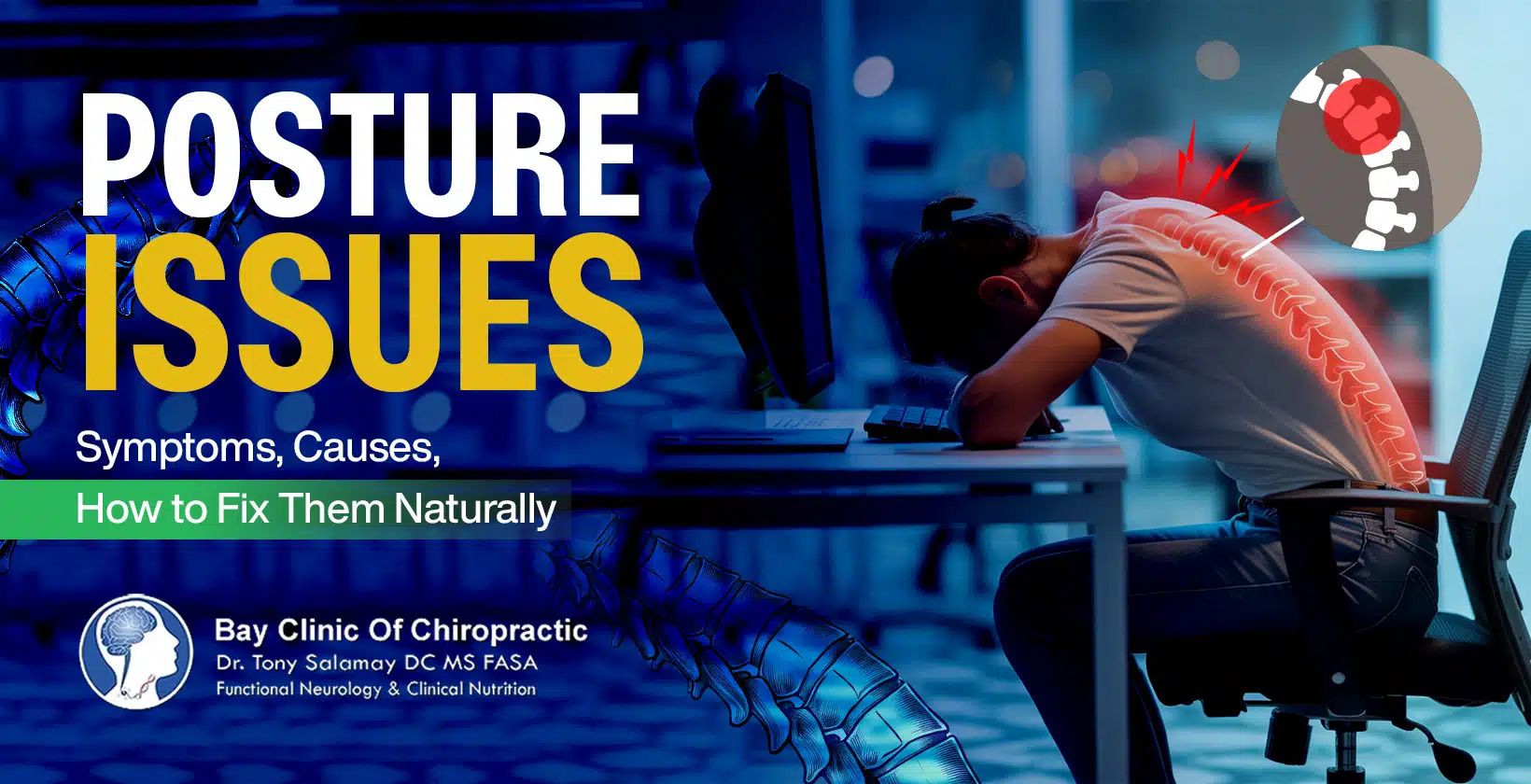
8 in 10 Americans have experienced posture issues at one point in their lives. By posture issues, we mean health effects, pain, and discomfort associated with poor posture. And by poor posture, we mean any posture that significantly increases strain on specific areas of the spine. Pain is one of the most common symptoms associated with musculoskeletal conditions, so it may be tricky many times to know the condition that may be causing you pain.
However, if you consistently notice this pain in your back, neck, and head after sitting or standing for a while, you may have posture issues resulting from bad posture. Posture issues are increasingly common due to sedentary lifestyles and improper ergonomics. Other signs of posture issues include breathing difficulties, poor sleep, mood changes, and balance problems. Poor posture may also contribute to digestive issues, reduced cardiorespiratory function, and decreased self-esteem.
Poor posture is the main cause of posture issues, resulting from habits like slouching, prolonged sitting, or using improper furniture. Conditions like obesity, injuries, genetic factors, and illnesses such as arthritis or osteoporosis also play a role. Identifying and addressing these causes is essential for effective management.
You can fix bad posture naturally through several approaches. Chiropractic care focuses on spinal alignment through adjustments and personalized posture improvement plans. Physical therapy uses targeted exercise to strengthen muscles and enhance flexibility. Simple practices like staying active, optimizing your workspace, avoiding prolonged sitting, and regularly stretching can also improve posture.
Keep reading to learn more about how posture issues affect health and discover practical natural strategies for addressing them.
What Are Posture Issues?
Posture issues are problems resulting from poor posture, which may affect the normal functioning of the tissues and organs of the body. Posture is simply how you hold the body. Poor posture occurs when a person cannot hold the body upright.
A key determinant of posture is the position and curve of the spine. The spine has four natural curves: the cervical, thoracic, lumbar, and sacral. A more simplistic approach to viewing spinal curves is to divide them into three: the neck, mid-back, and low-back curvatures. The curves give the spine an “S” shape when viewed from the side but straight when viewed from the back.
Spinal curves help absorb and distribute the stress and pressure the spine faces from regular movements like walking, bending, sitting, and standing. The curves of the spine dictate a person’s posture. A good and natural posture maintains the curves, while a bad posture increases them and makes it difficult to hold the body upright. Changes in the curves may result in more stress on certain parts of the spine, causing them to deteriorate faster.
Poor posture can lead to posture issues or problems, which can affect a person’s mood, balance, lung function, and cardiorespiratory efficiency. Dynamic posture refers to how you hold your body when moving, while static posture refers to your posture in a stationary position. You can assess dynamic posture while walking or bending, while static posture is observed while sitting or standing. Dynamic and static postures are both important when assessing posture issues.
What Are the Symptoms of Posture Issues?

Symptoms of posture issues include back pain, neck pain, headaches, breathing difficulties, sleep problems, mood disorders, and a displacement of internal organs. The severity of a person’s symptoms may be influenced by other musculoskeletal conditions present in the body.
Below is a list of symptoms associated with posture issues:
- Back pain
- Neck pain
- Sleep problems
- Mood disorders
- Breathing difficulties
- Poor balance
- Reduced cardiorespiratory efficiency
- Headaches
- Digestive problems
- Low self-esteem
What Are the Causes of Posture Issues?

Poor posture is the primary cause of posture issues. There are different types of poor posture, mainly kyphosis (outward curvature of the upper back with rounded shoulders), lordosis (forward curvature of the lower back), flat back (loss of curvature in the lower spine), forward head (hyperextension of the upper cervical spine causing the head to move forward), and scoliosis (sideways curvature of the spine).
The different types of poor posture have different causes. Some of the potential causes of poor posture are:
- Poor sitting and standing habits, like slouching and wearing high-heeled shoes for extended periods
- Excess weight (for example, obesity and pregnancy)
- Poor biomechanics of the spine
- Poor nutrition (especially vitamin D deficiency)
- Injuries
- Repetitive motions
- Health conditions (degenerative disc disease, arthritis, osteoporosis)
- Genetics
How Can You Naturally Improve Your Posture?
You can improve your posture through natural treatment strategies like chiropractic, physical therapy, and specific practices. Some natural strategies, like chiropractic, may also help with the relief of pain and other symptoms of posture problems.
Here are the ways you can naturally improve your posture.
Chiropractic
Chiropractic is a branch of functional medicine concerned with diagnosing, treating, and preventing neuromusculoskeletal disorders. Chiropractic leverages the relationship between the spine and the rest of the musculoskeletal system to manage a wide variety of musculoskeletal conditions and their symptoms.
Chiropractors can help manage posture issues through the following steps.
Diagnosis and Assessment
The first stage of chiropractic management is diagnosing the type of poor posture that is responsible for the posture issues. Chiropractors often start by physically examining the patient, and most can tell the type of poor posture from just physical examination.
However, further tests may be needed to rule out other conditions that can cause pain and similar symptoms to posture issues. These tests are typically imaging tests like X-rays, MRI scans, CT scans, and ultrasounds.
Identifying the Root Cause
The next step in the chiropractic management of posture issues is finding the root cause of the condition. Chiropractic as a model of healthcare operates on the principle of holistic healing, which emphasizes addressing health conditions from their root causes.
There are many potential root causes of posture issues. Chiropractors typically use relevant patient information, such as occupation, lifestyle, regular daily activities, previous injuries, and medical information, to identify the root cause of poor posture.
Chiropractic Techniques
Chiropractic techniques are adjustments and methods that target specific areas of the body to promote healing musculoskeletal conditions. There are over 130 types of chiropractic techniques, and chiropractors only have to select a few when managing any particular case.

Some technique selection criteria for managing posture issues are the severity of symptoms, treatment goals, type of posture, overall patient health, and the chiropractor’s knowledge and experience of the technique. Therefore, finding an experienced and quality chiropractor can contribute greatly to treatment outcomes. If you live in and around Panama City, reach out to us at The Bay Clinic of Chiropractic (850) 785-9372 or at info@thebaydoctor.com. Dr. Tony Salamay, our lead chiropractor at The Bay Clinic of Chiropractic, has decades of experience and expertise in managing several musculoskeletal conditions and their various symptoms.
Generally, chiropractors choose techniques to relieve pain and improve mobility in the back and neck regions. Some of the typical techniques for back and neck pain that may result from posture issues are spinal manipulation therapy (including Diversified and Flexion Distraction), chiropractic biophysics, and the Activator Technique.
One of the main aspects of drafting a chiropractic treatment plan is its personalized nature. Therefore, the choice of technique may vary with the patient and even with specific appointments.
Patient Education
Chiropractic treatment adjustments does not stop after applying chiropractic techniques, as chiropractors are still concerned about the other aspects of health necessary for the full healing of symptoms. Therefore, chiropractors often advise patients on the lifestyle changes and exercises they can adopt to improve their condition and health.
The advice and recommendations fall under patient education and are an important aspect of chiropractic treatment. Patient education may even be the main aspect of chiropractic treatment in managing posture issues in some individuals.
Posture issues result mainly from poor posture, and managing posture issues may be as simple as posture correction. Therefore, chiropractors educate patients on habits that cause poor posture, practical ways to improve their posture, manage posture symptoms, and maintain good posture for extended periods.
Physical Therapy
Physical therapy uses manual adjustments, movements, exercises, and treatments based on physical stimuli (like heat, cold, and electrical currents) to manage musculoskeletal conditions. The main goal of physical therapy is to strengthen the musculoskeletal system (consisting of bones, muscles, ligaments, tendons, and cartilage), which then reduces the risk of musculoskeletal conditions and their related symptoms.
Physical therapy can help correct poor posture and reduce the symptoms of posture issues. The most typical physical therapy options are exercise and stretching activities that can strengthen the musculoskeletal structures concerned with posture.
A study published in the Journal of Physical Therapy Science found that an exercise program for posture correction can improve symptoms of pain in the shoulder, midback, and lower back, which are among the typical ones associated with posture problems. A 2022 study also recommended physical exercise, postural hygiene, and physical activity to prevent and treat low back pain.
Posture Improvement Practices

Certain practices can help improve posture and maintain these posture improvements over an extended period. These posture improvement practices and tips are listed below:
- Stay physically active
- Stand upright, with shoulders back, stomach in, arms hanging, and focusing the body weight on the balls of the feet
- Perform stretching exercises regularly
- Do not cross your legs or sit in a fixed position for very extended periods
- Remain mindful of your posture
- Optimize the ergonomics of your work environment to maintain a good sitting and standing posture
- Lose excess weight
- Favor low-heeled shoes over high heels
- Use a firm or medium-firm bed that keeps the spine straight
- Do not stand on one foot for extended periods
- Relax your shoulders while sitting or working
- Eat healthy
Note that there are many more posture improvement practices, and the listed ones are only some of the more common ones. You should talk to your healthcare provider for more personalized tips.
Frequently Asked Questions
What Are the Health Effects of Bad Posture?
Bad posture can misalign the musculoskeletal system, causing a wide range of musculoskeletal conditions, typically characterized by pain and a loss of normal range of motion. The typical areas affected by bad posture include the neck, shoulder, and back. Other health effects of bad posture include balance and coordination problems, breathing difficulties, digestion problems, and a higher risk of spine injury.
On the other hand, good posture can benefit overall health and specifically benefit the circulatory, digestive, and respiratory systems. In fact, a trial study reveals that posture can stress management, mood, and self-esteem.
Is There a Perfect Posture?
Health practitioners and experts often strongly debate the concept of a perfect or optimal posture, preferring the idea that different people may have different healthy postures. Some people refer to a perfect posture as one that does not cause discomfort, but all postures can cause discomfort when maintained for a long time. Another common theory is that the perfect posture involves various adjustments over time. There is no consensus, really.
However, experts widely accept that different people may have different postures that are healthy for them. Therefore, adopting a healthy posture that does not put too much strain or load on body parts for prolonged periods may be better than the idea of one single posture that is perfect for everyone.
A healthy posture keeps the spine and body in alignment. The spine has natural curves, giving it an overall S-shape when observed from the side. A healthy posture preserves these curves without adding extra curves or bends. Practically, a healthy posture has the head above the shoulders and the top of the shoulders above the hips.
How Long Does It Take To Correct Posture Issues?
There is no fixed time for correcting posture issues, but most people start noticing improvements after 3 to 4 weeks of actively trying to fix their posture. Factors that influence the timeline of posture correction include the severity of the posture problems, health conditions, lifestyle, and occupation.
Talk to your healthcare provider if you have underlying issues that may be affecting your postures, especially issues relating to the neck and back, as well as the chest, pelvis, and legs. Dealing with these issues before correcting your posture can significantly influence the overall time for posture correction.
It is never too late to start correcting your posture. You can visit a chiropractor or physical therapist for a personalized plan to fix posture issues.
Do You Need Surgery for Bad Posture?
No, you will not need surgery for bad posture except in severe cases with a very pronounced curve in the spine or posture issues that affect the individual’s ability to function normally. People who have breathing issues and problems with their nervous systems may also need surgery.
Health practitioners are generally reluctant to recommend surgery because posture issues can generally be fixed with conservative options like chiropractic, lifestyle changes, and physical therapy. However, in cases where conservative treatments fail or symptoms are far too severe, surgery may be the next stop.
The risks of surgery are very significant, including nerve damage, infection, bleeding, and even paralysis. Therefore, the risk-benefit ratio is critical before recommending surgery. Essentially, the risk-benefit ratio involves weighing the potential benefits of surgery to the risks associated with surgical procedures. Most health practitioners will avoid surgery if the risks outweigh the benefits.
People who do need surgery often get spinal fusion, which is a procedure that joins two or more vertebrae using metal rods, hooks, and screws to straighten the spine. The complete recovery time is about 1 year.
Do Posture Correctors Work for Posture Issues?
Yes, posture correctors can work for posture issues, but only when used correctly. Posture correctors are devices designed to improve posture and fix posture issues. There are different forms and types of posture correctors, including harnesses, corsets, and braces.
The benefits of posture correctors in fixing posture issues lie in their ability to increase mindfulness and train the wearer on what good posture resembles. Basically, wearing posture correctors can help build muscle memory and promote good posture habits.
On the other hand, posture correctors on their own cannot relieve back or neck pain or miraculously cure any symptoms of posture issues. Posture correctors also do not strengthen the muscles; in fact, they may weaken muscles if the people using these devices rely too much on them and not their muscles.
Ultimately, posture correctors are not bad devices. However, they should not be used for more than 30 to 45 minutes daily or taken as replacements for normal posture habits or your healthcare provider’s advice.
Conclusion
Posture issues are associated with various health effects and unpleasant symptoms, from back pain and headaches to reduced organ function and mood disorders. The main cause of posture issues is poor posture, and there are different natural ways to correct poor posture, including chiropractic, physical therapy, and posture improvement practices.
Different people have different posture issues and, by implication, different healthcare needs. Therefore, you would want to talk to a qualified professional who can advise on the right changes and strategies to improve your posture. One such professional is Dr. Tony Salamay at The Bay Clinic of Chiropractic. You can reach The Bay Clinic of Chiropractic at (850) 785-9372 or info@thebaydoctor.com.
References
- MedlinePlus. Spinal stenosis — image page [Internet]. U.S. National Library of Medicine; [cited 2025 Oct 2]. Available from: https://medlineplus.gov/ency/imagepages/19463.htm
- Dolphens M, Cagnie B, Coorevits P, Vanderstraeten G, Cardon G, Dʼhooge R, et al. Sagittal standing posture and its association with spinal pain. Spine [Internet]. 2011 Nov 22;37(19):1657–66. Available from: https://journals.lww.com/spinejournal/abstract/2012/09010/sagittal_standing_posture_and_its_association_with.5.aspx
- Feng D, Zhang Y. College Students’ Knowledge, attitudes, and practices regarding body posture: A cross-sectional survey–Taking a university in Wuhu City as an example. Preventive Medicine Reports [Internet]. 2023 Sep 16;36:102422. Available from: https://pmc.ncbi.nlm.nih.gov/articles/PMC10510089/
- Yang L, Lu X, Yan B, Huang Y. Prevalence of Incorrect Posture among Children and Adolescents: Finding from a Large Population-Based Study in China. iScience [Internet]. 2020 Apr 8;23(5):101043. Available from: https://www.sciencedirect.com/science/article/pii/S2589004220302285#bib3
- Peng Y, Wang SR, Qiu GX, Zhang JG, Zhuang QY. Research progress on the etiology and pathogenesis of adolescent idiopathic scoliosis. Chinese Medical Journal [Internet]. 2020 Jan 13;133(4):483–93. Available from: https://pmc.ncbi.nlm.nih.gov/articles/PMC7046244/
- The causes of poor posture with evidence from history [Internet]. The BMJ. 2025. Available from: https://www.bmj.com/content/336/7653/1124/rr/762433
- Maltese PE, Michelini S, Baronio M, Bertelli M. Molecular foundations of chiropractic therapy. PubMed [Internet]. 2019 Sep 30;90(10-S):93–102. Available from: https://pmc.ncbi.nlm.nih.gov/articles/PMC7233649/
- Lin AFC, Cunliffe C, Chu VK, Chan V, Leung AC, Lau RP, et al. Prevention-Focused Care: The potential role of chiropractors in Hong Kong’s primary healthcare transformation. Cureus [Internet]. 2023 Mar 31; Available from: https://pmc.ncbi.nlm.nih.gov/articles/PMC10064816/
- İlter SE, Gökçe A. Assessment of chiropractic intervention influence on pain and life quality in cervicogenic headache afflicted office workers: a review. Eur Res J. 2023;9(6):1493–1501. Available from: https://dergipark.org.tr/en/download/article-file/3251907
- Haas JW, Woodham T, Oakley PA, Fortner MO, Harrison D. The subjective and objective improvement using Chiropractic Biophysics® protocols. Cureus [Internet]. 2023 Dec 14; Available from: https://pmc.ncbi.nlm.nih.gov/articles/PMC10723807/
- Huggins T, Boras AL, Gleberzon BJ, Popescu M, Bahry LA. Clinical effectiveness of the activator adjusting instrument in the management of musculoskeletal disorders: a systematic review of the literature [Internet]. 2012. Available from: https://pmc.ncbi.nlm.nih.gov/articles/PMC3280118/
- Institute for Quality and Efficiency in Health Care (IQWiG). In brief: Physical therapy [Internet]. InformedHealth.org – NCBI Bookshelf. 2024. Available from: https://www.ncbi.nlm.nih.gov/books/NBK561514/
- Kim D, Cho M, Park Y, Yang Y. Effect of an exercise program for posture correction on musculoskeletal pain. Journal of Physical Therapy Science [Internet]. 2015 Jan 1;27(6):1791–4. Available from: https://pmc.ncbi.nlm.nih.gov/articles/PMC4499985/
- García-Moreno JM, Calvo-Muñoz I, Gómez-Conesa A, López-López JA. Effectiveness of physiotherapy interventions for back care and the prevention of non-specific low back pain in children and adolescents: a systematic review and meta-analysis. BMC Musculoskeletal Disorders [Internet]. 2022 Apr 2;23(1). Available from: https://pmc.ncbi.nlm.nih.gov/articles/PMC8976404/
- MedlinePlus. Guide to good posture [Internet]. U.S. National Library of Medicine; [cited 2025 Oct 2]. Available from: https://medlineplus.gov/guidetogoodposture.html
- Nair S, Sagar M, Sollers J, Consedine N, Broadbent E. Do slumped and upright postures affect stress responses? A randomized trial. Health Psychology [Internet]. 2014 Sep 15;34(6):632–41. Available from: https://psycnet.apa.org/record/2014-37739-001
- Pope MH, Goh KL, Magnusson ML. Spine Ergonomics. Annual Review of Biomedical Engineering [Internet]. 2002 Jul 28;4(1):49–68. Available from: https://www.annualreviews.org/content/journals/10.1146/annurev.bioeng.4.092101.122107
- Chen YL, Chan YC, Zhang LP. Postural Variabilities Associated with the Most Comfortable Sitting Postures: A Preliminary Study. Healthcare [Internet]. 2021 Dec 6;9(12):1685. Available from: https://pmc.ncbi.nlm.nih.gov/articles/PMC8701092/
- Karaman S, Özdemi̇R ÖÇ. The effect of low back and neck pain on posture, burnout, and quality of life in formal caregivers of children with disabilities and the elderly. Irish Journal of Medical Science (1971 -) [Internet]. 2023 Jan 23;192(5):2059–64. Available from: https://link.springer.com/article/10.1007/s11845-023-03286-w
- NHS. Kyphosis: treatment [Internet]. NHS; [cited 2025 Oct 2]. Available from: https://www.nhs.uk/conditions/kyphosis/treatment/
- Leung M, Kan MMP, Cheng HMH, De Carvalho DE, Anwer S, Li H, et al. Effects of Using a Shoulder/Scapular Brace on the Posture and Muscle Activity of Healthy University Students during Prolonged Typing—A Randomized Controlled Cross-Over Trial. Healthcare [Internet]. 2023 May 25;11(11):1555. Available from: https://pmc.ncbi.nlm.nih.gov/articles/PMC10252399/