
Sports injuries are defined as damage to the musculoskeletal system due to overuse, impact, or excessive force. These injuries are especially common among physically active people, and around 2 million people have sports injuries every year and have to receive treatment in emergency departments. In fact, above the age of 12, about 35% of reported injuries are obtained from playing sports.
Chiropractic care offers a holistic and effective approach to the management and prevention of sports injuries. Chiropractors guarantee chiropractic care by identifying the root causes of sports injuries, providing manual adjustments, and using techniques that promote healing, pain relief, and injury prevention.
There are various types of sports injuries, including joint sprains, muscle strains, soft tissue injuries, concussions, and tendinopathy. The exact techniques chiropractors use for treating sports injuries depend on the type of the sports injury. However, spinal manipulation, soft tissue therapy, joint adjustments, and physical rehabilitation exercises are the typical techniques for the chiropractic treatment of sports injuries.
The benefits of chiropractic care in the treatment of sports injuries are numerous, including short- and long-term pain relief, improved strength, better flexibility, and quicker recovery times. This article will examine these benefits in more detail, as well as the different treatment options chiropractors use in managing sports injuries.
What Are Sports Injuries?
Sports injuries are injuries to the musculoskeletal system typically due to overuse, direct impact, or excessive force. There are about 8.6 million sports- and recreation-related injuries yearly in the US, according to the CDC. Most sports injuries occur during sports, exercise, and recreational activities, like cycling, swimming, and dancing.
These injuries are not limited to just people playing sports, though. For instance, an ACL (anterior cruciate ligament) tear – which is an injury to the knee – is most commonly seen during sporting activity requiring sudden changes and direction changes, as in basketball, football, tennis, and soccer. However, falls, accidents, assaults, and even dancing can also cause ACL tears. The same applies to other common injuries like tennis elbow, tendinitis, strains and sprains, and shoulder injuries.
Therefore, while sports injuries more commonly affect athletes, you do not have to be playing a sport to have an injury that occurs mainly to players of a particular sport. You typically do have to be physically active, though, to get a sports injury.
How Does Chiropractic Help With Sports Injuries?
Chiropractic helps with sports injuries by evaluating the injury, identifying the root cause of the injury, and targeting the affected areas with appropriate chiropractic techniques. Chiropractors also offer relevant advice on the right diet and lifestyle strategies to aid recovery.
Chiropractic care has been a staple in sports for years now. At the biggest sports level of all – the Olympics – the United States has used chiropractic for its athletes since 1980. Talking more locally, studies find that 77% of American Football League athletes use chiropractors. Therefore, it is clear that the use of chiropractic in sports is not a new concept. The question to ask is how chiropractic helps with sports injuries.
For starters, chiropractic is a holistic healthcare model that focuses on evaluating and conservatively treating musculoskeletal disorders. Many sports injuries fall under musculoskeletal disorders, so chiropractic care is often a great option. So, the techniques that can help manage these disorders can help treat and prevent sports injuries.
Also, chiropractic, being a branch of functional medicine, emphasizes finding the root cause of a problem before managing it. You may be thinking – the cause of my injury is that I turned my ankle while running – but it’s beyond that. Chiropractors address the problem from the joint, muscle, and spinal angles, first figuring out the problems with these components of the body. This way, you do not just treat the condition’s symptoms but tackle the root itself.
What Sports Injuries Can Chiropractic Treat?
Chiropractic can treat both acute and chronic sports injuries that affect musculoskeletal structures, like muscles, tendons, and ligaments. Chiropractors can also treat neuromusculoskeletal injuries, which have a neurological component.
Sports injuries can be classified into acute or chronic. Acute injuries happen suddenly, like a dislocated shoulder or knee strain. In contrast, chronic injuries develop over time and are typically due to overuse. Chronic injuries examples include arthritis, repetitive strain injury, and stress fractures.
Some of the common injuries that chiropractors treat are listed below.

- Lower back pain
- Muscle strain (particularly calf and hamstring)
- Concussion
- Joint sprain
- Ankle sprain
- Headache
- Golfer’s elbow
- Neck injury
- Tendinopathy
- Groin strain
- Neural entrapments
- Shoulder injury
Chiropractic Treatment for Sports Injuries
There are different techniques that sports chiropractors employ to achieve holistic healing for sports injuries. Typically, sports chiropractors have to use multiple of these techniques for comprehensive treatment. The exact technique(s) used depends on the nature of the injury and the individual’s health state. Here are some of these techniques.

Soft Tissue Therapy
Soft tissue therapy involves the management, manipulation, and rehabilitation of soft tissues (like the muscles, tendons, and ligaments). The pillars of soft tissue therapy are soft tissue manipulation and massage, and this therapy is one of the broad therapeutic interventions chiropractors offer. Soft tissue therapies are effective in both treating and preventing sports injuries like muscle strains.
Muscles are among the soft tissues in the body. If the muscles are too tight or restricted, chiropractors may adopt techniques to stimulate and relax them. This usually involves stretching the affected area, with the amount of force applied dependent on the tension in the area. That is, the higher the tension, the more vigorous the stretching. When the tension is relieved in the area, pain duly reduces.
Spine Manipulation
Spine manipulation involves applying a high-velocity, low-amplitude thrust at the end of a joint. The joint, in this case, is in the spine. Spine manipulation is also a broad therapeutic intervention of chiropractic, and it is present in 8 out of 10 chiropractic treatment plans. Manipulating the spine can help reduce pain, prevent, and treat sports injuries. Chiropractic finds that optimal nervous system function and musculoskeletal health depend on the spine’s alignment, which explains why spinal manipulation is a common sports chiropractic technique.
Joint Adjustments
Joint mobilization techniques involve low velocity and high amplitude, unlike manipulation techniques, which involve high velocity and low amplitude. The aim of joint adjustment therapy is to improve joint mobility and flexibility, which then increases the joint’s range of motion and helps treat and prevent joint injuries.
Physical Therapy
Physical therapy uses exercise, massage, and physical treatments like heat, cold, and electrical stimulation to relieve pain and enhance muscle function. While it may seem counterproductive, actively exercising and working out injured areas can benefit quick recovery. Chiropractors are experienced – backed by scientific evidence, too – in prescribing the right exercise, physical rehabilitation program, nutritional and dietary counseling, and other adjunct procedures.
What are the Benefits of Chiropractic Care in Sports Injuries?
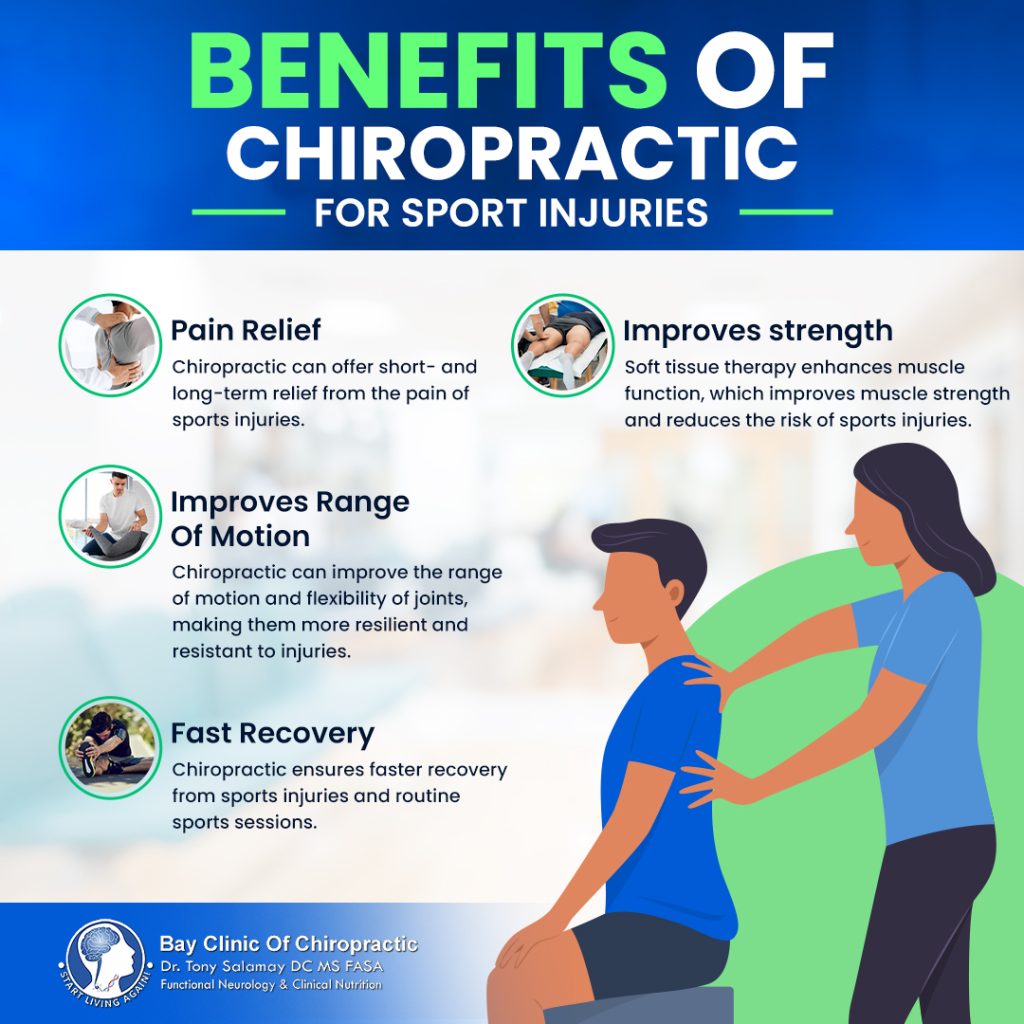
The benefits of chiropractic care in sports injuries include pain relief, improved strength, improved range of motion, and quick recovery. These benefits ensure that the patient feels better in the short- and long-term.
Some of the benefits you can get from sports chiropractors are explained below.
Relieve Pain
Chiropractic can offer short- and long-term relief from the pain of sports injuries. When dealing with any injury, including a long-term injury, the goal is to have both short and long-term relief and total healing. Therefore, with conditions like shoulder injury, sprains, and strains, you want to get immediate relief from the pain it brings, as well as recover fully from the condition. To this effect, chiropractic care has been found to be beneficial.
Of course, the option of medications always looms large when injured. However, the commonest pain medications are anti-inflammatory in nature. When used for extended periods, they may start to affect the immune system, considering the role of inflammation in normal immune responses. Also, the side effects of these medications are often not worth it when you consider how similar or even more effective other non-medication options are.
Improves Strength
Stronger muscles correlate to better muscle function and a lower risk of sports injuries. One of the benefits of soft tissue therapy is that it enhances muscle function, which improves muscle strength. The stronger these muscles are, the more resilient they are, and ultimately, the better they are at resisting injuries in the future.
An accompanying benefit to stronger muscles is also better performance when these muscles are called to action. Therefore, with chiropractic care, you not only reduce the risk of injury, but you can also raise your level while using different muscles and muscle groups.
Improve Range of Motion
Range of motion refers to the extent or limit to which you can move a muscle or joint in various directions. Chiropractic care for injuries to the joint helps to increase the range of motion of these joints pretty rapidly. Also, muscle injuries can affect the flexibility of that muscle, which impairs movement and overall mobility. By improving the biomechanics of the joints and muscles, the range of motion increases, and this also improves athletic performance.
Fast Recovery
Another benefit of improving the biomechanics of joints and muscles and neuromuscular coordination is increased recovery times. Yes, chiropractic care treats sports injuries in the most efficient way possible. Aside from faster recovery after sports injuries, the muscles and joints also recover faster after routine sports sessions. This is important in reducing the risk of chronic injuries from overuse and excess strain on the muscles and joints. Again, this ultimately also improves performance.
Frequently Asked Questions
How Long Does Recovery From Sports Injuries Take With Chiropractic?
Recovery depends entirely on the kind of injury. Injuries that involve a complete tear or rupture of a tendon or ligament usually take months to heal. However, injuries involving strains or sprains can heal in a few days or weeks, depending on their severity. Also, the presence of underlying neuromusculoskeletal problems can lengthen the recovery time.
Can Chiropractic Prevent Sports Injuries?
Yes, chiropractic can prevent sports injuries by addressing the underlying neuromusculoskeletal imbalances and advising on proper exercise and prevention strategies. Chiropractors have a deep understanding of the neuromusculoskeletal system, which is critical to proper movements in sports or exercise. Therefore, sport chiropractors are very well suited to managing disorders of the neuromusculoskeletal system, of which sports injuries are part.
Are There Sports Injuries That Chiropractic Cannot Treat?
Sports injuries that require surgery, like ACL and cartilage tears and complete fractures, are often not primarily treated by chiropractors. However, chiropractic care is still useful in the recovery process of these injuries and in the prevention of these injuries in the future.
What Are The Other Conditions Chiropractors Can Treat?
Chiropractors can also treat neck pain, shoulder pain, wrist pain, temporomandibular joint (TMJ) disorders, headaches, and disc pain. These conditions are common today and can occur while doing routine activities like typing, jogging, and doing house chores.
Conclusion
Chiropractic care offers a comprehensive and effective approach to treating sports injuries. Chiropractors can help athletes recover from injuries, alleviate pain, improve strength, and enhance flexibility by combining soft tissue therapy, spine manipulation, joint adjustments, and tailored exercises. The holistic nature of chiropractic care addresses the symptoms and underlying causes of sports injuries, leading to long-lasting results and reduced risk of future issues. For personalized treatment plans, contact the Bay Clinic of Chiropractic in Panama City, FL at (850) 785-9372 or email info@thebaydoctor.com for personalized care.
References
- Common sports injuries: Incidence and average charges [Internet]. ASPE. 2014. Available from: https://aspe.hhs.gov/reports/common-sports-injuries-incidence-average-charges-0
- Lee AD, Szabo K, McDowell K, Granger S. Opinions of sports clinical practice chiropractors, with sports specialty training and those without, about chiropractic research priorities in sports health care: a centering resonance analysis [Internet]. 2016. Available from: https://pmc.ncbi.nlm.nih.gov/articles/PMC5178019/
- Sheu Y, Chen L-H, Hedegaard H. Sports- and recreation-related injury episodes in the United States, 2011–2014. Natl Health Stat Rep. 2016 Nov 18;(99):1-12. Available from: https://www.cdc.gov/nchs/data/nhsr/nhsr099.pdf
- The UK National Ligament Registry Report 2015 [Internet]. ResearchGate. Available from: https://www.researchgate.net/publication/276850643_The_UK_National_Ligament_Registry_Report_2015
- Chiropractic Treatment in Sports: Systematic review of randomized Controlled trials [Internet]. ResearchGate. Available from: https://www.researchgate.net/publication/348266233_Chiropractic_Treatment_in_Sports_Systematic_Review_of_Randomized_Controlled_Trials
- LeFebvre R, Peterson D, Haas M. Evidence-Based practice and chiropractic care. Journal of Evidence-Based Complementary & Alternative Medicine [Internet]. 2012 Sep 3;18(1):75–9. Available from: https://pmc.ncbi.nlm.nih.gov/articles/PMC3716373/
- Branch NSC and O. NIAMS health information on sports injuries [Internet]. National Institute of Arthritis and Musculoskeletal and Skin Diseases. 2025. Available from: https://www.niams.nih.gov/health-topics/sports-injuries
- Lin AFC, Piong SZ, Wan WM, Li P, Chu VK, Chu ECP. Unlocking Athletic Potential: The Integration of Chiropractic Care into the Sports Industry and Its Impact on the Performance and Health of Athletes and Economic Growth in China and Hong Kong. Cureus [Internet]. 2023 Apr 5; Available from: https://pmc.ncbi.nlm.nih.gov/articles/PMC10075015/
- Wisdo JJ. Chiropractic management of hip pain after conservative hip arthroplasty. Journal of Manipulative and Physiological Therapeutics [Internet]. 2004 Sep 1;27(7):479. Available from: https://www.jmptonline.org/article/S0161-4754%2804%2900133-2/fulltext
- Myrtos CD. Functional Soft-Tissue examination and treatment by manual methods [Internet]. 2011. Available from: https://pmc.ncbi.nlm.nih.gov/articles/PMC3044816/
- Hurwitz EL, Coulter ID, Adams AH, Genovese BJ, Shekelle PG. Use of chiropractic services from 1985 through 1991 in the United States and Canada. American Journal of Public Health [Internet]. 1998 May 1;88(5):771–6. Available from: https://pmc.ncbi.nlm.nih.gov/articles/PMC1508935/
- Choi J, Lee S, Jeon C. Effects of flexion-distraction manipulation therapy on pain and disability in patients with lumbar spinal stenosis. Journal of Physical Therapy Science [Internet]. 2015 Jan 1;27(6):1937–9. Available from: https://pmc.ncbi.nlm.nih.gov/articles/PMC4500015/
- The effectiveness of soft-tissue therapy for the management of musculoskeletal disorders and injuries of the upper and lower extremities: A systematic review by the Ontario Protocol for Traffic Injury Management (OPTIMa) Collaboration [Internet]. ResearchGate. Available from: https://www.researchgate.net/publication/282045649_The_effectiveness_of_soft-tissue_therapy_for_the_management_of_musculoskeletal_disorders_and_injuries_of_the_upper_and_lower_extremities_A_systematic_review_by_the_Ontario_Protocol_for_Traffic_Injury_
- Side Effects of Non-Steroidal Anti-Inflammatory Drugs: The Experience of Patients with Musculoskeletal Disorders [Internet]. ResearchGate. Available from: https://www.researchgate.net/publication/270708194_Side_Effects_of_Non-Steroidal_Anti-Inflammatory_Drugs_The_Experience_of_Patients_with_Musculoskeletal_Disorders
- Miners AL. Chiropractic treatment and the enhancement of sport performance: a narrative literature review [Internet]. 2010. Available from: https://pmc.ncbi.nlm.nih.gov/articles/PMC2989393/