Your hips feel off, your lower back aches, and walking or standing just feels uneven. Maybe it’s been gradual, or maybe it showed up suddenly after a fall or long hours at your desk. Either way, something doesn’t feel right in your body.
What you’re feeling could be pelvic misalignment. It happens when your pelvic bones shift out of their natural position and throw your whole body out of sync. This can happen from poor posture, muscle imbalances, past injuries, or even pregnancy.
You might notice:
- Ongoing lower back or hip pain
- One leg feeling shorter than the other
- Knee, ankle, or foot pain with no clear cause
- Uneven posture or gait
- Trouble with digestion or bladder control
A study by Dr. Qiuhua Yu from the Sun Yat-sen University, China, found that non-specific chronic back pain in young adults is associated with pelvic asymmetry.
This article breaks down everything you need to know about pelvic misalignment- what causes it, the symptoms to watch for, and natural ways to fix it. We’ll cover treatments that actually work, including chiropractic care, diet changes, exercises, and supplements that support healing. You’ll also get answers to common questions people ask once they realize their pelvis might be the issue.
If your body’s been feeling off and you’re tired of guessing why, keep reading- this could finally explain what’s been going on.
What Is Pelvic Misalignment?
Pelvic misalignment happens when your pelvic bones shift out of their natural position. This can affect how your spine, hips, and legs function.
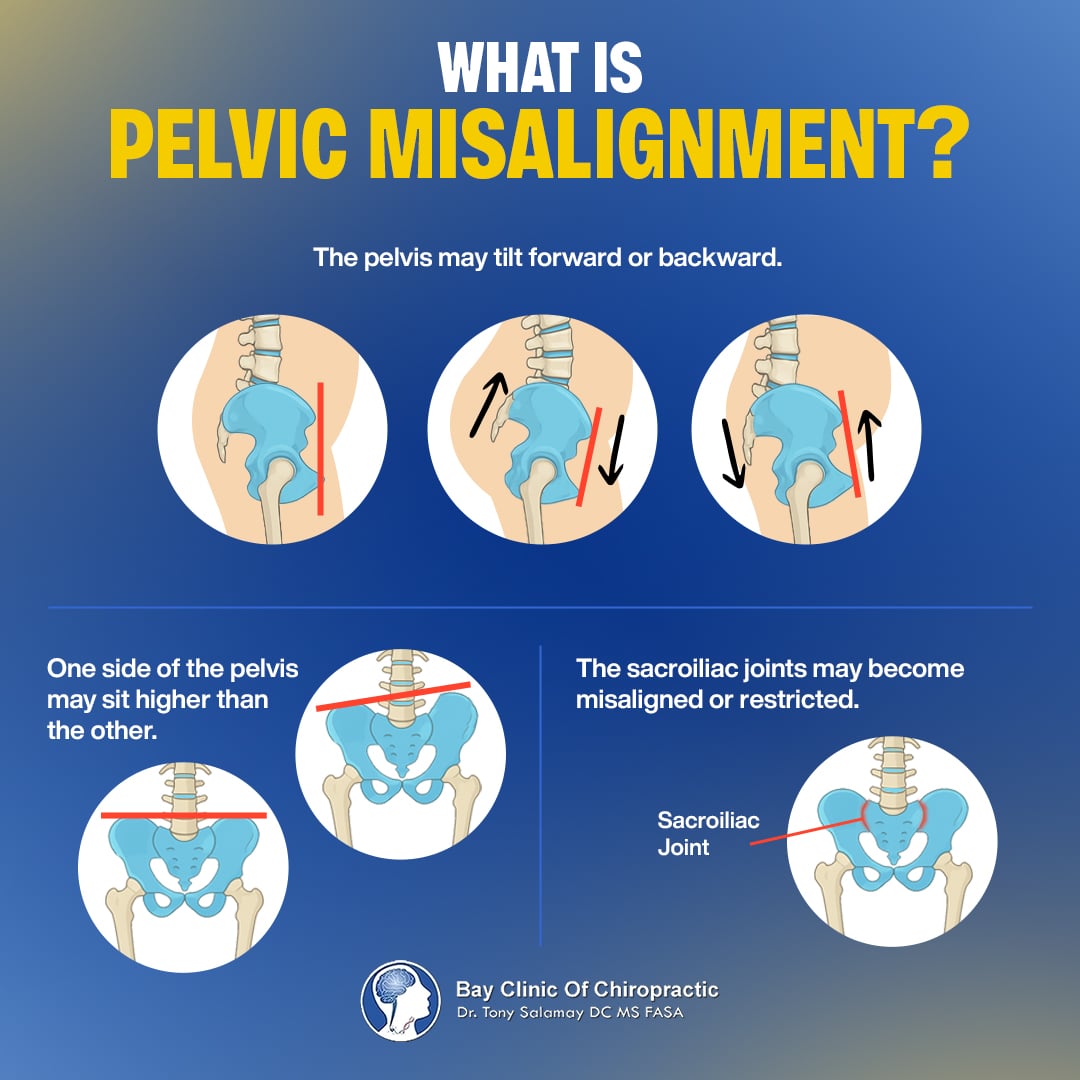
The pelvis supports your spine and connects your upper and lower body. When it’s off balance, the entire skeletal system compensates. Over time, this leads to muscle tension, joint stress, and postural problems.
Pelvic misalignment may occur in different ways:
- The pelvis may tilt forward or backward.
- One side may sit higher than the other.
- The sacroiliac joints (where your pelvis connects to your spine) may become uneven or restricted.
Many people don’t realize their pelvis is misaligned until symptoms show up. Even small shifts can throw off your posture and movement. If left uncorrected, this imbalance may affect your mobility and trigger discomfort throughout your body.
If you’re living in Panama City, FL and experiencing hip pain, lower back discomfort, or uneven posture, pelvic misalignment could be the cause. Schedule an appointment today to get a professional evaluation and personalized chiropractic care to restore balance and relieve pain.
What Are The Symptoms Of Pelvic Misalignment?
The symptoms of pelvic misalignment can show up in different ways depending on how your body compensates.
Here are the most common symptoms:
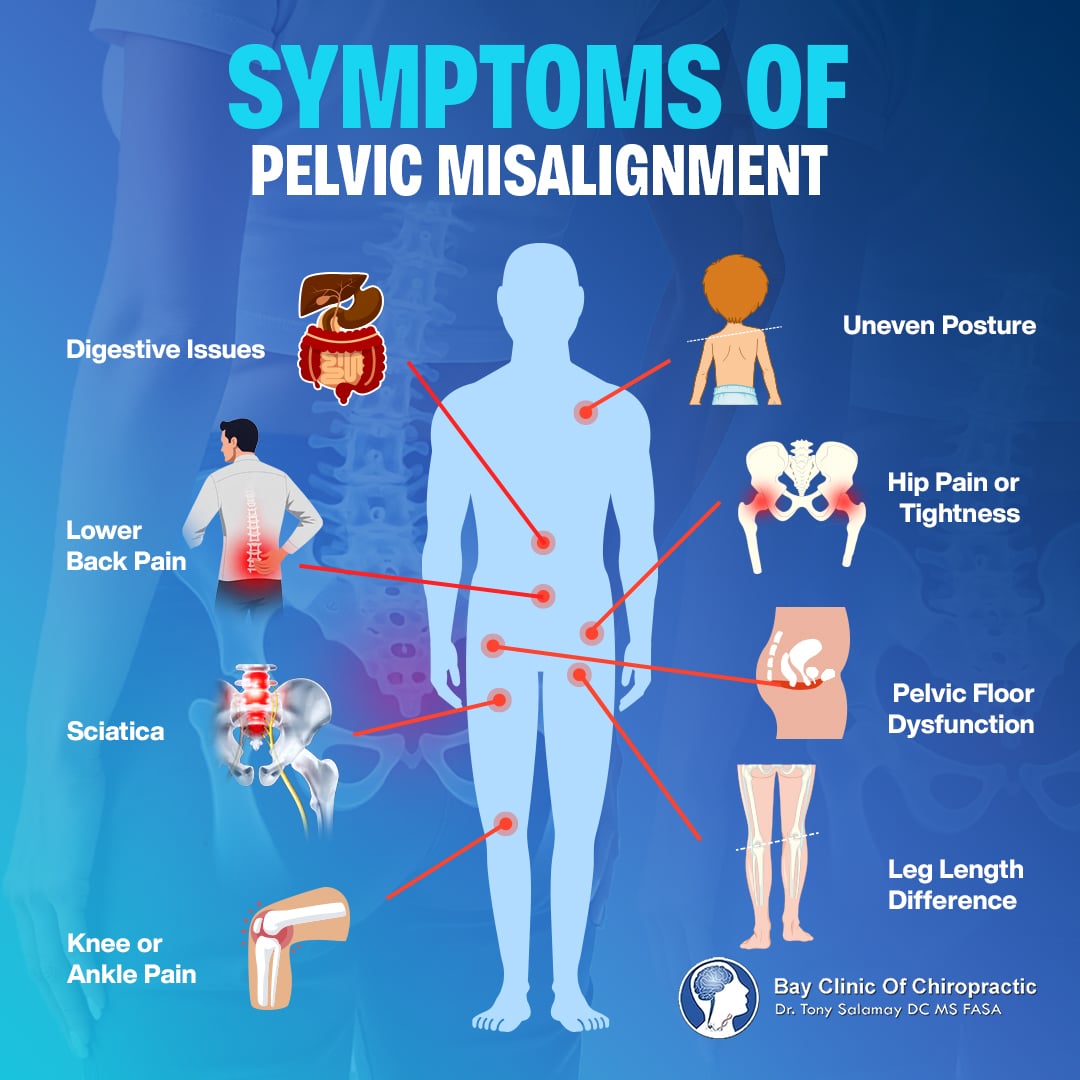
- Lower back pain: This is the most reported symptom. Uneven stress on the spine and muscles can lead to stiffness or sharp pain.
- Hip pain or tightness: A tilted pelvis affects how your hip joints move. You may feel pinching, soreness, or pulling on one side.
- Leg length difference: One leg may appear shorter due to the pelvic shift. This throws off your gait and may cause limping or uneven wear on shoes.
- Knee or ankle pain: Misalignment changes how your legs absorb weight. Joints below the pelvis can become strained as they try to compensate.
- Sciatica: A rotated pelvis can compress the sciatic nerve. This causes pain, tingling, or numbness that shoots down your leg.
- Uneven posture: One shoulder may sit higher, or your torso may lean to one side. Over time, this leads to chronic tension and muscle imbalances.
- Digestive issues: Pressure on abdominal organs can affect bowel function. Some people experience constipation, bloating, or irregular digestion.
- Pelvic floor dysfunction: Misalignment can weaken or overwork the pelvic floor muscles. This may lead to urinary leakage or core instability.
What Causes Pelvic Misalignment?

The causes of pelvic misalignment vary, but most involve lifestyle habits, injuries, or muscular imbalances.
Here are the main contributors:
- Poor posture: Slouching while sitting or standing for long periods shifts your pelvis forward or backward. Over time, this weakens stabilizing muscles and forces your spine and hips to adapt unnaturally.
- Injury or trauma: A fall, car crash, or impact during sports can force the pelvic joints out of position. Even small injuries, like a misstep or awkward twist, can alter joint alignment and lead to chronic issues if left untreated.
- Uneven leg length: Some people are born with one leg slightly shorter. Others develop a functional difference from muscle imbalances or pelvic tilting. Either case changes how your pelvis absorbs weight, creating long-term stress on joints.
- Repetitive movements: Activities like lifting on one side, swinging a bat, or even carrying a child on one hip can strain pelvic muscles unevenly. Repeating these motions daily can lead to chronic misalignment and pain over time.
- Pregnancy and childbirth: As your body prepares for delivery, ligaments loosen, and the pelvis widens. This natural process can cause instability or shifting. After birth, alignment may not return to normal without corrective care. herefore chiropractic care during pregnancy may help relieve pain naturally.
- Weak core muscles: Your deep abdominal and back muscles stabilize the pelvis. If they’re weak or underused, your body relies on surrounding muscles, which can pull the pelvis into a poor position and lead to chronic dysfunction.
- Sleeping habits: Sleeping on your side with one leg pulled up or using an unsupportive mattress places uneven pressure on the pelvis for hours. Night after night, this can cause subtle shifts in alignment.
Natural Treatments For Pelvic Misalignment
Treating pelvic misalignment naturally focuses on correcting posture, relieving muscle tension, and restoring joint balance. You don’t always need surgery or heavy medication. Many people improve with conservative care that addresses the root cause.
Chiropractic adjustments, exercise, and targeted supplements can all help stabilize your pelvis and reduce symptoms. Diet and herbal remedies also play a role in managing inflammation and supporting joint health. The right approach depends on your specific symptoms, activity level, and overall health.
Below, we break down the most effective natural treatments so you can choose what works best for your body.
Chiropractic Care
Chiropractic care is one of the most effective ways to address pelvic misalignment. Chiropractors use hands-on adjustments to realign your pelvis and restore joint mobility.
During an exam, your chiropractor checks for leg length differences, muscle tension, and joint restrictions. They may perform pelvic tilt tests or spinal assessments to find the misalignment.
Treatment includes specific adjustments to the sacroiliac joints or lumbar spine. These quick, controlled movements help reset alignment and reduce pressure on surrounding nerves and muscles.
A study by Dr. Misuk Cho from the Korea Nazarene University, found that pelvic adjustments significantly improved pelvic stability and posture. Participants showed reduced hip flexion and knee abduction during walking, suggesting that chiropractic adjustments can correct pelvic misalignment and enhance gait mechanics.
Regular adjustments improve posture, balance, and flexibility. Many people also notice less back pain, better hip motion, and improved stability when walking or exercising.
Functional Medicine
Functional medicine focuses on how your body’s systems work together to support joint stability and muscle balance. Instead of just treating symptoms like pain or stiffness, it looks deeper to identify what’s throwing your body out of alignment.
Practitioners may run lab tests to check for inflammation, gut health issues, nutritional deficiencies, and hormone imbalance. These internal factors directly affect how your muscles and joints function. For example, chronic low-grade inflammation can weaken ligaments and connective tissues that support your pelvis.
A lack of key nutrients like magnesium or vitamin D may impair muscle recovery and nerve function. Hormonal changes, such as during pregnancy or menopause, can also influence pelvic alignment by loosening ligaments and altering muscle tone.
Functional medicine addresses these issues by creating a personalized plan that may include:
- Anti-inflammatory nutrition
- Gut repair protocols
- Stress and sleep optimization
- Supplementation based on test results
This way, your body becomes more capable of holding correct alignment and healing from musculoskeletal stress.
Dietary Changes
What you eat can influence how your body manages inflammation, muscle function, and joint support. A balanced diet helps your tissues recover and reduces the stress on your pelvic joints. Certain foods support bone strength, reduce swelling, and improve circulation. Others can trigger inflammation or weaken structural support.

Below, you’ll find foods that support pelvic alignment and ones that may make symptoms worse.
Foods to Eat for Pelvic Misalignment
- Leafy greens: Spinach, kale, and Swiss chard are rich in magnesium and calcium. These minerals support muscle relaxation and bone strength. Add them to omelets, smoothies, or stir-fries for an easy daily boost.
- Fatty fish: Salmon, sardines, and mackerel are high in omega-3 fatty acids. These reduce inflammation and support joint health. Grill or bake them with herbs and lemon two to three times a week.
- Berries: Blueberries, raspberries, and strawberries contain antioxidants that help repair tissue and fight inflammation. Add them to yogurt, oatmeal, or salads.
- Nuts and seeds: Almonds, walnuts, chia seeds, and flaxseeds provide healthy fats, magnesium, and protein. Snack on a handful or blend into smoothies or overnight oats.
- Bone broth: Packed with collagen, bone broth supports joint and ligament repair. Sip it as a warm drink or use it as a base for soups and stews.
- Avocados: Full of healthy fats, potassium, and anti-inflammatory compounds. Slice onto toast, salads, or blend into smoothies for creamy texture and nutrients.
- Eggs: A great source of protein and vitamin D, which supports bone density. Eat them boiled, scrambled, or added to vegetable-rich dishes.
Foods to Avoid for Pelvic Misalignment
- Refined sugars: Found in sodas, candy, and baked goods, sugar triggers inflammation and slows tissue repair. Cut back by swapping desserts for fresh fruit or using honey in moderation.
- Processed meats: Bacon, sausage, and deli meats contain preservatives and high sodium that can increase inflammation and joint stiffness. Choose lean proteins like grilled chicken, turkey, or legumes instead.
- Fried foods: French fries, fried chicken, and chips are loaded with unhealthy fats that inflame joints. Bake or air-fry foods with olive oil to reduce strain on your body.
- White bread and pasta: These refined carbs spike blood sugar and offer little nutritional value. Replace with whole grains like quinoa, brown rice, or whole wheat pasta for steady energy and fiber.
- Dairy (in sensitive individuals): Cheese, milk, and cream may trigger inflammation or digestive issues in some people. Try almond, oat, or coconut milk as gentler alternatives if dairy causes bloating or discomfort.
- Alcohol: Beer, wine, and spirits can dehydrate tissues, increase inflammation, and slow healing. Limit intake to special occasions and drink water between servings to stay hydrated.
- Excess salt: Too much sodium from packaged snacks and frozen meals causes fluid retention and joint swelling. Flavor meals with herbs, spices, and lemon juice instead.
Supplements
Supplements can support pelvic alignment by strengthening bones, relaxing tight muscles, and reducing inflammation. They’re not a replacement for movement or treatment, but they can speed up recovery and ease discomfort. The right nutrients help your body hold proper alignment and heal from stress or strain.
Below are key supplements that support joint health, nerve function, and muscle balance. Always check with your healthcare provider before starting anything new, especially if you take medication or have underlying conditions.
Magnesium
Magnesium is a vital mineral involved in over 300 biochemical reactions in the body, including muscle and nerve function, bone health, and energy production. For individuals dealing with pelvic misalignment, magnesium’s muscle-relaxing properties can be particularly beneficial.
It helps alleviate muscle tension and spasms in the pelvic region, potentially reducing discomfort and improving mobility.
Natural sources of magnesium include leafy green vegetables like spinach and Swiss chard, nuts such as almonds and cashews, seeds like pumpkin and chia, legumes, whole grains, and fatty fish. Incorporating these foods into your diet can help maintain adequate magnesium levels.
According to the National Institutes of Health, the recommended daily allowance for magnesium is 400-420 mg for adult men and 310-320 mg for adult women. It’s advisable to consult with a healthcare provider before starting any supplementation, especially if you have underlying health conditions or are taking other medications.
Calcium
Calcium is an essential mineral that plays a crucial role in maintaining strong bones and teeth, as well as supporting muscle and nerve function. For individuals dealing with pelvic misalignment, adequate calcium intake is vital, as it helps maintain bone density and structural integrity, potentially reducing the risk of further misalignment or associated discomfort.
Natural sources of calcium include dairy products like milk, yogurt, and cheese, which are among the most concentrated sources. Non-dairy options encompass leafy green vegetables such as kale and broccoli, canned fish with bones like sardines and salmon, and fortified foods like certain cereals and plant-based milk alternatives. Incorporating these foods into your diet can help ensure sufficient calcium intake.
According to the National Institutes of Health, the recommended daily calcium intake is 1000 mg for adults aged 19 to 50 years and 1200 mg for women over 50 and men over 70. It’s important to note that excessive calcium intake from supplements may have health risks. Therefore, it’s advisable to consult with a healthcare provider before starting any supplementation.
Glucosamine
Glucosamine is a naturally occurring compound found in cartilage, the tissue that cushions joints. It plays a crucial role in building and maintaining cartilage, making it essential for joint health. For individuals with pelvic misalignment, glucosamine may help by supporting the repair and maintenance of cartilage in the pelvic joints, potentially reducing discomfort and improving mobility.
Natural food sources of glucosamine are limited. It is primarily found in the shells of shellfish such as shrimp, crab, and lobster. However, these are not commonly consumed parts of these animals. As a result, glucosamine is typically taken as a dietary supplement. Vegetarian or vegan alternatives are available, which are synthesized from fermented corn or other plant sources.
According to Dr. Caroline Williams from the University of Liverpool, England, the typical dosage of glucosamine sulfate is 500 mg taken three times daily, totaling 1500 mg per day.
It’s important to consult with a healthcare provider before starting glucosamine supplements, especially if you have shellfish allergies or are taking other medications, as glucosamine may interact with certain medications.
Herbal Remedies
Herbal remedies can support your recovery from pelvic misalignment by reducing inflammation, easing muscle tension, and improving circulation. Many herbs have natural compounds that work similarly to mild pain relievers or anti-inflammatories without the side effects of medication. While they don’t realign bones, they can relieve symptoms that come with misalignment, like stiffness or nerve irritation.
Below are herbs commonly used to support joint and muscle health. Always contact a healthcare provider and check for interactions with medications before starting any herbal supplement.
Turmeric
Turmeric is a bright yellow spice commonly used in Indian and Middle Eastern cooking. Its main active compound, curcumin, has strong anti-inflammatory and antioxidant effects. For people with pelvic misalignment, turmeric may help by reducing inflammation in muscles and joints, easing stiffness, and supporting recovery in surrounding tissues. It’s especially useful if your misalignment causes nerve irritation or chronic soreness.
You can use turmeric in several forms. Ground turmeric is easy to add to soups, rice, or roasted vegetables. Turmeric tea or “golden milk” is another popular option, made by simmering the spice with milk or a milk alternative.
Supplements are available in capsules or tablets, often combined with black pepper extract (piperine) to improve absorption. Topical creams containing turmeric may also reduce localized inflammation. If you choose a supplement, look for standardized curcumin content and consult your healthcare provider to ensure it’s appropriate for you.
Devil’s Claw
Devil’s Claw is a plant native to southern Africa, known for its anti-inflammatory and pain-relieving properties. It gets its name from the hook-shaped fruit it produces, but the root is the part used medicinally.
People often turn to Devil’s Claw to manage joint pain, back pain, and arthritis symptoms. For those with pelvic misalignment, it may help ease muscle soreness, reduce inflammation around the pelvic joints, and improve range of motion.
It works by blocking certain inflammatory pathways in the body, similar to how mild NSAIDs work. This makes it helpful for those who want natural symptom relief without relying on over-the-counter painkillers.
Devil’s Claw is most commonly taken in capsule or tablet form. It’s also available as a tincture or in tea blends, though teas are less concentrated. If you have ulcers, take blood thinners, or have gallstones, speak to your provider before using this herb.
Ginger
Ginger is a well-known root used in both cooking and traditional medicine. It contains compounds like gingerol that have strong anti-inflammatory and antioxidant effects. For those dealing with pelvic misalignment, ginger may help by easing muscle tension, reducing joint swelling, and supporting blood flow to the affected area. It can also relieve secondary symptoms like stiffness or digestive discomfort that sometimes come with misalignment.
Ginger helps reduce inflammation similarly to NSAIDs but with fewer side effects. It’s a gentle option for long-term use and is especially useful if pain or soreness is triggered by activity or poor posture.
You can use ginger fresh, dried, powdered, or as an extract. Add fresh ginger to tas, smoothies, or stir-fries. Ginger capsules and tinctures are convenient if you prefer a supplement. For muscle relief, some people also use ginger-infused oils or creams directly on sore areas.
Exercise
Exercise is an effective way to manage pelvic misalignment naturally. It strengthens muscles that support and stabilize your pelvis, reduces muscle imbalances, and improves joint movement.
When certain muscles are weak or overly tight, they can pull the pelvis out of position. Focused, low-impact movement can restore balance and help your body maintain proper alignment.
Here are some key exercises to include:
- Pelvic tilts: Lie on your back with knees bent. Flatten your lower back against the floor by gently tilting your pelvis upward. This activates your deep abdominal muscles and helps improve awareness and control of pelvic position.
- Glute bridges: With your knees bent and feet flat, lift your hips off the floor while squeezing your glutes. This strengthens the gluteus maximus, a key stabilizer that prevents the pelvis from tilting or rotating.
- Clamshells: Lie on your side with knees bent, feet together. Raise the top knee without moving your hips. This targets the gluteus medius, a muscle that helps keep your pelvis level when walking or standing.
- Hip flexor stretches: Kneel on one knee with the other foot in front, then gently press your hips forward. This stretch lengthens the front of your hips, which often become tight and pull the pelvis forward.
- Bird-dogs: Start on hands and knees, then extend one arm and the opposite leg at the same time. This improves balance, core control, and coordination between muscles on both sides of the body.
Perform each movement slowly and with good form. Aim for 2 to 3 sets of 10-15 reps, or hold stretches for 20-30 seconds. Always avoid exercises that cause pain or strain. If possible, check with a chiropractor or physical therapist to make sure you’re choosing the right movements for your specific misalignment.
Breathing Exercises
Breathing exercises help support pelvic alignment by activating your deep core muscles and relaxing tension in your hips and lower back. Most people don’t realize that poor breathing mechanics can weaken the diaphragm and overstress other core muscles. Over time, this can affect posture and pelvic stability.
Focused breathing techniques improve coordination between your diaphragm, pelvic floor, and abdominal muscles. This helps stabilize your spine and reduce pressure on misaligned joints. It also calms the nervous system, which can lower chronic muscle tension and pain.
Try these breathing exercises:
- Diaphragmatic breathing: Lie on your back with knees bent. Place one hand on your chest and the other on your belly. Breathe in through your nose and let your belly rise. Exhale slowly through your mouth. Repeat for 5-10 minutes daily.
- Box breathing: Inhale for 4 seconds, hold for 4, exhale for 4, and pause for 4. This pattern builds breath control and focus.
Practice daily, especially before stretching or after exercise, to improve results.
Frequently Asked Questions
Can Pelvic Misalignment Cause Constipation?
Yes, pelvic misalignment can contribute to constipation by disrupting the coordination of pelvic floor muscles. According to Dr. Satish S. C. Rao from the Augusta University, Augusta, Georgia, USA, this dysfunction, known as dyssynergic defecation, impairs the relaxation and coordination necessary for bowel movements. In fact, studies indicate that up to 50% of individuals with chronic constipation exhibit pelvic floor dysfunction, highlighting the significant role of pelvic alignment in bowel health.
Can A Misaligned Pelvis Cause Pelvic Floor Dysfunction?
Yes, a misaligned pelvis can contribute to pelvic floor dysfunction (PFD) by altering the biomechanics of the pelvic region. A study by Dr. Łukasz Oleksy from the University of Physical Education in Krakow, Poland demonstrates that pelvic repositioning exercises improved pelvic floor muscle symmetry, suggesting that pelvic alignment plays a significant role in pelvic floor function. The researchers concluded that correcting pelvic asymmetry could be an effective approach to treating PFD.
Can Pelvic Misalignment Cause Incontinence?
Yes, pelvic misalignment can contribute to urinary incontinence by affecting the support and function of the pelvic floor muscles. A study by Dr. Amanda Martins Reis from the University of Campinas, Campinas, Brazil has found that postural changes, including pelvic tilt, are associated with increased prevalence of stress urinary incontinence, particularly in women with myofascial dysfunction.
Can A Chiropractor Realign Your Pelvis?
Yes, chiropractors can realign the pelvis using specific adjustment techniques. Research by Dr. Misuk Cho from the Korea Nazarene University, Republic of Korea shows that pelvic adjustments with the Gonstead Technique significantly improved pelvic alignment and posture in female university students. The study concluded that chiropractic pelvic adjustments could be an effective method for correcting pelvic misalignment.
Conclusion
Pelvic misalignment can cause more than back or hip pain. It can lead to poor posture, joint strain, nerve pressure, and even digestive or bladder problems. Natural treatments like chiropractic care, targeted exercises, nutrition, and supplements can relieve symptoms and restore proper alignment.
Addressing underlying causes such as inflammation, weak muscles, or poor posture makes a lasting difference. Whether it’s adjusting the pelvis, strengthening your core, or supporting joint health with herbs and minerals, a consistent, personalized approach works best.
That lingering pain or stiffness you’ve been ignoring might not be random- your pelvis could be at the center of it all.
At the Bay Clinic of Chiropractic in Panama City, Florida, Dr. Tony Salamay uses advanced, research-backed methods to identify and correct pelvic misalignment. With a focus on functional medicine and chiropractic care, he treats the root cause, not just the symptoms, so your body can move and heal the way it’s meant to.
Ready to get back in alignment? Contact the Bay Clinic of Chiropractic today! Your pelvis- and the rest of your body will thank you for it.
References
- Yu Q, Huang H, Zhang Z, Hu X, Li W, Li L, et al. The association between pelvic asymmetry and non-specific chronic low back pain as assessed by the global postural system. BMC Musculoskeletal Disorders [Internet]. 2020 Sep 5;21(1):596. Available from: https://bmcmusculoskeletdisord.biomedcentral.com/articles/10.1186/s12891-020-03617-3
- Vaz G, Roussouly P, Berthonnaud E, Dimnet J. Sagittal morphology and equilibrium of pelvis and spine. European Spine Journal [Internet]. 2001 Jun 26;11(1):80–7. Available from: https://pmc.ncbi.nlm.nih.gov/articles/PMC3610486/
- Reuler JB. Low back pain [Internet]. 1985. Available from: https://pmc.ncbi.nlm.nih.gov/articles/PMC1306303/
- Davis D, Taqi M, Vasudevan A. Sciatica [Internet]. StatPearls – NCBI Bookshelf. 2024. Available from: https://www.ncbi.nlm.nih.gov/books/NBK507908/
- Grimes WR, Stratton M. Pelvic floor dysfunction [Internet]. StatPearls – NCBI Bookshelf. 2023. Available from: https://www.ncbi.nlm.nih.gov/books/NBK559246/
- Maiers M, Agaoglu M, Brown R, Cassirer C, DaSilva K, Lystad RP, et al. Chiropractic in Global Health and wellbeing: a white paper describing the public health agenda of the World Federation of Chiropractic. Chiropractic & Manual Therapies [Internet]. 2018 Jun 19;26(1):26. Available from: https://pmc.ncbi.nlm.nih.gov/articles/PMC6048707/
- Cho M. Effects of pelvic adjustment on pelvic posture and angles of the lower limb joints during walking in female university students. Journal of Physical Therapy Science [Internet]. 2016 Jan 1;28(4):1284–8. Available from: https://pmc.ncbi.nlm.nih.gov/articles/PMC4868228/
- Bland J. Defining function in the functional medicine model [Internet]. 2017. Available from: https://pmc.ncbi.nlm.nih.gov/articles/PMC5312741/
- Stefanicka-Wojtas D, Kurpas D. Personalised Medicine—Implementation to the Healthcare system in Europe (Focus Group discussions). Journal of Personalized Medicine [Internet]. 2023 Feb 21;13(3):380. Available from: https://pmc.ncbi.nlm.nih.gov/articles/PMC10058568/
- Krupa KN, Fritz K, Parmar M. Omega-3 fatty acids [Internet]. StatPearls – NCBI Bookshelf. 2024. Available from: https://www.ncbi.nlm.nih.gov/books/NBK564314/
- Martínez-Puig D, Costa-Larrión E, Rubio-Rodríguez N, Gálvez-Martín P. Collagen Supplementation for Joint Health: The Link between Composition and Scientific Knowledge. Nutrients [Internet]. 2023 Mar 8;15(6):1332. Available from: https://pmc.ncbi.nlm.nih.gov/articles/PMC10058045/
- Asensi MT, Napoletano A, Sofi F, Dinu M. Low-Grade Inflammation and Ultra-Processed Foods Consumption: A review. Nutrients [Internet]. 2023 Mar 22;15(6):1546. Available from: https://pmc.ncbi.nlm.nih.gov/articles/PMC10058108/
- Tharmalingam J, Gangadaran P, Rajendran RL, Ahn BC. Impact of alcohol on inflammation, immunity, infections, and extracellular vesicles in pathogenesis. Cureus [Internet]. 2024 Mar 25;16(3):e56923. Available from: https://pmc.ncbi.nlm.nih.gov/articles/PMC11043057/
- Office of Dietary Supplements – magnesium [Internet]. Available from: https://ods.od.nih.gov/factsheets/Magnesium-HealthProfessional/
- Cormick G, Belizán JM. Calcium intake and health. Nutrients [Internet]. 2019 Jul 15;11(7):1606. Available from: https://pmc.ncbi.nlm.nih.gov/articles/PMC6683260/
- Office of Dietary Supplements – calcium [Internet]. Available from: https://ods.od.nih.gov/factsheets/Calcium-HealthProfessional/
- Williams C, Ampat G. Glucosamine sulfate [Internet]. StatPearls – NCBI Bookshelf. 2023. Available from: https://www.ncbi.nlm.nih.gov/books/NBK558930/
- Hewlings S, Kalman D. Curcumin: A review of its Effects on Human health. Foods [Internet]. 2017 Oct 22;6(10):92. Available from: https://pmc.ncbi.nlm.nih.gov/articles/PMC5664031/
- Boonrueng P, Wasana PWD, Hasriadi N, Vajragupta O, Rojsitthisak P, Towiwat P. Combination of curcumin and piperine synergistically improves pain-like behaviors in mouse models of pain with no potential CNS side effects. Chinese Medicine [Internet]. 2022 Oct 23;17(1). Available from: https://pmc.ncbi.nlm.nih.gov/articles/PMC9590184/
- Gxaba N, Manganyi MC. The Fight against Infection and Pain: Devil’s Claw (Harpagophytum procumbens) a Rich Source of Anti-Inflammatory Activity: 2011–2022. Molecules [Internet]. 2022 Jun 6;27(11):3637. Available from: https://pmc.ncbi.nlm.nih.gov/articles/PMC9182060/
- Yücel Ç, Karatoprak GŞ, Açıkara ÖB, Akkol EK, Barak TH, Sobarzo-Sánchez E, et al. Immunomodulatory and anti-inflammatory therapeutic potential of gingerols and their nanoformulations. Frontiers in Pharmacology [Internet]. 2022 Sep 5;13:902551. Available from: https://pmc.ncbi.nlm.nih.gov/articles/PMC9483099/
- Ludwig O, Dindorf C, Kelm S, Kelm J, Fröhlich M. Muscular Strategies for Correcting the Pelvic Position to Improve Posture—An Exploratory Study. Journal of Functional Morphology and Kinesiology [Internet]. 2024 Jan 29;9(1):25. Available from: https://pmc.ncbi.nlm.nih.gov/articles/PMC10885056/
- Kim J, Park M. Changes in the activity of trunk and hip extensor muscles during bridge exercises with variations in unilateral knee joint angle. Journal of Physical Therapy Science [Internet]. 2016 Jan 1;28(9):2537–40. Available from: https://pmc.ncbi.nlm.nih.gov/articles/PMC5080170/
- Hamasaki H. Effects of Diaphragmatic Breathing on Health: A Narrative review. Medicines [Internet]. 2020 Oct 15;7(10):65. Available from: https://pmc.ncbi.nlm.nih.gov/articles/PMC7602530/
- Rao SSC, Patcharatrakul T. Diagnosis and treatment of dyssynergic defecation. Journal of Neurogastroenterology and Motility [Internet]. 2016 Jun 7;22(3):423–35. Available from: https://pmc.ncbi.nlm.nih.gov/articles/PMC4930297/
- Oleksy Ł, Mika A, Kielnar R, Grzegorczyk J, Marchewka A, Stolarczyk A. The influence of pelvis reposition exercises on pelvic floor muscles asymmetry. Medicine [Internet]. 2019 Jan 1;98(2):e13988. Available from: https://pmc.ncbi.nlm.nih.gov/articles/PMC6336649/
- Reis AM, Brito LGO, Teixeira CPF, De Araújo CC, Facio FA, Herrmann V, et al. Is there a difference in whole body standing posture in women with urinary incontinence based on the presence of myofascial dysfunction in the pelvic floor muscles? Physical Therapy [Internet]. 2021 Jul 2;101(10). Available from: https://academic.oup.com/ptj/article/101/10/pzab171/6315144?login=false
- Cho M. The influence of pelvic adjustment on the posture of female university students. Journal of Physical Therapy Science [Internet]. 2013 Jan 1;25(7):785–7. Available from: https://pmc.ncbi.nlm.nih.gov/articles/PMC3820405/