Shoulder pain is a common issue that can arise due to problems with the muscles, tendons, ligaments, or bones of the shoulder. The prevalence of shoulder pain in adults is as much as 26%, which translates to one in every four adults. Most people who have shoulder pain feel it on the outer side of the shoulder, and the pain may get much more severe when lifting or resting on the arm.
The leading cause of shoulder pain is injury to the rotator cuff (a group of muscles and tendons around the shoulder), accounting for around 70% of all cases. Specifically, inflammation and tears from prolonged use or repetitive motions, arthritis, frozen shoulder, and nerve injuries are typically responsible for shoulder pain. Therefore, people who work in occupations requiring frequent overhead movements, like painters and electricians, or players of sports like tennis and basketball are more likely to experience shoulder pain.
Diagnosis of shoulder pain typically begins with a physical examination and may include imaging tests like X-rays, MRIs, or ultrasounds to help identify the underlying issue. Chiropractic plays a key role in managing shoulder pain as it leverages the relationship between the nervous system and the body’s musculoskeletal structures to achieve holistic healing. Chiropractors combine various non-invasive techniques manual therapy, trigger point therapy, and soft tissue therapy with the right lifestyle advice to relieve pain and improve mobility.
This article will examine what shoulder pain is, its causes, risk factors, diagnosis, prevention, and one of the most effective ways of treating shoulder pain – chiropractic. Let’s get into it.
What is Shoulder Pain?
Shoulder pain is any type of pain or discomfort that you experience in and around your shoulder. The shoulder is the most movable joint in the body due to the collective action of the muscles, tendons, ligaments, and bones in the area. When there is a problem with at least one of these components, shoulder pain may arise.
Typically, shoulder pain is felt on the outer side of the shoulder, with the pain originating just beneath the bone that forms the “roof” of the shoulder (known as the acromion). In most conditions, this shoulder pain worsens when the arms are lifted sideways or when you lie on the shoulder overnight.

The symptoms of shoulder pain are not limited to just pain. There may be other functional disorders that accompany shoulder pain, including depression, anxiety, and a worsening of overall quality of life. This response is not normal, and comparing these symptoms to pain in other areas of the body, like the hips, shows just how significant the impact of shoulder pain is on overall body health.
The pain symptoms of shoulder pain last more than 6 months in half of the patients that have the condition. Considering the discomfort associated with shoulder pain, from the pain to reduced range of motion to mental health problems, it is essential to understand proper management techniques for the condition. This management starts with finding the causes and risk factors.
What Causes Shoulder Pain?
While there are always suspected causes, healthcare practitioners often do not have all the answers on the exact cause of shoulder pain. However, we do know that rotator cuff disorders are the most common source of shoulder pain, being responsible for close to 70% of all shoulder pain cases.
The rotator cuff is a group of muscles and tendons around the shoulder joint. Some disorders affecting the rotator cuff include inflammation (rotator cuff tendinitis) and tears (rotator cuff tear). The source of injury to the rotator cuff is often wear and tear from extended use. Wear and tear can also affect other parts of the shoulder and not just the rotator cuff.
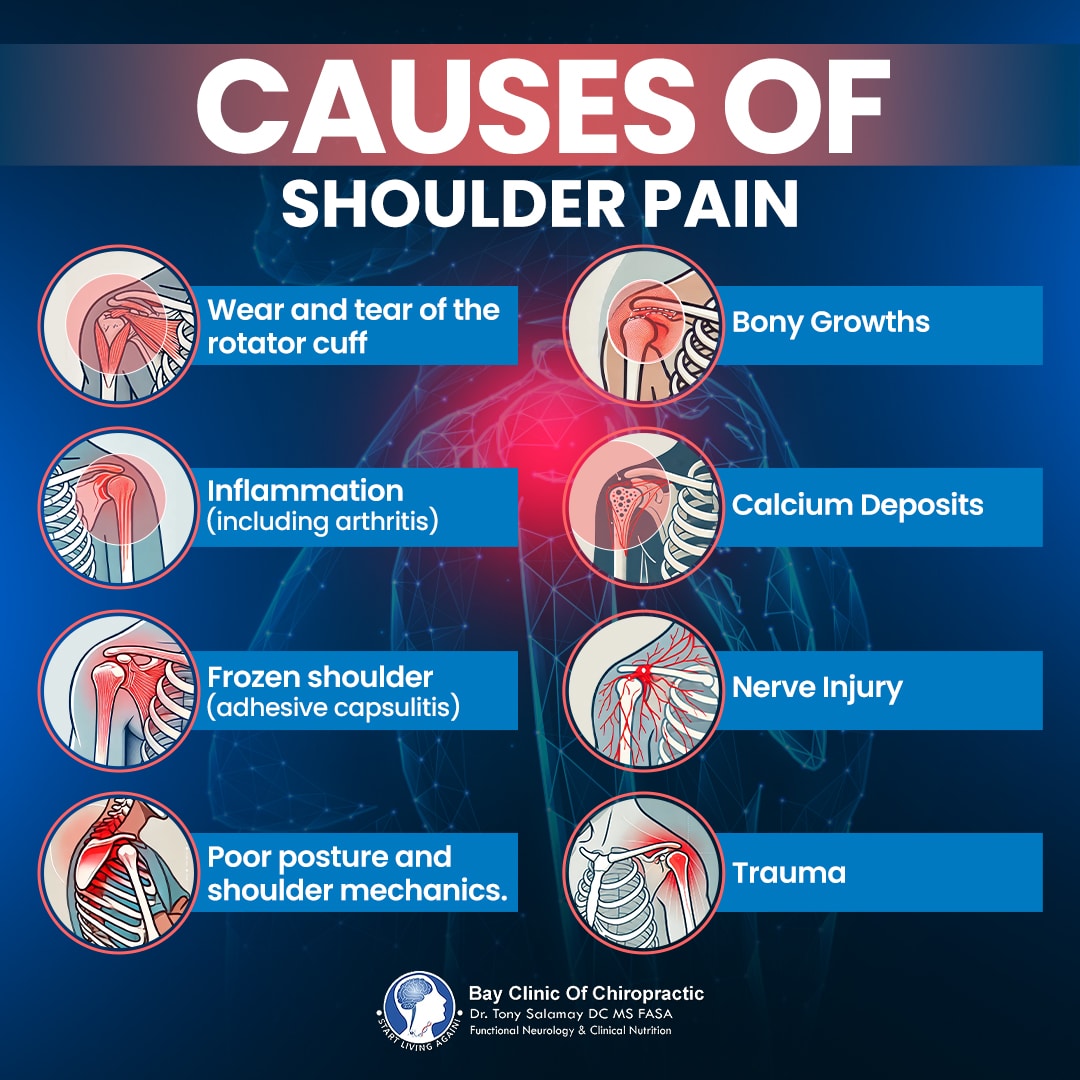
Aside from wear and tear, bony growths, inflammation (including arthritis), and calcium deposits in the shoulder can also cause shoulder pain. Frozen shoulder (adhesive capsulitis) is often of key research interest to healthcare practitioners and has a prevalence of up to 5% in the population. Shoulder pain can also result from nerve injury, trauma, and poor posture and shoulder mechanics.
If you’re noticing shoulder pain, stiffness, weakness, or difficulty lifting your arm, it could indicate an underlying joint or soft tissue issue that shouldn’t be ignored. Early evaluation can help prevent the condition from worsening and support faster recovery. At The Bay Clinic of Chiropractic, we provide personalized chiropractic care in Panama City, FL to identify the root cause of shoulder pain and improve mobility, function, and overall joint health.
Who Is Most Likely to Have Shoulder Pain?
People with occupations that involve raising their hands above their heads will most commonly have shoulder pain. Such occupations include painters, electricians, and shelf stockers. Also, people who play sports like tennis, baseball, and basketball are at greater risk of having shoulder pain.
A significant proportion of the world’s population will experience shoulder pain daily, yearly, and throughout their lifetime. However, because of the mechanics and processes frequently involved in the development of shoulder pain, it is most common among people with occupations that involve raising their hands above their heads.
How is Shoulder Pain Diagnosed?
Shoulder pain is diagnosed through different methods, starting with a physical examination of the shoulder. Your healthcare provider can then ask relevant questions about the shoulder to get your experience of the pain and better understand the problem. Imaging tests, like X-ray, ultrasound, and magnetic resonance imaging (MRI), may also be used for accurate diagnosis.
A consequence of the several different causes and presentations of shoulder pain is that there is no one universal diagnostic method or tool for shoulder pain. Instead, healthcare professionals have to combine different diagnostic methods to arrive at an accurate diagnosis.
Your healthcare provider will generally start with a physical examination and assessment. To this end, the examiner can ask questions regarding the pain and how it feels, as well as feel the shoulder and arm. Also, the examiner may check the range of motion of the shoulder, asking you to do certain exercises like lifting and lowering your arms sideways, as well as moving your elbows inwards or outwards.
The healthcare provider may call for imaging tests after the initial examination of the shoulder. These tests can be used to specifically diagnose the condition responsible for the cause of the pain or rule out other possible causes of pain. Some imaging tests used are X-ray, ultrasound, magnetic resonance imaging (MRI), computed tomography (CT) scans, and electromyography (EMG).
Note, though, that imaging tests are often misleading. For instance, despite test results showing a tear in the rotator cuff, this may not be the cause of the shoulder pain. This is well justified in the amount of people who have these tears yet do not feel any pain.
Chiropractic Treatment for Shoulder Pain
Similar to other conditions with multi-factorial causes, shoulder pain has no one singular treatment. In most cases, conservative treatments are the first line of treatment and are generally sufficient for effectively managing the pain. Among these conservative treatments, chiropractic has frequently demonstrated positive results.
Below, we will examine chiropractic for shoulder pain in more detail, as well as how effective other treatment options are.
Chiropractic is a branch of functional medicine that focuses on diagnosing, treating, and preventing neuromusculoskeletal disorders. Chiropractors (health practitioners who practice chiropractic) emphasize the connection between the nervous system and overall health in their healing process.
The main focus of chiropractic care is the relationship between major body structures, like bones, muscles, and nerves, and how this relationship can be leveraged to treat different conditions. Chiropractic is based on the principle that the central nervous system (brain and spinal cord) controls the entire body system, and problems in different body parts can be traced to problems in the brain and spine.
Therefore, by correcting these problems in the central nervous system through different procedures on the spine and surrounding areas, the body can return to balance and heal itself. And what better healer of the body than the body itself, right?!
Will Chiropractic Help Shoulder Pain?
Yes, chiropractic can help treat shoulder pain with the right techniques and treatment plan. Chiropractic is an excellent treatment option for conditions that affect the musculoskeletal structures, including muscles, tendons, and ligaments. Chiropractors often use different chiropractic techniques to guarantee healing.
Here are some of these techniques.

Manual and Manipulative Therapy (MMT)
Manual and manipulative therapy is a group of techniques that involve applying pressure or controlled thrusts to a part of the body. Simply called manual therapy or manipulative therapy, MMT combines different physical therapy activities, massage, and exercise to treat the shoulder and relieve pain. MMT is the most common therapeutic option that chiropractors employ for the management of shoulder pain.
MMT is effective in the management of shoulder disorders and their accompanying symptoms, of which pain rises to the top. By increasing the mobility of the joints and their range of motion, manual therapy can also help improve the performance of the shoulder, which may translate to improved quality of life.
Many home treatments also fall in the category of manual therapy. Your chiropractor may advise on the proper home plan, like the proper sitting and sleeping posture or the use of cold and heat, that will help you accelerate the recovery of your shoulders.
Trigger Point Therapy
Trigger point therapy revolves around identifying a trigger point for the pain in the shoulder and surrounding areas and then applying sustained pressure to inactivate these trigger points. Application of this pressure is usually hands-on, typically with the fingers. Trigger point therapy is one of the oldest and most used chiropractic techniques.
Also known as ischemic compression, trigger point therapy has proven helpful in the immediate and short-term relief of pain and in the long-term management of chronic shoulder pain. This therapy also increases the shoulder joint’s range of motion and increases the pain threshold, both crucial aspects of the journey toward full recovery.
Soft Tissue Therapy
Soft tissue therapy is a group of chiropractic techniques that manipulate the soft tissues of the body. The soft tissues of the shoulder include its tendons, ligaments, cartilage, and capsule. Of the different injuries to the soft tissue possible, the rotator cuff (a group of muscles and tendons in the shoulder) is the most frequently affected.
Whenever there is pain and similar discomforting issues with the shoulder, there are three major categories responsible – soft tissue disorders, arthritis, and articular injury. Recall that injury to the rotator cuff is responsible for 7 in 10 cases of shoulder pain. Therefore, soft tissue therapy, which includes different techniques that target soft tissues, will almost always be useful in treating shoulder pain.
More specifically, chiropractors use techniques like stretching and massage to manage shoulder pain. Deep friction massage, in particular, has been identified as the default soft tissue technique for soft tissue disorders of the shoulder, especially those affecting the rotator cuff.
Finding a Chiropractor
Do you need a chiropractor for shoulder pain in Panama City, FL, or around this area? The Bay Clinic of Chiropractic is perfect for you. Led by the experienced Dr. Tony Salameh, we offer an integrated approach to managing different health conditions and injuries, ensuring you get holistic care and treatment.
You will get state-of-the-art and comprehensive testing, as well as a personalized treatment plan that aligns best with the needs and requirements of your body. Contact the Bay Clinic at (850) 785-9372 or email info@thebaydoctor.com for personalized care.
Medications
Over-the-counter analgesics (pain relief medications), like acetaminophen (Tylenol) and ibuprofen (Advil), are typical medications that can help in relieving shoulder pain. If the pain medications used are also anti-inflammatory, there may be a reduction in inflammation in the area, which also helps relieve pain symptoms.
However, long-term use of these anti-inflammatory analgesics often brings several undesirable effects, including ulcers, gastrointestinal disturbances, and kidney damage. When you consider how many months some shoulder pain symptoms may last, medications cannot be seen as an effective long-term option in managing shoulder pain.
Invasive Procedures
Invasive procedures are those where there is intentional access into the body, usually through cutting or puncturing the skin, or inserting medical devices into the body. Shoulder pain can be resolved with conservative treatments that do not require direct access into the body (like chiropractic and home treatments) for most people.
In fact, invasive treatment options, like surgery, are almost never the first option, and rightfully so, too. According to a controlled surgical trial published in The Lancet, there are no clinically significant benefits to surgical procedures for shoulder pain and function. While there may be some individuals who will reliably benefit from surgical procedures, there is not nearly enough research available to recognize surgery as a practical and useful treatment option for shoulder pain.
Frequently Asked Questions
Do You Need Surgery for Shoulder Pain?
In an overwhelming majority of cases, you do not need surgery for shoulder pain. In fact, despite the extensive research on the subject, there is little evidence that surgery offers any benefit at all in the management of pain compared to other more conservative treatment options, like chiropractic and even medications. Still, if other treatment options are exhausted and there is still no remission, healthcare providers may consider surgery as a viable treatment option.
How Long Does Shoulder Pain Last?
With proper treatment, shoulder pain can last anywhere from a few weeks to months, depending on the cause and pattern of the pain. About half of the people with shoulder pain usually fully recover in six months. The other half may experience pain and other symptoms for longer than 6 months and, in severe, chronic cases, up to years.
Can Chiropractic Prevent Shoulder Pain?
Chiropractic care can prevent shoulder pain in some individuals. This is because chiropractic can help increase the flexibility and strength of the muscles and joints in the shoulder, which then reduces stiffness and the occurrence of shoulder pain. However, the prevention of shoulder pain by chiropractic is not absolute and total, as with any other treatment option.
When Should You See a Chiropractor for Shoulder Pain?
You should see a chiropractor for shoulder pain if the pain lasts for more than 3 to 4 days and if you notice pain in the spine or other parts of the body. Limited range of motion, recurring shoulder pain, and pain that significantly affects your quality of life are also indicators that you should see a chiropractor.
What to Expect During Your First Chiropractic Visit for Shoulder Pain?
During your first chiropractic visit for shoulder pain, expect your chiropractor to collect some personal and medical data, and then physically examine and assess your shoulder. Your chiropractor may then ask questions about your job, daily routine, and posture to gain more insight into your injury. Your chiropractic visit may conclude with your chiropractor ordering imaging tests (like x-rays and MRI scans) and relevant laboratory tests to aid diagnosis, before drafting a personalized treatment plan.
Conclusion
Shoulder pain is a common musculoskeletal condition that can significantly impact daily life. As tricky as it may be, finding the root causes of shoulder pain through proper diagnosis and personalized treatment plans is essential. Chiropractic care, manual therapy, and other non-invasive treatments can relieve shoulder pain quickly and effectively. By seeking early intervention and taking preventive measures, individuals can minimize the risk of developing shoulder pain and maintain optimal shoulder health.
For a customized treatment plan to meet your specific needs, contact the Bay Clinic of Chiropractic at (850) 785-9372 or email us at info@thebaydoctor.com. Our dedicated team, headed by the experienced Dr. Tony Salameh, is here to provide you with the highest level of personalized care.
References
- Institute for Quality and Efficiency in Health Care (IQWiG). Overview: Shoulder pain [Internet]. InformedHealth.org – NCBI Bookshelf. 2024. Available from: https://www.ncbi.nlm.nih.gov/books/NBK554693/
- Bilberg R, Nørgaard B, Overgaard S, Roessler KK. Mental health and quality of life in shoulder pain patients and hip pain patients assessed by patient reported outcome. International Journal of Orthopaedic and Trauma Nursing [Internet]. 2013 Aug 19;18(2):81–8. Available from: https://www.sciencedirect.com/science/article/abs/pii/S1878124113000671
- Kuijpers T, Van Der Windt DAWM, Van Der Heijden GJMG, Bouter LM. Systematic review of prognostic cohort studies on shoulder disorders. Pain [Internet]. 2004 Apr 23;109(3):420–31. Available from: https://journals.lww.com/pain/abstract/2004/06000/systematic_review_of_prognostic_cohort_studies_on.27.aspx
- Murphy RJ, Carr AJ. Shoulder pain [Internet]. 2010. Available from: https://pmc.ncbi.nlm.nih.gov/articles/PMC3217726/
- Li D, St Angelo JM, Taqi M. Adhesive capsulitis (Frozen shoulder) [Internet]. StatPearls – NCBI Bookshelf. 2025. Available from: https://www.ncbi.nlm.nih.gov/books/NBK532955/
- Lucas J, Van Doorn P, Hegedus E, Lewis J, Van Der Windt D. A systematic review of the global prevalence and incidence of shoulder pain. BMC Musculoskeletal Disorders [Internet]. 2022 Dec 8;23(1). Available from: https://bmcmusculoskeletdisord.biomedcentral.com/articles/10.1186/s12891-022-05973-8
- Institute for Quality and Efficiency in Health Care (IQWiG). Shoulder pain: Learn More – Shoulder pain: What helps? [Internet]. InformedHealth.org – NCBI Bookshelf. 2024. Available from: https://www.ncbi.nlm.nih.gov/books/NBK554692/
- Maltese PE, Michelini S, Baronio M, Bertelli M. Molecular foundations of chiropractic therapy. PubMed [Internet]. 2019 Sep 30;90(10-S):93–102. Available from: https://pmc.ncbi.nlm.nih.gov/articles/PMC7233649/
- Brantingham JW, Cassa TK, Bonnefin D, Jensen M, Globe G, Hicks M, et al. Manipulative Therapy for Shoulder Pain and Disorders: Expansion of a Systematic Review. Journal of Manipulative and Physiological Therapeutics [Internet]. 2011 Jun 1;34(5):314–46. Available from: https://www.sciencedirect.com/science/article/abs/pii/S0161475411000625
- Camarinos J, Marinko L. Effectiveness of manual physical therapy for Painful shoulder Conditions: A Systematic review. Journal of Manual & Manipulative Therapy [Internet]. 2009 Dec 1;17(4):206–15. Available from: https://pmc.ncbi.nlm.nih.gov/articles/PMC2813507/
- Moraska AF, Hickner RC, Kohrt WM, Brewer A. Changes in blood flow and cellular metabolism at a myofascial trigger point with trigger point release (Ischemic compression): a Proof-of-Principle pilot study. Archives of Physical Medicine and Rehabilitation [Internet]. 2012 Sep 10;94(1):196–200. Available from: https://pmc.ncbi.nlm.nih.gov/articles/PMC3529849/
- SAGE PublicationsSage UK: London, England. Effectiveness of ischemic compression on myofascial trigger points in relieving neck pain: A systematic review and meta-analysis – Anle Xu, Qiangmin Huang, Jifeng Rong, Xuejiao Wu, Meikui Deng, Lijuan Ji, 2023 [Internet]. Sage Journals. Available from: https://journals.sagepub.com/doi/10.3233/BMR-220045?url_ver=Z39.88-2003&rfr_id=ori:rid:crossref.org&rfr_dat=cr_pub%20%200pubmed
- Dinnes J, Loveman E, McIntyre L, Waugh N. The effectiveness of diagnostic tests for the assessment of shoulder pain due to soft tissue disorders: a systematic review [Internet]. NIHR Health Technology Assessment Programme: Executive Summaries – NCBI Bookshelf. 2003. Available from: https://www.ncbi.nlm.nih.gov/books/NBK62241/
- Liesdek C, Van Der Windt DA, Koes BW, Bouter LM. Soft-tissue disorders of the shoulder. Physiotherapy [Internet]. 1997 Jan 1;83(1):12–7. Available from: https://www.sciencedirect.com/science/article/abs/pii/S0031940605661032
- Wongrakpanich S, Wongrakpanich A, Melhado K, Rangaswami J. A Comprehensive review of Non-Steroidal Anti-Inflammatory Drug Use in the Elderly. Aging and Disease [Internet]. 2018 Jan 1;9(1):143. Available from: https://pmc.ncbi.nlm.nih.gov/articles/PMC5772852/
- Beard DJ, Rees JL, Cook JA, Rombach I, Cooper C, Merritt N, et al. Arthroscopic subacromial decompression for subacromial shoulder pain (CSAW): a multicentre, pragmatic, parallel group, placebo-controlled, three-group, randomised surgical trial. The Lancet [Internet]. 2017 Nov 21;391(10118):329–38. Available from: https://www.thelancet.com/journals/lancet/article/PIIS0140-67361732457-1/fulltext
- Khan M, Alolabi B, Horner N, Bedi A, Ayeni OR, Bhandari M. Surgery for shoulder impingement: a systematic review and meta-analysis of controlled clinical trials. CMAJ Open [Internet]. 2019 Jan 1;7(1):E149–58. Available from: https://pmc.ncbi.nlm.nih.gov/articles/PMC6411477/