
You’ve cleaned up your diet, stayed consistent at the gym, and maybe even skipped dessert for weeks- yet the scale hasn’t budged.
That stall in progress? It’s called a weight loss plateau. It happens when your body adjusts to your routine and stops responding. This can be triggered by a slowed metabolism, stress, hormone imbalances, or even a lack of sleep.
You might experience some of the following that contribute to your weight loss plateau:
- Constant fatigue despite eating well
- Sudden cravings or stronger hunger
- Inches staying the same even if workouts feel harder
- A drop in motivation or mood
In a study on weight loss plateaus, Dr. Gurpreet Sarwan from the Nassau University Medical Center, NY, USA, states, “Following an initial period of steady weight reduction, individuals attempting to lose weight frequently experience a frustrating plateau where progress halts.” This highlights the importance of proper management of weight loss plateaus.
This article breaks down why plateaus happen, how long they usually last, and what natural strategies can get your progress moving again. You’ll learn about functional medicine, specific foods to eat and avoid, supplements that may help, how chiropractic care supports your metabolism, and how to manage stress to reset your system.
If your body feels stuck, and nothing seems to work, you’re in the right place. Keep reading- because the answers you’ve been looking for might be simpler than you think.
What Is A Weight Loss Plateau?
A weight loss plateau happens when your body stops losing weight despite continued efforts with diet and exercise. This phase is frustrating but common. Most people hit a plateau at some point during their weight loss journey.
When you first start losing weight, changes in diet and exercise usually lead to quick results. Your body sheds water weight and burns stored glycogen (a form of carbohydrate stored in muscles and liver). As the process continues, your metabolism slows to match your lower body weight.
Eventually, calorie burn evens out with calorie intake. This balance halts further weight loss. Plateaus signal that your body has adapted. It no longer sees a reason to drop more weight unless something changes.
It doesn’t mean you’re doing something wrong. It means your body needs a new strategy to continue making progress.
What Causes A Weight Loss Plateau?
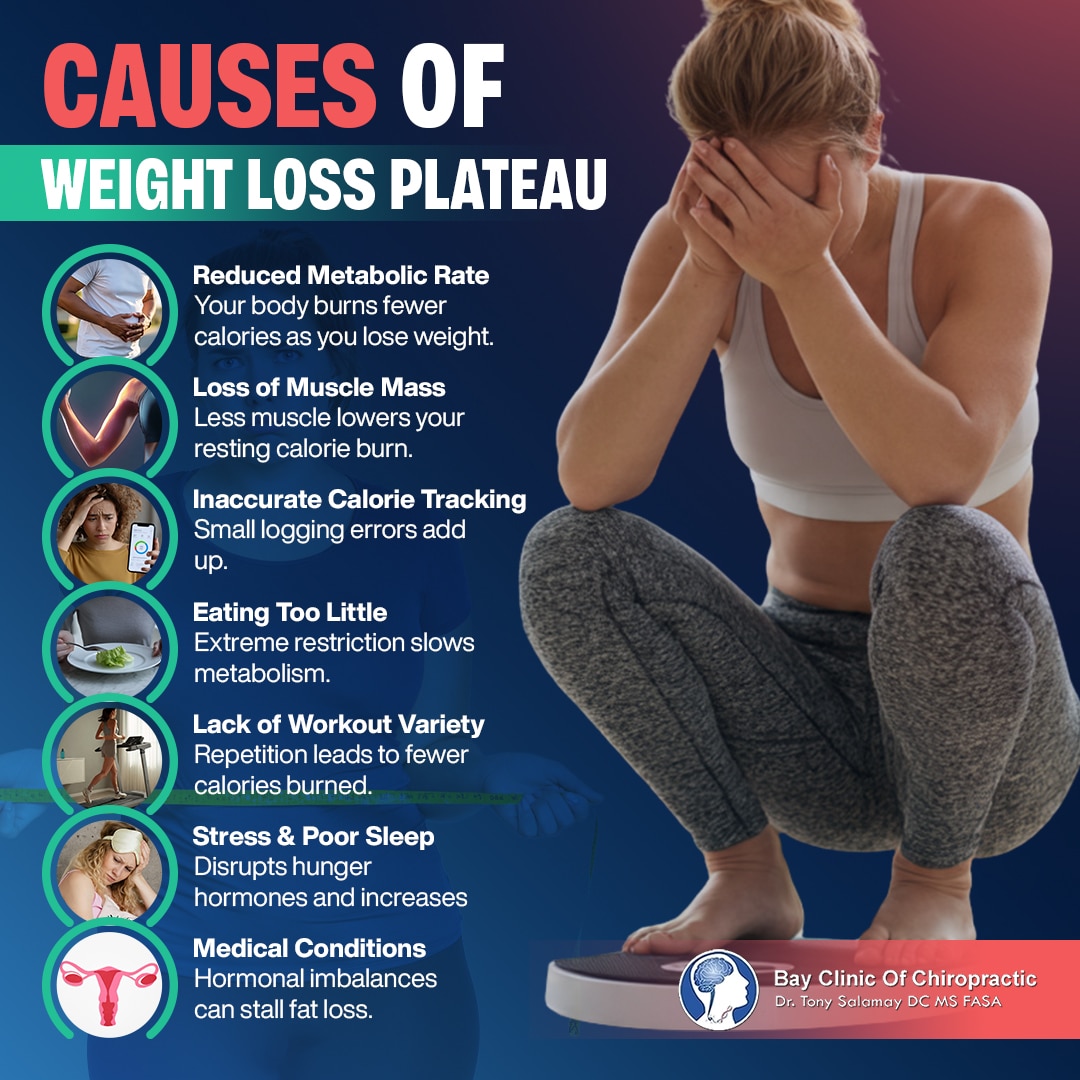
Several factors can stall weight loss, even if you’re following the same routine. Here are the most common reasons why weight loss plateaus happen:
- Reduced metabolic rate: As you lose weight, your body burns fewer calories at rest. This natural slowdown is your body’s way of conserving energy and adapting to a smaller size.
- Loss of muscle mass: Muscle burns more calories than fat, even when you’re resting. Without strength training, weight loss can lead to muscle loss, which lowers your metabolic rate.
- Inaccurate calorie tracking: Small mistakes in portion sizes or forgetting to log snacks can add up over time. These unnoticed extras can shift you out of a calorie deficit. A study on calorie estimation by Dr. Ruth E. Brown from the York University, Toronto, Ontario, Canada found that “There was a wide range of under and overestimation of calories during exercise and in a meal.”
- Eating too little: Severe calorie restriction can backfire by triggering your body’s survival response. This slows metabolism and increases fat storage to preserve energy.
- Lack of variety in workouts: Repeating the same exercise leads to efficiency, meaning your body burns fewer calories doing the same activity. Switching it up keeps your body challenged.
- Stress and poor sleep: Chronic stress raises cortisol levels, which can increase cravings and belly fat. Poor sleep affects hormones that control hunger and fullness, leading to overeating.
- Medical conditions: Hormonal imbalances from conditions like thyroid disorders, PCOS, or insulin resistance can block weight loss. These issues affect metabolism, appetite, and how your body stores fat.
How Long Can A Weight Loss Plateau Last?
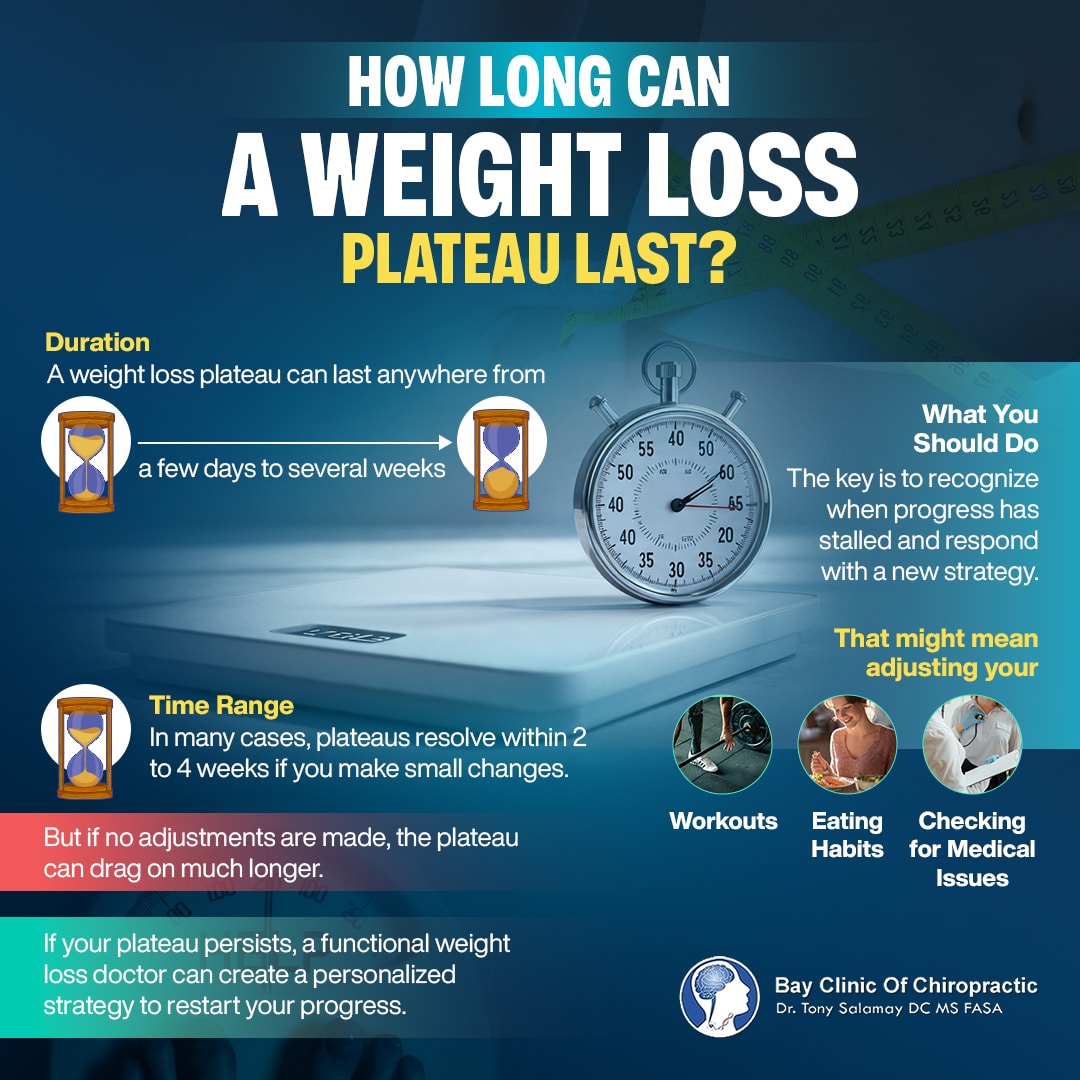
A weight loss plateau can last anywhere from a few days to several weeks. The length depends on your metabolism, diet, activity level, stress, and underlying health conditions.
In many cases, plateaus resolve within 2 to 4 weeks if you make small changes. But if no adjustments are made, the plateau can drag on much longer. Some people stay stuck for months if the root cause isn’t addressed.
A 12-month randomized study trial by Dr. K. E. Foster-Schubert from the University of Washington School of Medicine, Seattle, WA, USA showed that weight loss typically slows after the initial six months, despite continued efforts with diet and exercise. This supports the idea that the body naturally resists further loss once it adjusts to changes in activity and intake.
The key is to recognize when progress has stalled and respond with a new strategy. That might mean adjusting your workouts, eating habits, or checking for medical issues.
Natural Options To Overcome Weight Loss Plateaus
When progress stalls, it’s time to change your approach. Natural strategies can help your body shift out of a plateau and start responding again.
The options below target different root causes like slow metabolism, inflammation, stress, or hormone imbalances. You may only need one or two changes, or you might need a combination. Each approach is safe to explore with guidance from a qualified provider.
Functional Medicine
Functional medicine takes a root-cause approach to weight loss. It looks beyond calories to understand how your body’s systems are working together.
Plateaus often link to hidden problems like blood sugar imbalances, high cortisol (your stress hormone), chronic inflammation, or sluggish thyroid function. These issues can block fat loss even if your diet and workouts are solid. Functional medicine uses advanced lab testing to pinpoint these imbalances.
Common functional lab tests include:
- Comprehensive Thyroid Panel: Assesses thyroid function by measuring levels of TSH, Free T3, Free T4, Reverse T3, and thyroid antibodies.
- Fasting Insulin and Glucose Tests: Identify insulin resistance, a condition where cells become less responsive to insulin, leading to elevated blood sugar levels and potential weight gain.
- Cortisol Testing: Evaluates cortisol levels to detect imbalances in this stress hormone, which can influence appetite and fat storage.
- Comprehensive Stool Analysis: Examines gut health by analyzing the microbiome, detecting inflammation, and identifying infections that may affect metabolism and nutrient absorption.
- Micronutrient Testing: Assesses levels of essential vitamins and minerals to identify deficiencies that could impair metabolic processes and energy production.
Once you have the data, treatment is tailored to your needs. Your functional medicine practitioner will create a personalized treatment plan that might include diet changes, adaptogenic herbs, gut repair supplements, or detox support.
The goal is to rebalance your system so your body becomes more responsive again. For many people stuck in a plateau, this step makes the biggest difference.
Dietary Changes
Adjusting your diet is often the fastest way to break a plateau. Small shifts in what, when, and how you eat can restart fat loss.
Your body may have adapted to your current intake, especially if you’ve been eating the same foods or sticking to one meal pattern for a long time. Changing macronutrient ratios or timing your meals differently can make a big difference.
Focus on nutrient-dense, anti-inflammatory foods that support metabolism and balance blood sugar. At the same time, cut back on foods that trigger inflammation, spikes in insulin, or gut irritation.
Let’s look at which foods help and which ones hold you back during a plateau.

Foods to Eat for Weight Loss Plateau
- High-fiber vegetables: Broccoli, spinach, zucchini, and cauliflower keep you full longer and stabilize blood sugar. Fill half your plate with these at lunch and dinner to cut cravings naturally.
- Lean protein: Chicken, turkey, fish, eggs, and tofu help preserve muscle and boost metabolism. Aim for 20 to 30 grams of protein per meal to support fat loss.
- Healthy fats: Avocados, olive oil, chia seeds, and almonds help reduce inflammation and keep you satisfied. Add a tablespoon of olive oil or a handful of nuts to meals to avoid snacking later.
- Fermented foods: Sauerkraut, kimchi, kefir, and plain Greek yogurt support gut health, which can impact metabolism. Include one small serving daily to improve digestion and nutrient absorption.
- Low-glycemic fruits: Berries, apples, and grapefruit offer vitamins and fiber without spiking blood sugar. Pair with a protein or fat source to slow digestion and control hunger.
- Whole grains: Quinoa, oats, and brown rice provide steady energy and support thyroid function. Stick to 1/2 cup portions and pair them with protein for balanced meals.
Foods to Avoid for Weight Loss Plateau
- Refined carbs: White bread, pastries, and pasta spike blood sugar and trigger fat storage. Swap them for whole grains like quinoa or oats to keep energy stable.
- Sugary drinks: Sodas, sweet teas, and even fruit juices are packed with hidden sugars. Replace them with water, herbal teas, or fruit-infused water to stay hydrated without extra calories.
- Processed snacks: Chips, crackers, and granola bars often contain refined oils and sugars, which may increase inflammation. Prep cut veggies, nuts, or hard-boiled eggs to grab when hunger hits.
- Artificial sweeteners: These can disrupt gut bacteria and increase cravings. Try using small amounts of honey or stevia if you need a sweet fix.
- Fried foods: Fries, fried chicken, and fast food meals are high in inflammatory fats. Opt for grilled or baked options, and cook with avocado or olive oil at home.
- Excess dairy: Some people react to lactose or casein, which can cause bloating and inflammation. Try cutting dairy for 1-2 weeks to see if weight loss resumes.
- Alcohol: It slows fat burning and adds empty calories. Limit to one drink occasionally, or skip it completely during a plateau reset.

Chiropractic Care
Chiropractic care can play a supportive role when you’re dealing with a weight loss plateau, especially if stress, inflammation, or poor nervous system function are part of the issue.
While chiropractic adjustments don’t directly cause weight loss, they can improve how your body functions overall. Misalignments in the spine can interfere with nerve signals that help regulate appetite, digestion, metabolism, and hormone levels.
Regular adjustments may help reduce inflammation, improve sleep, and lower stress levels by calming the nervous system. These changes can create better conditions for fat loss.
Many chiropractors also offer practical advice on movement, posture, and daily habits that support metabolism and physical activity. This extra layer of guidance can help you move past a stubborn plateau.
Nutrition is also a growing focus in chiropractic practice. Dr. Mi Kyung Lee from Murdoch University, Perth, Australia conducted a survey of 333 chiropractors from the ACORN research network and found that most provide basic nutrition advice, especially for chronic inflammatory conditions.
Supplements
When diet and exercise alone aren’t enough, targeted supplements may help support fat metabolism, hormone balance, and energy production.
The right supplement can help correct subtle imbalances that block weight loss. These include insulin resistance, low energy output, or poor nutrient absorption. But supplements are not magic pills. They work best when paired with a healthy lifestyle.
Quality and dosage matter, so we recommend checking with a healthcare provider before starting anything new.
Let’s break down a few that may help during a weight loss plateau.
Chromium Picolinate
Chromium picolinate is a chemical compound that combines trivalent chromium and picolinic acid. It’s often marketed as a dietary supplement to support weight loss and improve insulin sensitivity. Chromium is an essential trace mineral that plays a role in macronutrient metabolism and the enhancement of insulin action.
Naturally, chromium is found in foods like whole grains, nuts, broccoli, and green beans. According to MedlinePlus, the recommended dietary allowance (RDA) for chromium varies by age and sex, with adult males aged 19-50 requiring 35 mcg per day and females of the same age needing 25 mcg per day.
A review by Dr. Hongliang Tian from the First Clinical Medical School, China, found that supplemental doses from 200 mcg to 1000 mcg per day resulted in 1 kg weight loss in obese individuals. It’s essential to consult a healthcare provider before starting any supplementation, as excessive intake may lead to adverse effects.
Berberine
Berberine is a natural compound extracted from plants like goldenseal and barberry. It’s been used in traditional Chinese and Ayurvedic medicine for its antimicrobial and anti-inflammatory properties. Recent studies suggest Berberine may aid in weight management by activating AMP-activated protein kinase (AMPK), an enzyme that regulates metabolism and energy balance. The activation of AMPK enhances insulin sensitivity, increases fat oxidation, and reduces fat storage, contributing to weight loss.
Berberine is not commonly found in significant amounts in foods, so supplementation is often necessary to achieve therapeutic effects. According to a study by Dr. Yun S. Lee from Seoul National University, Korea, berberine supplementation at a dose of 380 mg per kg of body weight per day resulted in reduced body weight and improved glucose tolerance in mice. It’s essential to consult with a healthcare provider before starting berberine supplementation, as it can interact with various medications and may cause gastrointestinal side effects in some individuals.
L-Carnitine
L-Carnitine is a naturally occurring amino acid derivative that plays a crucial role in energy production by transporting long-chain fatty acids into the mitochondria, where they are oxidized to produce energy. This function has led to its use as a supplement aimed at enhancing fat metabolism and supporting weight loss efforts.
Research indicates that L-Carnitine supplementation may contribute to modest reductions in body weight and body mass index (BMI). A systematic review and meta-analysis of randomized controlled trials by Dr. Nasir Talenezhad from the Shahid Sadoughi University of Medical Sciences, Yazd, Iran, found that L-Carnitine supplementation significantly decreased body weight by an average of 1.21 kg and BMI by 0.24 kg/m². The analysis suggested that a daily intake of 2000 mg of L-Carnitine provided the maximum effect in adults.
Naturally, L-Carnitine is found in animal products such as red meat, fish, poultry, and dairy products. However, the amounts obtained from diet alone may be insufficient to achieve the therapeutic levels used in studies examining weight loss effects.
According to Dr. John N. Hathcock from the Council for Responsible Nutrition, Washington, DC, USA supplementation of L-Carnitine at doses up to 2000 mg per day is safe. Although higher doses have been tested without adverse effects, data for intakes above this level are not sufficient for a confident conclusion of long-term safety.
It’s essential to consult with a healthcare provider before starting L-Carnitine supplementation, as individual needs may vary, and potential interactions with medications or underlying health conditions should be considered.
Herbal Remedies
Herbs are used to support digestion, metabolism, and overall health. Some herbs may also help your body overcome a weight loss plateau by improving blood sugar control, reducing inflammation, or boosting energy use.
These natural options aren’t quick fixes, but they can support the systems that affect weight. Many also have antioxidant or anti-inflammatory benefits that can make your body more responsive to diet and exercise.
You can find many of these herbs in teas, capsules, tinctures, or as part of spice blends used in cooking. As with supplements, quality and dose matter, so always read labels and talk with your healthcare provider before starting anything new.
Cinnamon
Cinnamon is a spice made from the inner bark of trees from the Cinnamomum genus. It’s widely used in both sweet and savory dishes, but it also offers several health benefits that may support weight loss. Studies show that cinnamon improves insulin sensitivity and helps lower blood sugar levels, which is especially helpful if insulin resistance is stalling your progress.
By slowing how quickly sugar enters the bloodstream, cinnamon may reduce fat storage and control appetite. Some research also suggests it may help reduce cholesterol and inflammation, both of which can interfere with metabolic health.
You can use cinnamon in several forms: ground powder, cinnamon sticks, or liquid extracts. It’s easy to add to smoothies, oatmeal, coffee, or roasted vegetables. The most studied form is Ceylon cinnamon, known for its lower coumarin content, which is safer for long-term use.
Green Tea
Green tea comes from the leaves of the Camellia sinensis plant and is rich in antioxidants called catechins, especially EGCG (epigallocatechin gallate). These compounds are known for boosting metabolism and increasing fat oxidation, which may help support weight loss when progress stalls.
Green tea has also been shown to improve insulin sensitivity and reduce inflammation. Some studies suggest it may enhance energy expenditure, especially when combined with caffeine, making it useful during a plateau. While results vary, daily intake of green tea has been linked to modest reductions in body weight and waist size.
You can use green tea in several forms: brewed as loose leaf or tea bags, as matcha powder (ground whole leaves), or in capsule and extract supplements. For the best effect, drink 2 to 3 cups per day or use a standardized extract under guidance from a healthcare provider.
Turmeric
Turmeric is a bright yellow spice made from the root of the Curcuma longa plant. Its active compound, curcumin, is known for its strong anti-inflammatory and antioxidant effects. While turmeric doesn’t directly cause weight loss, it can support fat loss by improving insulin sensitivity and reducing low-grade inflammation that may stall metabolism.
Some studies show curcumin may help lower levels of leptin and resistin, two hormones linked to obesity. It may also support better liver function, which plays a key role in processing fats and toxins. These benefits make turmeric a helpful addition when you’re stuck in a plateau.
Turmeric can be used as a ground spice in cooking, added to smoothies or teas, or taken in capsules or tinctures. Because curcumin is poorly absorbed on its own, combine it with black pepper (which contains piperine) or choose supplements that include both for better absorption.
Exercise Adjustment
Physical activity plays an important role in weight loss and overall health. If your workouts haven’t changed in weeks, your body may have adapted. That means fewer calories burned and less progress. Changing your exercise routine is one of the most effective ways to break through a plateau.
This can include adding strength training if you’ve only been doing cardio. Muscle burns more calories at rest, so building lean mass helps your metabolism work harder. You can also try high-intensity interval training (HIIT), which alternates short bursts of effort with rest and has been shown to improve fat loss.
If you’re already doing both, consider increasing intensity, duration, or frequency slightly. Even switching the time of day or trying new movements can wake your body up. On the flip side, if you’re overtraining, cutting back slightly may help your body recover and respond better.
The key is variety and listening to how your body reacts over time.
Stress Management
Chronic stress is one of the most overlooked causes of a weight loss plateau. High stress keeps your body in a constant state of alert, raising cortisol levels. Elevated cortisol can increase belly fat, slow metabolism, and trigger cravings for sugar and carbs.
Stress also affects sleep and hormones like insulin and leptin, which control hunger and fat storage. If you’re doing everything right but are still stuck, managing stress might be the missing link.
Practical tools include deep breathing, short walks, journaling, or limiting screen time before bed. Even 10 minutes of mindfulness or quiet time each day can help calm your nervous system. Prioritizing sleep is also essential, as poor sleep quality fuels cortisol and hunger hormones.
The goal isn’t to eliminate stress completely but to give your body space to reset. That creates better conditions for fat loss to resume naturally.
Frequently Asked Questions
What Role Does Stress Play In Weight Loss Plateaus?
Chronic stress elevates cortisol levels, which can increase appetite and promote fat storage, particularly in the abdominal area, leading to weight loss plateaus. A study by Dr. Benedict Herhaus from the University Medicine Mainz, Mainz, Germany, found that individuals with higher cortisol levels had a greater tendency to overeat and gain weight.
Can Polycystic Ovary Syndrome (PCOS) Cause A Weight Loss Plateau?
Yes, PCOS can contribute to weight loss plateaus due to hormonal imbalances and insulin resistance associated with the condition. A study by Dr. Siew Lim from Monash University, Clayton, Vic, Australia, found that women with PCOS often experience greater difficulty in losing weight and are more prone to weight cycling, which can hinder sustained weight loss efforts.
Can Thyroid Disorders Cause A Weight Loss Plateau?
Yes, thyroid disorders, particularly hypothyroidism, can lead to weight loss plateaus. Hypothyroidism slows metabolism due to reduced thyroid hormone levels, making weight loss more challenging. According to a study by Dr. Thomas Reinehr from the University of Witten/Herdecke, Germany, alterations in thyroid hormones during obesity treatment suggest an adaptation process, indicating that thyroid function plays a role in weight management.
How Does Hormonal Birth Control Affect A Weight Loss Plateau?
Hormonal birth control methods, such as combined oral contraceptives, are generally considered weight-neutral. A Cochrane review by Dr. Maria F. Gallo from The Ohio State University, Columbus, USA concluded that combined hormonal contraceptives do not significantly affect weight. However, individual responses may vary, and some may experience weight changes.
Conclusion
Hitting a weight loss plateau doesn’t mean you’ve failed- it means your body has adapted. From metabolic slowdowns and hormonal shifts to stress and poor sleep, many hidden factors can stall progress.
Natural strategies like adjusting your diet, varying your workouts, managing stress, and supporting your body with supplements or chiropractic care can help restart fat loss. Functional medicine and advanced lab testing also offer insight when typical methods no longer work.
When your progress hits the brakes, it’s not about pushing harder- it’s about getting smarter with your approach.
At the Bay Clinic of Chiropractic in Panama City, FL, Dr. Tony Salamay uses a root-cause method that combines chiropractic care, functional medicine, and lifestyle guidance to help you break through plateaus naturally. Whether it’s hormone imbalance, chronic stress, or metabolic resistance, he works with you to uncover what’s really going on.
Ready to move past frustration and finally see results? Reach out to the Bay Clinic of Chiropractic today- your next step forward starts with a simple conversation.
References
- Sarwan G, Daley SF, Rehman A. Management of weight loss plateau [Internet]. StatPearls – NCBI Bookshelf. 2024. Available from: https://www.ncbi.nlm.nih.gov/books/NBK576400/
- Kim JY. Optimal Diet Strategies for weight loss and weight loss maintenance. Journal of Obesity & Metabolic Syndrome [Internet]. 2020 Oct 27;30(1):20–31. Available from: https://pmc.ncbi.nlm.nih.gov/articles/PMC8017325/
- Adeva-Andany MM, González-Lucán M, Donapetry-García C, Fernández-Fernández C, Ameneiros-Rodríguez E. Glycogen metabolism in humans. BBA Clinical [Internet]. 2016 Feb 28;5:85–100. Available from: https://pmc.ncbi.nlm.nih.gov/articles/PMC4802397/
- Farhana A, Rehman A. Metabolic consequences of weight reduction [Internet]. StatPearls – NCBI Bookshelf. 2023. Available from: https://www.ncbi.nlm.nih.gov/books/NBK572145/
- Brown RE, Canning KL, Fung M, Jiandani D, Riddell MC, Macpherson AK, et al. Calorie estimation in adults differing in body weight class and weight loss status. Medicine & Science in Sports & Exercise [Internet]. 2015 Oct 15;48(3):521–6. Available from: https://pmc.ncbi.nlm.nih.gov/articles/PMC5055397/
- Kumar R, Rizvi MR, Saraswat S. Obesity and stress: a contingent paralysis. International Journal of Preventive Medicine [Internet]. 2022 Jan 1;13(1):95. Available from: https://pmc.ncbi.nlm.nih.gov/articles/PMC9362746/
- Foster‐Schubert KE, Alfano CM, Duggan CR, Xiao L, Campbell KL, Kong A, et al. Effect of diet and exercise, alone or combined, on weight and body composition in Overweight‐to‐Obese postmenopausal women. Obesity [Internet]. 2011 Apr 14;20(8):1628–38. Available from: https://pmc.ncbi.nlm.nih.gov/articles/PMC3406229/
- Bland J. Defining Function in the Functional Medicine Model [Internet]. 2017. Available from: https://pmc.ncbi.nlm.nih.gov/articles/PMC5312741/
- Abraham SB, Rubino D, Sinaii N, Ramsey S, Nieman LK. Cortisol, obesity, and the metabolic syndrome: A cross‐sectional study of obese subjects and review of the literature. Obesity [Internet]. 2013 Jan 1;21(1):E105-17. Available from: https://pmc.ncbi.nlm.nih.gov/articles/PMC3602916/
- Contreras F, Al-Najim W, Roux CWL. Health benefits beyond the scale: The role of diet and nutrition during weight loss programmes. Nutrients [Internet]. 2024 Oct 22;16(21):3585. Available from: https://pmc.ncbi.nlm.nih.gov/articles/PMC11547696/
- Velázquez-López L, Muñoz-Torres AV, García-Peña C, López-Alarcón M, Islas-Andrade S, La Peña JED. Fiber in Diet Is Associated with Improvement of Glycated Hemoglobin and Lipid Profile in Mexican Patients with Type 2 Diabetes. Journal of Diabetes Research [Internet]. 2016 Jan 1;2016:1–9. Available from: https://pmc.ncbi.nlm.nih.gov/articles/PMC4842057/
- Velázquez-López L, Muñoz-Torres AV, García-Peña C, López-Alarcón M, Islas-Andrade S, La Peña JED. Fiber in Diet Is Associated with Improvement of Glycated Hemoglobin and Lipid Profile in Mexican Patients with Type 2 Diabetes. Journal of Diabetes Research [Internet]. 2016 Jan 1;2016:1–9. Available from: https://pmc.ncbi.nlm.nih.gov/articles/PMC4842057/
- Tsuda T. Recent progress in Anti-Obesity and Anti-Diabetes effect of berries. Antioxidants [Internet]. 2016 Apr 6;5(2):13. Available from: https://pmc.ncbi.nlm.nih.gov/articles/PMC4931534/
- Wan Y, Tobias DK, Dennis KK, Guasch-Ferré M, Sun Q, Rimm EB, et al. Association between changes in carbohydrate intake and long term weight changes: prospective cohort study. BMJ [Internet]. 2023 Sep 27;382:e073939. Available from: https://pmc.ncbi.nlm.nih.gov/articles/PMC10523278/
- Asensi MT, Napoletano A, Sofi F, Dinu M. Low-Grade Inflammation and Ultra-Processed Foods Consumption: A review. Nutrients [Internet]. 2023 Mar 22;15(6):1546. Available from: https://pmc.ncbi.nlm.nih.gov/articles/PMC10058108/
- Goosenberg E, Afzal M. Lactose intolerance [Internet]. StatPearls – NCBI Bookshelf. 2025. Available from: https://www.ncbi.nlm.nih.gov/books/NBK532285/
- Kingston J, Raggio C, Spencer K, Stalaker K, Tuchin PJ. A review of the literature on chiropractic and insomnia. Journal of Chiropractic Medicine [Internet]. 2010 Aug 14;9(3):121–6. Available from: https://pmc.ncbi.nlm.nih.gov/articles/PMC3188343/
- Lee MK, Amorin-Woods L, Cascioli V, Adams J. The use of nutritional guidance within chiropractic patient management: a survey of 333 chiropractors from the ACORN practice-based research network. Chiropractic & Manual Therapies [Internet]. 2018 Feb 2;26(1):7. Available from: https://pmc.ncbi.nlm.nih.gov/articles/PMC5819231/
- Yazaki Y, Faridi Z, Ma Y, Ali A, Northrup V, Njike VY, et al. A pilot study of chromium picolinate for weight loss. The Journal of Alternative and Complementary Medicine [Internet]. 2010 Mar 1;16(3):291–9. Available from: https://pmc.ncbi.nlm.nih.gov/articles/PMC5206698/
- Tian H, Guo X, Wang X, He Z, Sun R, Ge S, et al. Chromium picolinate supplementation for overweight or obese adults. Cochrane Database of Systematic Reviews [Internet]. 2013 Nov 29;2013(11):CD010063. Available from: https://pmc.ncbi.nlm.nih.gov/articles/PMC7433292/
- Lee YS, Kim WS, Kim KH, Yoon MJ, Cho HJ, Shen Y, et al. Berberine, a natural plant product, activates AMP-Activated protein kinase with beneficial metabolic effects in diabetic and Insulin-Resistant states. Diabetes [Internet]. 2006 Jul 27;55(8):2256–64. Available from: https://diabetesjournals.org/diabetes/article-abstract/55/8/2256/12348/Berberine-a-Natural-Plant-Product-Activates-AMP?redirectedFrom=fulltext
- Talenezhad N, Mohammadi M, Ramezani-Jolfaie N, Mozaffari-Khosravi H, Salehi-Abargouei A. Effects of l-carnitine supplementation on weight loss and body composition: A systematic review and meta-analysis of 37 randomized controlled clinical trials with dose-response analysis. Clinical Nutrition ESPEN. 2020 Jun;37(1):9–23. Available from: https://magistralbr.caldic.com/storage/product-files/134262824.pdf
- Hathcock JN, Shao A. Risk assessment for carnitine. Regulatory Toxicology and Pharmacology [Internet]. 2006 Aug 10;46(1):23–8. Available from: https://www.sciencedirect.com/science/article/abs/pii/S0273230006001115?via%3Dihub
- Qin B, Panickar KS, Anderson RA. Cinnamon: Potential Role in the Prevention of Insulin Resistance, Metabolic Syndrome, and Type 2 Diabetes. Journal of Diabetes Science and Technology [Internet]. 2010 May 1;4(3):685–93. Available from: https://pmc.ncbi.nlm.nih.gov/articles/PMC2901047/
- Mokra D, Joskova M, Mokry J. Therapeutic effects of green tea polyphenol (‒)-Epigallocatechin-3-Gallate (EGCG) in relation to molecular pathways controlling inflammation, oxidative stress, and apoptosis. International Journal of Molecular Sciences [Internet]. 2022 Dec 25;24(1):340. Available from: https://pmc.ncbi.nlm.nih.gov/articles/PMC9820274/
- Xu R, Bai Y, Yang K, Chen G. Effects of green tea consumption on glycemic control: a systematic review and meta-analysis of randomized controlled trials. Nutrition & Metabolism [Internet]. 2020 Jul 10;17(1):56. Available from: https://link.springer.com/article/10.1186/s12986-020-00469-5
- Antioxidant and anti-inflammatory properties of curcumin [Internet]. ResearchGate. Available from: https://www.researchgate.net/publication/6268359_Antioxidant_and_anti-inflammatory_properties_of_curcumin#full-text
- Boonrueng P, Wasana PWD, Hasriadi N, Vajragupta O, Rojsitthisak P, Towiwat P. Combination of curcumin and piperine synergistically improves pain-like behaviors in mouse models of pain with no potential CNS side effects. Chinese Medicine [Internet]. 2022 Oct 23;17(1). Available from: https://pmc.ncbi.nlm.nih.gov/articles/PMC9590184/
- Cox CE. Role of physical activity for weight loss and weight maintenance. Diabetes Spectrum [Internet]. 2017 Aug 1;30(3):157–60. Available from: https://pmc.ncbi.nlm.nih.gov/articles/PMC5556592/
- Bentley TGK, D’Andrea-Penna G, Rakic M, Arce N, LaFaille M, Berman R, et al. Breathing Practices for Stress and Anxiety Reduction: Conceptual Framework of Implementation Guidelines based on a systematic review of the published literature. Brain Sciences [Internet]. 2023 Nov 21;13(12):1612. Available from: https://pmc.ncbi.nlm.nih.gov/articles/PMC10741869/
- Herhaus B, Ullmann E, Chrousos G, Petrowski K. High/low cortisol reactivity and food intake in people with obesity and healthy weight. Translational Psychiatry [Internet]. 2020 Jan 27;10(1):40. Available from: https://www.nature.com/articles/s41398-020-0729-6
- Lim S, Smith CA, Costello MF, MacMillan F, Moran L, Ee C. Barriers and facilitators to weight management in overweight and obese women living in Australia with PCOS: a qualitative study. BMC Endocrine Disorders [Internet]. 2019 Oct 23;19(1):106. Available from: https://link.springer.com/article/10.1186/s12902-019-0434-8
- Reinehr T. Obesity and thyroid function. Molecular and Cellular Endocrinology [Internet]. 2009 Jun 19;316(2):165–71. Available from: https://www.sciencedirect.com/science/article/abs/pii/S0303720709003499?via%3Dihub
- Gallo MF, Lopez LM, Grimes DA, Carayon F, Schulz KF, Helmerhorst FM. Combination contraceptives: effects on weight. Cochrane Database of Systematic Reviews [Internet]. 2014 Jan 29;2014(1):CD003987. Available from: https://www.cochranelibrary.com/cdsr/doi/10.1002/14651858.CD003987.pub5/full