Your stomach feels heavy. You’re bloated, backed up, and uncomfortable, and nothing seems to help for long. Meals sit in your gut like bricks, and even “healthy” changes leave you frustrated.
These symptoms often point to a sluggish colon, where waste moves too slowly and starts affecting your energy, mood, and digestion. Poor hydration, low fiber intake, processed food, and stress all play a role in slowing your system down.
A colon cleanse may help you clear waste and toxins and alleviate these symptoms. A study by Dr. Juan Javier Peralta-Palmezano from the National University of Colombia, Colombia, found that 30% of schoolchildren and adolescents had at least one FGID, with functional constipation being the most prevalent (13.2%).
This article breaks down how to cleanse your colon naturally– without harsh detoxes or overpriced supplements. You’ll learn why your colon matters, what happens when it’s not working right, and how to support it using simple changes like water, fiber, probiotics, and fermented foods. We’ll also cover how these habits affect your overall health and answer common questions about colon cleansing, constipation, IBS, and more.
The goal isn’t a quick fix. It’s helping you feel lighter, clearer, and more in control of your health. If you’re tired of digestive issues weighing you down, keep reading.
What Is A Colon Cleanse?
A colon cleanse is a process used to help clear waste and toxins from your colon (large intestine). It’s often done to improve digestion, support regular bowel movements, and reset your gut.
Your colon’s main job is to absorb water and minerals from food waste, then push the rest out of your body. Over time, waste buildup, low-fiber diets, dehydration, and processed foods can slow this system down. When that happens, you might feel bloated, sluggish, or constipated.
A colon cleanse aims to stimulate natural movement in your gut and help your body eliminate backed-up waste. People often use colon cleansing methods when they feel constipated, want to prepare for a diet change, or are just looking to feel cleaner from the inside out.
There are two main types of colon cleanses:
- Mechanical methods like enemas or colon hydrotherapy (professional water flushing).
- Natural methods using fluids, fiber, probiotics, or certain foods and teas to get your digestive system moving.
This article focuses only on natural methods. These options work with your body’s own processes, without the risks or discomfort that come with more invasive approaches.
Colon cleansing isn’t a cure-all. But when done safely and occasionally, it can support digestive health and help you feel more balanced.
Why Do You Need A Colon Cleanse?

A natural colon cleanse may help when the following issues show up:
- Frequent constipation: If you’re going more than a day or two without a bowel movement, stool can become dry and compacted. This slows digestion even more and can cause cramping, bloating, or discomfort when you finally do go.
- Bloating and gas: Trapped waste in your colon creates excess gas as it ferments. This can leave you feeling full, swollen, or tight in the abdomen, especially after meals.
- Sluggish digestion: When your digestive system isn’t moving smoothly, you may feel heavy or uncomfortable even hours after eating. A backed-up colon makes it harder for your body to process food and absorb nutrients.
- Poor diet habits: Diets high in processed food, sugar, or low in fiber slow down the colon. Without enough roughage or water, your gut struggles to push waste through effectively.
- Exposure to toxins: Pesticides, additives, and environmental chemicals all pass through your digestive system. Over time, these can stress your detox pathways. A cleanse supports your body in flushing these more efficiently.
- Skin breakouts or dullness: Your gut and skin are closely connected. When waste lingers too long, your body may try to push toxins out through the skin, causing acne, rashes, or dullness.
- Low energy or brain fog: A poorly functioning colon can affect how well your body absorbs nutrients and clears waste. This can lead to fatigue, trouble focusing, or a foggy, sluggish feeling throughout the day.
What Are The Benefits Of A Colon Cleanse?
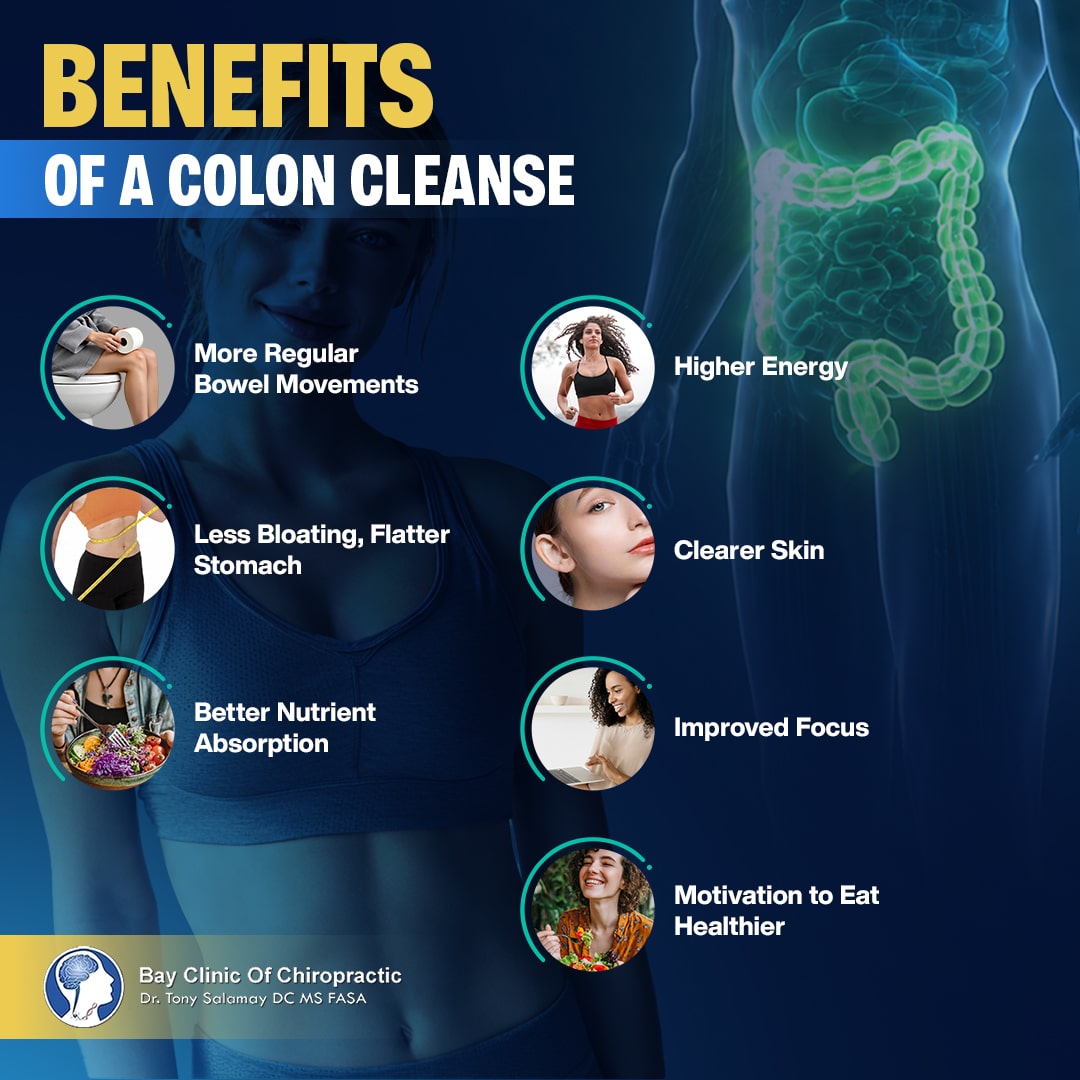
These are the benefits many people experience after a successful natural colon cleanse:
- More regular bowel movements: A good cleanse helps reset your digestive rhythm. This means you’ll likely have easier, more consistent trips to the bathroom without needing to strain or wait days between movements.
- Reduced bloating and a flatter stomach: With gas and waste out of the way, your abdomen may feel lighter and less swollen. This can ease pressure, especially after meals.
- Better nutrient absorption: A cleaner colon gives your body a better chance to absorb vitamins, minerals, and water from your food. This can improve energy, support your immune system, and enhance overall health.
- Increased energy levels: When your gut is clear and working properly, you may feel a noticeable boost in physical and mental energy. You’ll likely feel less sluggish and more alert during the day.
- Improved skin clarity: When your body eliminates waste more efficiently through digestion, it doesn’t rely as heavily on your skin. This may lead to fewer breakouts and a clearer, healthier complexion.
- Better focus and mental clarity: A well-functioning gut helps produce and regulate brain chemicals like serotonin. After a cleanse, many people report feeling more clear-headed, focused, and emotionally stable.
- Motivation to maintain healthier habits: Feeling lighter, less bloated, and more energized can make it easier to stick with better food choices and regular hydration. A cleanse can be a great jump-start to healthier living.
7 Ways To Do A Colon Cleanse Naturally
Many natural methods can help your body flush waste and improve digestion using food, fluids, and simple habits. These 7 options are gentle, affordable, and easy to include in your routine. Whether you’re feeling backed up or just want to feel lighter, the strategies below can support your gut health and help you get things moving.
You can use one method or combine several, depending on what works best for your body. Always start slow and listen to your body’s response as you go. You’ll learn about these natural colon cleansing strategies:
- Drink Water
- Increase Fiber Intake
- Take Probiotics
- Try Prune Juice
- Perform A Salt Water Flush
- Drink Herbal Teas
- Eat Fermented Foods
- Drink Water
Drinking enough water is the foundation of a natural colon cleanse. Your colon needs steady hydration to keep stool soft and moving. Without enough fluid, waste can dry out and become harder to pass, which leads to constipation and sluggish digestion.
Aim for at least 8 to 10 cups (64 to 80 ounces) of water per day. That’s about 2 to 2.4 liters. According to the National Academy of Medicine, healthy adult men should get around 3.7 liters (125 ounces) daily, while women should aim for 2.7 liters (91 ounces). If you’re physically active or in a hot climate, you may need to drink even more.
Start your day with a glass of warm water. Drinking it on an empty stomach can help stimulate a bowel movement and jumpstart your gut. Add lemon if you like- it’s gentle on the stomach and may support digestion.
Sip water consistently throughout the day. Don’t wait until you’re thirsty. Staying hydrated supports regularity and helps your body naturally clear out waste.
- Increase Fiber Intake
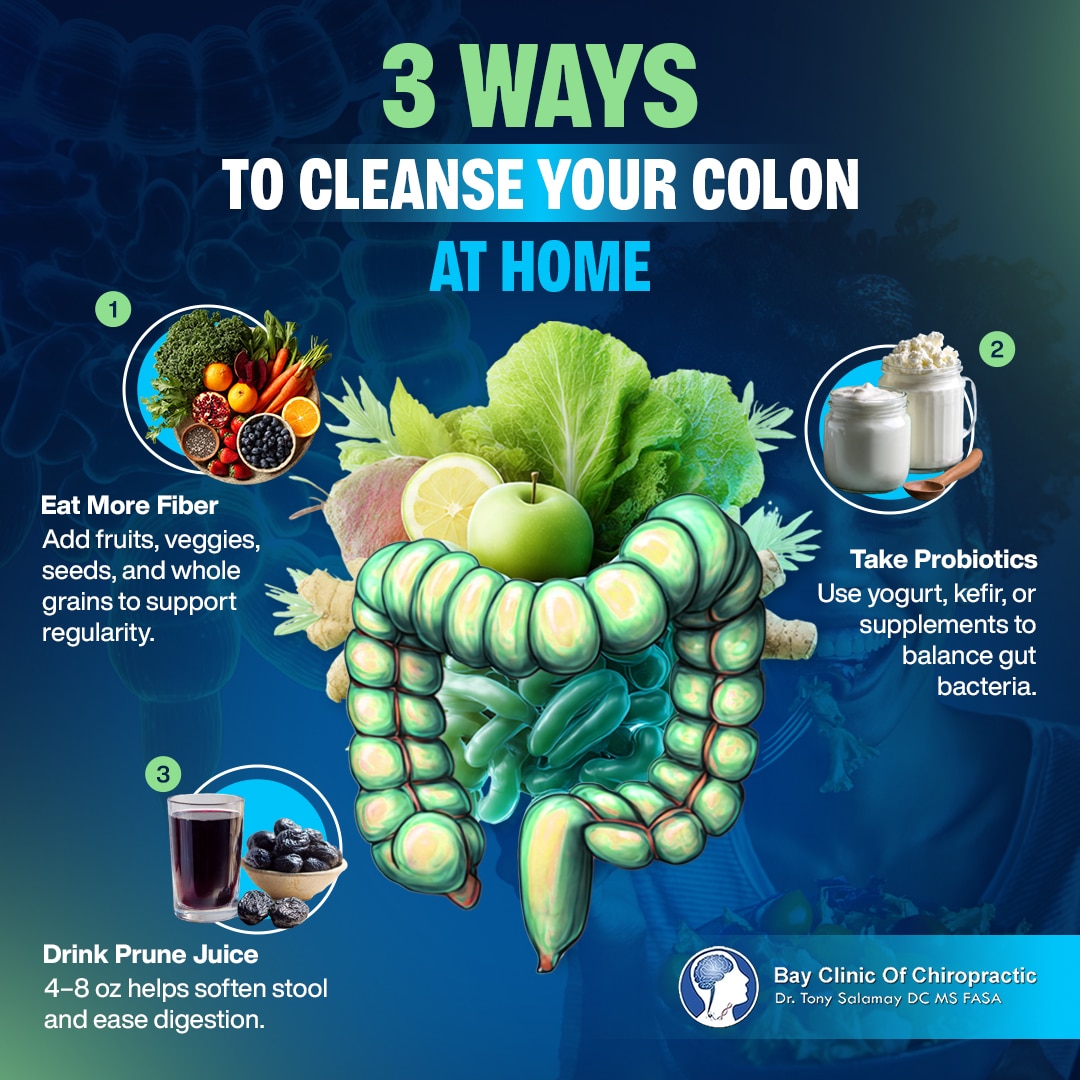
Fiber is one of the most important nutrients for colon health. It adds bulk to your stool, helps waste move through the colon, and supports regular bowel movements. Without enough fiber, stool can become small, dry, and harder to pass, leading to constipation and bloating.
There are two types of fiber: soluble and insoluble.
- Soluble fiber absorbs water and forms a gel-like substance, which helps soften stool.
- Insoluble fiber adds bulk and helps push waste through your digestive tract.
For the best results, you need both types in your diet. Foods rich in fiber include fruits, vegetables, legumes, oats, flaxseeds, chia seeds, nuts, and whole grains. Leafy greens like spinach, broccoli, and kale are especially helpful.
According to Dr. Alison M. Stephen from the University of Surrey, Guildford, Surrey, UK, the daily fiber goal for adults is around 25 grams for women and 38 grams for men. Most people fall short of this, especially when eating processed or low-carb diets. Increasing your fiber slowly over a few days can help avoid gas and cramping. It’s also essential to drink more water when you increase fiber, or you could worsen constipation instead of relieving it.
Getting enough fiber daily helps cleanse the colon naturally, without relying on pills or powders. It’s a habit that supports gut health long-term.
- Take Probiotics
Probiotics are beneficial bacteria that live in your gut and help maintain a healthy balance in your digestive system. When your gut is out of balance, harmful bacteria can grow and disrupt digestion, slow bowel movements, and increase toxin buildup. Taking probiotics can help restore this balance and support natural colon cleansing.
These helpful bacteria break down food, support nutrient absorption, and help regulate bowel movements. They also play a key role in managing inflammation and supporting your immune system. Probiotics can be taken as supplements, but you can also get them from fermented foods like yogurt with live cultures, kefir, sauerkraut, kimchi, miso, and tempeh.
When you’re cleansing your colon or increasing fiber, probiotics can ease the transition. They may reduce gas, support smoother digestion, and help prevent constipation or diarrhea during diet changes. Look for supplements that contain strains like Lactobacillus and Bifidobacterium, which are well-researched for digestive health.
Consistency is key. Whether you choose food sources or supplements, daily intake gives your gut the best chance to stay balanced. If you’re new to probiotics, start with small amounts and monitor how your body responds.
- Try Prune Juice
Prune juice is a natural remedy for constipation and sluggish digestion. It works as a mild, food-based laxative because it’s rich in sorbitol, a sugar alcohol that draws water into the colon. This helps soften stool and stimulates movement, making it easier to pass.
A study by Dr. Taishi Koyama from the Institute for Health Science, MIKI Corporation, Hyogo, Japan, found that prune juice significantly decreased hard and lumpy stools while increasing normal stool consistency.
Just 4 to 8 ounces of prune juice in the morning can be enough to get things moving. Some people prefer to drink it warm, especially first thing after waking up, to help stimulate digestion. It’s also high in fiber and antioxidants, which support overall gut health.
Because it works gently, prune juice is often recommended before turning to stronger laxatives. It’s safe for most people and can be used as needed. However, it can cause gas or loose stools in larger amounts, so it’s best to start small.
You can drink it plain or mix it with water or a splash of lemon. Choose 100% prune juice with no added sugar for the best results.
- Perform A Salt Water Flush
A salt water flush is a quick method used to trigger a bowel movement and clear out your colon. It involves drinking a mix of warm water and non-iodized salt (usually sea salt) on an empty stomach. The high salt content forces water into the intestines, which can rapidly move waste through your system.
To do it, mix 2 teaspoons of sea salt into 1 quart (32 ounces) of warm water. Drink the entire mixture within 5 to 10 minutes. Stay near a bathroom, as the flush usually triggers a strong urge to go within 30 to 60 minutes.
This method should only be used occasionally, not daily. Overuse can cause dehydration or disturb your body’s mineral balance. It’s also not recommended for people with kidney issues, high blood pressure, or heart conditions.
While effective, this is a more intense option. Start with gentler methods like fiber and water unless you’re comfortable with stronger, fast-acting approaches.
- Drink Herbal Teas
Certain herbal teas can gently stimulate your digestive system and support natural colon cleansing. They work by relaxing the muscles in your gut, reducing bloating, and promoting regular bowel movements without the harsh effects of over-the-counter laxatives.
Popular options include senna, peppermint, ginger, dandelion, and licorice root. Senna is a natural laxative, often used short-term to relieve constipation. Peppermint and ginger help soothe the digestive tract and reduce gas. Dandelion supports liver function, which can enhance detoxification.
To use herbal teas for cleansing, steep 1 to 2 teaspoons of dried herbs in hot water for 5 to 10 minutes. Drink one cup before bed or first thing in the morning. Always follow package directions, especially with senna, as overuse can lead to dependency or cramping.
Choose organic, caffeine-free teas with minimal additives. These herbal options are best used in moderation, and it’s smart to rotate different teas rather than relying on one kind daily.
- Eat Fermented Foods
Fermented foods are rich in natural probiotics, which support a healthy gut microbiome and help keep your colon functioning smoothly. These foods introduce beneficial bacteria that improve digestion, break down waste, and support regular bowel movements.
Examples include sauerkraut, kimchi, miso, tempeh, kefir, yogurt with live cultures, and kombucha. These foods don’t just add probiotics to your system- they also help maintain a good balance of gut bacteria, which is essential for breaking down food and moving waste out effectively.
Adding just a small serving of fermented foods to your meals each day can improve digestion over time. For example, a spoonful of sauerkraut with lunch or a glass of kefir with breakfast can make a difference. Always choose unpasteurized versions with “live and active cultures” on the label for maximum benefits.
These foods can also help ease bloating and support immune function. If you’re new to fermented foods, start with small portions to avoid gas or stomach discomfort.
Frequently Asked Questions
Is Colon Cleansing Effective For Treating Constipation?
Yes, natural colon cleansing methods, particularly increasing dietary fiber intake, are effective for relieving occasional constipation. A systematic review and meta-analysis by Dr. Alice van der Schoot from the King’s College London, London, United Kingdom, with chronic constipation found that fiber supplementation significantly improved stool frequency and consistency.
Can A Colon Cleanse Help With Weight Loss?
Colon cleansing may lead to short-term weight loss by clearing out stool and reducing bloating, but it doesn’t reduce body fat. A study in the Dr. Hiromi Ueda from the Rakuno Gakuen University, Ebetsu, Hokkaido, Japan, noted that while colon hydrotherapy can cause temporary weight loss due to fluid and fecal elimination, there’s no evidence it leads to long-term fat loss or improved metabolism.
Is A Colon Cleanse Beneficial For People With Ibs (Irritable Bowel Syndrome)?
Yes, incorporating soluble fiber like psyllium into your diet can alleviate certain IBS symptoms, particularly in cases of constipation-predominant IBS (IBS-C). A double-blind randomized controlled trial by Dr. Jagadeesh Menon from the Post Graduate Institute of Medical Education & Research, Chandigarh, India, involving 81 children with IBS demonstrated that psyllium husk supplementation significantly reduced symptom severity compared to a placebo.
Is Colon Cleansing Recommended For People With Hemorrhoids?
No, aggressive colon cleansing, like frequent enemas or stimulant laxatives, isn’t recommended for people with hemorrhoids. These methods can cause irritation and become less effective over time. Instead, they advise natural colon cleansing methods like increasing fiber and fluids to reduce straining and support regular bowel movements.
Conclusion
Taking care of your colon does not have to be complicated. With the right habits like drinking enough water, eating fiber-rich foods, supporting your gut with probiotics, and sticking to gentle, natural methods, you can keep your digestion regular and your energy levels steady. These small changes can lead to big improvements in how you feel every day.
Still, if things are not improving or you are unsure where to start, expert help can make a real difference.
At the Bay Clinic of Chiropractic in Panama City, FL, Dr. Tony Salamay focuses on more than temporary relief. He uses a personalized, whole-body approach to figure out what is really going on inside your gut. Through careful evaluation and tailored care, he helps you get lasting results.
If your gut is off, your whole body feels it. Contact the Bay Clinic of Chiropractic and take the first real step toward restoring your digestive health.
References
- Peralta-Palmezano JJ, Guerrero-Lozano R. Prevalence of functional gastrointestinal disorders in school children and adolescents. Korean Journal of Gastroenterology [Internet]. 2019 Jan 1;73(4):207. Available from: https://synapse.koreamed.org/articles/1121259
- Azzouz LL, Sharma S. Physiology, large intestine [Internet]. StatPearls – NCBI Bookshelf. 2023. Available from: https://www.ncbi.nlm.nih.gov/books/NBK507857/
- Bazzocchi G, Giuberti R. Irrigation, lavage, colonic hydrotherapy: from beauty center to clinic? Techniques in Coloproctology [Internet]. 2017 Jan 1;21(1):1–4. Available from: https://link.springer.com/article/10.1007/s10151-016-1576-6
- Diaz S, Bittar K, Hashmi MF, Mendez MD. Constipation [Internet]. StatPearls – NCBI Bookshelf. 2023. Available from: https://www.ncbi.nlm.nih.gov/books/NBK513291/
- Yang J. Effect of dietary fiber on constipation: A meta analysis. World Journal of Gastroenterology [Internet]. 2012 Jan 1;18(48):7378. Available from: https://pmc.ncbi.nlm.nih.gov/articles/PMC3544045/
- De Pessemier B, Grine L, Debaere M, Maes A, Paetzold B, Callewaert C. Gut–Skin Axis: Current Knowledge of the Interrelationship between Microbial Dysbiosis and Skin Conditions. Microorganisms [Internet]. 2021 Feb 11;9(2):353. Available from: https://pmc.ncbi.nlm.nih.gov/articles/PMC7916842/
- Vermorken AJM, Andrès E, Cui Y. Bowel movement frequency, oxidative stress and disease prevention. Molecular and Clinical Oncology [Internet]. 2016 Aug 10;5(4):339–42. Available from: https://pmc.ncbi.nlm.nih.gov/articles/PMC5038884/
- Kiela PR, Ghishan FK. Physiology of intestinal absorption and secretion. Best Practice & Research Clinical Gastroenterology [Internet]. 2016 Feb 10;30(2):145–59. Available from: https://pmc.ncbi.nlm.nih.gov/articles/PMC4956471/
- Bamalan OA, Moore MJ, Khalili YA. Physiology, serotonin [Internet]. StatPearls – NCBI Bookshelf. 2023. Available from: https://www.ncbi.nlm.nih.gov/books/NBK545168/
- Medicine IO. Dietary reference intakes for water, potassium, sodium, chloride, and sulfate [Internet]. National Academies Press eBooks. 2005. Available from: https://nap.nationalacademies.org/read/10925/chapter/6#80
- Guan ZW, Yu EZ, Feng Q. Soluble dietary fiber, one of the most important nutrients for the gut microbiota. Molecules [Internet]. 2021 Nov 11;26(22):6802. Available from: https://pmc.ncbi.nlm.nih.gov/articles/PMC8624670/
- Stephen AM, Champ MM j., Cloran SJ, Fleith M, Van Lieshout L, Mejborn H, et al. Dietary fibre in Europe: current state of knowledge on definitions, sources, recommendations, intakes and relationships to health. Nutrition Research Reviews [Internet]. 2017 Jul 5;30(2):149–90. Available from: https://www.cambridge.org/core/journals/nutrition-research-reviews/article/dietary-fibre-in-europe-current-state-of-knowledge-on-definitions-sources-recommendations-intakes-and-relationships-to-health/B263D1D7B3440DC9D6F68E23C2B4212F
- Linares DM, Ross P, Stanton C. Beneficial Microbes: The pharmacy in the gut. Bioengineered [Internet]. 2015 Dec 28;7(1):11–20. Available from: https://pmc.ncbi.nlm.nih.gov/articles/PMC4878258/
- Abdelhamid AG, El-Masry SS, El-Dougdoug NK. Probiotic Lactobacillus and Bifidobacterium strains possess safety characteristics, antiviral activities and host adherence factors revealed by genome mining. The EPMA Journal [Internet]. 2019 Sep 5;10(4):337–50. Available from: https://pmc.ncbi.nlm.nih.gov/articles/PMC6883010/
- Koyama T, Nagata N, Nishiura K, Miura N, Kawai T, Yamamoto H. Prune juice containing sorbitol, pectin, and polyphenol ameliorates subjective complaints and hard feces while normalizing stool in chronic constipation: a randomized Placebo-Controlled trial. The American Journal of Gastroenterology [Internet]. 2022 Aug 12;117(10):1714–7. Available from: https://pmc.ncbi.nlm.nih.gov/articles/PMC9531972/
- Piirainen L, Peuhkuri K, Bäckström K, Korpela R, Salminen S. Prune juice has a mild laxative effect in adults with certain gastrointestinal symptoms. Nutrition Research [Internet]. 2007 Aug 1;27(8):511–3. Available from: https://www.academia.edu/16473704/Prune_juice_has_a_mild_laxative_effect_in_adults_with_certain_gastrointestinal_symptoms
- Efficacy of Lukewarm Saline Water and Exercise as… : Official journal of the American College of Gastroenterology | ACG [Internet]. LWW. Available from: https://journals.lww.com/ajg/fulltext/2009/10003/efficacy_of_lukewarm_saline_water_and_exercise_as.469.aspx
- Kim YS, Kim JW, Ha NY, Kim J, Ryu HS. Herbal therapies in Functional Gastrointestinal Disorders: A narrative review and clinical implication. Frontiers in Psychiatry [Internet]. 2020 Jul 10;11:601. Available from: https://www.frontiersin.org/journals/psychiatry/articles/10.3389/fpsyt.2020.00601/full
- Julián-Flores A, Aguilar-Zárate P, Michel MR, Sepúlveda-Torre L, Torres-León C, Aguilar CN, et al. Exploring the therapeutic potential of medicinal plants in the context of gastrointestinal health: a review. Plants [Internet]. 2025 Feb 20;14(5):642. Available from: https://www.mdpi.com/2223-7747/14/5/642
- Leeuwendaal NK, Stanton C, O’Toole PW, Beresford TP. Fermented foods, health and the gut microbiome. Nutrients [Internet]. 2022 Apr 6;14(7):1527. Available from: https://pmc.ncbi.nlm.nih.gov/articles/PMC9003261/
- Cuamatzin-García L, Rodríguez-Rugarcía P, El-Kassis EG, Galicia G, De Lourdes Meza-Jiménez M, Del Rocío Baños-Lara Ma, et al. Traditional Fermented Foods and Beverages from around the World and Their Health Benefits. Microorganisms [Internet]. 2022 Jun 2;10(6):1151. Available from: https://pmc.ncbi.nlm.nih.gov/articles/PMC9227559/
- Van Der Schoot A, Drysdale C, Whelan K, Dimidi E. The Effect of fiber supplementation on Chronic Constipation in Adults: An Updated Systematic Review and Meta-Analysis of Randomized Controlled Trials. American Journal of Clinical Nutrition [Internet]. 2022 Jul 11;116(4):953–69. Available from: https://pmc.ncbi.nlm.nih.gov/articles/PMC9535527/
- Ueda H, Matsukawa T, Watanabe T, Hosaka Y, Takehana K. Morphological, biochemical and mechanical features of the cranial cruciate and lateral collateral ligaments in dogs. Okajimas Folia Anatomica Japonica [Internet]. 2006 Jan 1;83(1):25–32. Available from: https://www.jstage.jst.go.jp/article/ofaj/83/1/83_1_25/_article
- Menon J, Thapa BR, Kumari R, Kadyada SP, Rana S, Lal SB. Efficacy of oral psyllium in pediatric irritable bowel syndrome. Journal of Pediatric Gastroenterology and Nutrition [Internet]. 2022 Sep 22;76(1):14–9. Available from: https://www.researchgate.net/publication/363787770_EFFICACY_OF_ORAL_PSYLLIUM_IN_PEDIATRIC_IRRITABLE_BOWEL_SYNDROME_A_DOUBLE_BLIND_RANDOMISED_CONTROL_TRIAL