You’re tired of feeling bloated, foggy, and off, and nothing seems to explain why. Maybe your digestion is unpredictable, your energy crashes daily, or your mood shifts without warning. These symptoms don’t just wear you down. They make everyday life harder than it should be.
Candida overgrowth, also known as candidiasis, is a common but often overlooked cause of these struggles. Candida is a type of yeast that lives in your body naturally, but when it grows too much, it creates problems. A high-sugar diet, antibiotics, chronic stress, and weak immune function often trigger it.
You might be dealing with:
- Fatigue that lingers no matter how much you rest
- Digestive problems like bloating, gas, or constipation
- Brain fog or trouble focusing
- Frequent yeast infections or skin irritation
- Cravings for sugar or carbs
- Feeling anxious or moody for no clear reason
Regarding Candida overgrowth, Dr. Arya N. R. from the Kerala University of Health Sciences, Sri Lanka, states “It presents with pain and itching, which decreases the quality of life, leading to high morbidity.”
This article breaks down what Candida overgrowth is, what causes it, and how to fix it naturally. You’ll learn how functional medicine, diet, herbs, supplements, and more can help- and why Dr. Tony Salamay at the Bay Clinic of Chiropractic is your partner in real recovery.
Keep reading- your missing answers might start right here.
What Is Candida Overgrowth?
Candida overgrowth or candidiasis, is a fungal infection caused by excessive growth of Candida. It is a type of yeast that naturally lives in your mouth, gut, and on your skin. It usually stays in check thanks to your immune system and healthy bacteria.
When that balance gets disrupted, Candida can grow out of control and cause problems. Candida overgrowth most often affects the digestive tract, but it can also show up in the mouth (oral thrush), skin folds, or genitals. The most common species involved is Candida albicans.
Overgrowth usually happens when your immune system is weakened, or when you take antibiotics, steroids, or birth control pills. A high-sugar or high-refined-carb diet also encourages yeast to grow. People with diabetes or high blood sugar are more likely to experience overgrowth as well.
A comprehensive review by Dr. Alberto Rodríguez-Archilla from the University of Granada, Granada, Spain, highlights that individuals with diabetes mellitus (DM) are more prone to Candida species infections, especially when blood sugar levels are poorly controlled. The study notes that hyperglycemia impairs immune function and creates an environment conducive to Candida overgrowth.
This imbalance can trigger symptoms across multiple systems in the body. While Candida is not harmful in normal amounts, overgrowth can lead to uncomfortable and persistent issues if left unaddressed.
Still struggling with bloating, brain fog, or recurring yeast issues? A functional medicine doctor at Bay Clinic of Chiropractic can help uncover root causes and guide your recovery.
What Are The Symptoms Of Candida Overgrowth?
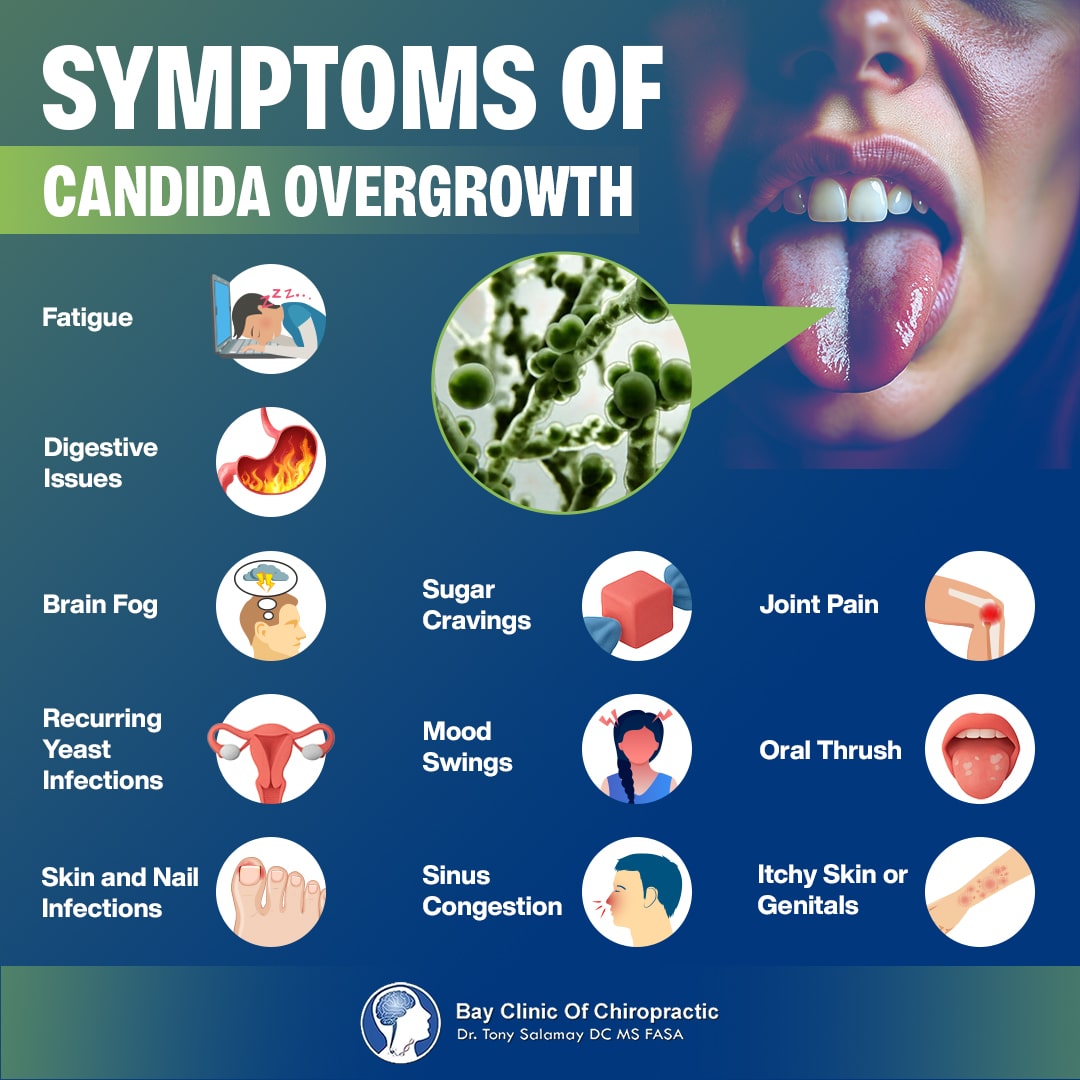
Candida overgrowth can affect different parts of your body, leading to a wide range of symptoms:
- Fatigue: Candida can increase the risk of developing Chronic Fatigue Syndrome (CFS). It can also interfere with your ability to absorb nutrients, especially B vitamins and magnesium, which support energy. Chronic inflammation caused by overgrowth can also strain your immune system and leave you feeling exhausted.
- Digestive issues: Imbalance in gut bacteria may lead to bloating, gas, constipation, or diarrhea. Candida can weaken the gut lining and contribute to leaky gut, which makes symptoms worse.
- Brain fog: Many people report poor concentration, forgetfulness, or mental sluggishness. This can be caused by inflammation, nutrient malabsorption, or toxins released by Candida.
- Recurring yeast infections: Vaginal yeast infections, jock itch, or athlete’s foot that keep coming back often point to systemic overgrowth. These areas are warm and moist, making them ideal for yeast growth.
- Oral thrush: Thick white patches on the tongue or inner cheeks signal yeast overgrowth in the mouth. It may also cause a cotton-like feeling, redness, or soreness.
- Sinus congestion: Chronic nasal stuffiness, post-nasal drip, or frequent sinus infections may be linked to fungal overgrowth. Candida can inflame the mucous membranes and disrupt your normal immune defenses.
- Skin and nail infections: Fungal rashes, athlete’s foot, or yellowing toenails can develop when Candida spreads to the skin or nails. These infections tend to be persistent and difficult to treat.
- Cravings for sugar and carbs: Candida feeds on sugar, so overgrowth can cause intense cravings for sweets and refined carbs. These cravings often worsen the imbalance and make it harder to recover.
- Joint pain: Some people experience stiffness or pain in the joints, especially in the morning. This may be linked to toxins produced by yeast or immune system inflammation. Research by Dr. Anjali Mishra from the Holy Family Hospital, New Delhi, India, shows that “Candida species are the most common cause of fungal arthritis and osteomyelitis, especially in immunocompromised patients.”
- Mood swings or anxiety: Candida affects your gut, which is directly connected to your brain. Neurotransmitter imbalances caused by gut inflammation can lead to mood swings, anxiety, or even depression.
- Itchy skin or genitals: Itching in the genital area or on the skin without a rash or visible cause can be a sign of yeast irritation. Yeast overgrowth increases histamine levels, which may trigger itching.
What Causes Candida Overgrowth?
Candida overgrowth often starts when the body’s internal balance is disrupted. Several common factors can create the right conditions for yeast to multiply too much:
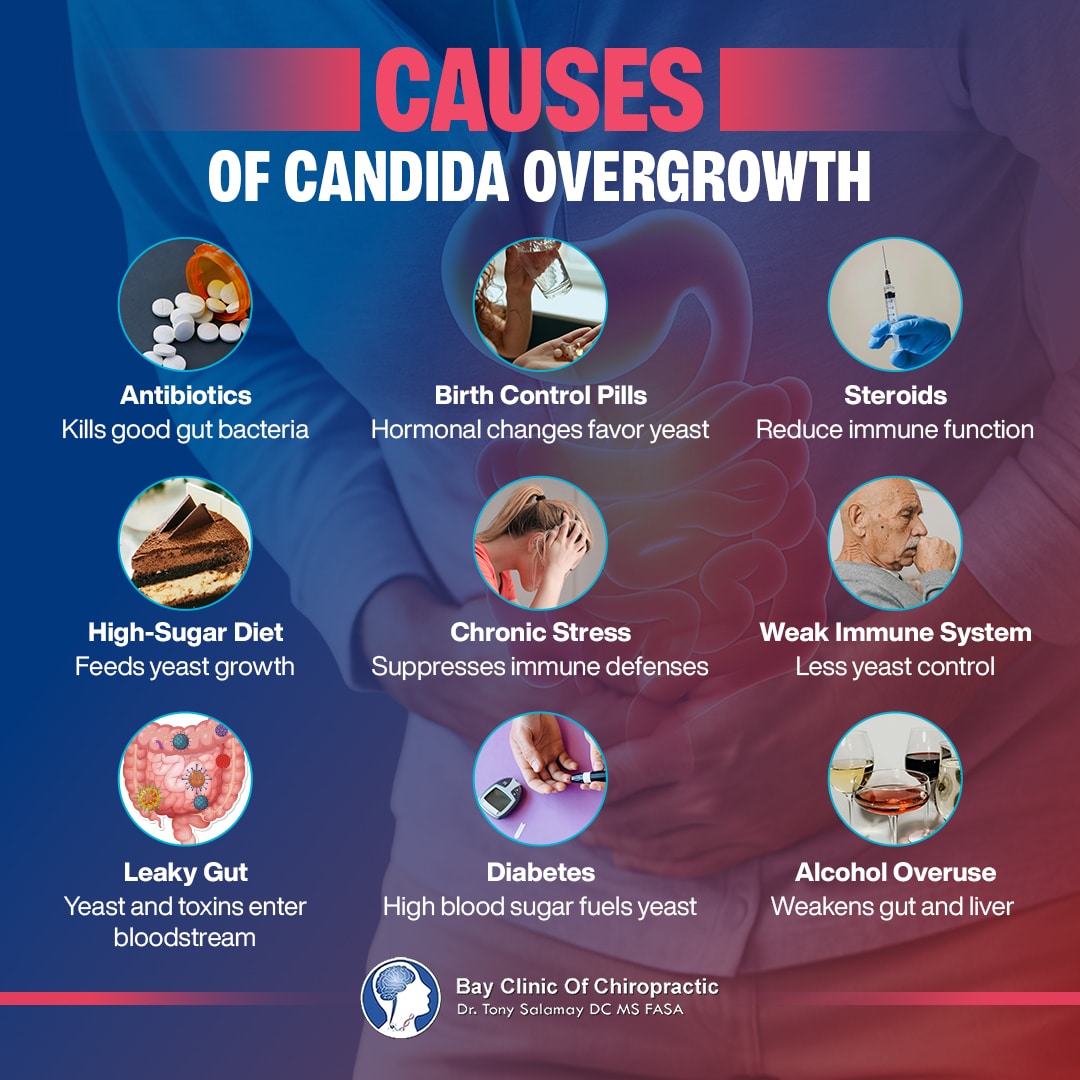
- Antibiotic use: Antibiotics kill off both harmful and beneficial bacteria in your gut. Without enough good bacteria, Candida can grow unchecked and take over.
- High-sugar and high-carb diet: Sugar and refined carbs feed yeast, allowing it to grow and spread. Diets heavy in processed foods, soda, bread, and pasta create an ideal environment for overgrowth.
- Weakened immune system: People with suppressed immunity from illness, stress, or chronic conditions are more vulnerable. A weakened immune system cannot control Candida as effectively.
- Hormonal changes and birth control use: Birth control pills and hormonal shifts can change the gut environment and promote yeast growth. Estrogen especially seems to support Candida survival. For instance, Dr. Atousa Aminzadeh from the Islamic Azad University, Khorasgan, Isfahan, IR, states “The results of the present study demonstrate that oral contraceptives containing estradiol can lead to Candida colonization in the oral cavity.”
- Chronic stress: Ongoing stress raises cortisol, which suppresses your immune function and affects gut health. Over time, this creates a setting where yeast can thrive.
- Diabetes and high blood sugar: Elevated glucose in the blood and tissues fuels yeast overgrowth. People with uncontrolled blood sugar are at much higher risk for infections.
- Corticosteroids or immunosuppressants: Medications like prednisone can reduce inflammation but also weaken your body’s ability to keep yeast under control. This often leads to secondary fungal infections.
- Poor gut health or leaky gut: Damage to the intestinal lining allows yeast and toxins to spread into the bloodstream. This increases inflammation and supports overgrowth throughout the body.
- Alcohol overuse: Alcohol feeds yeast and harms your liver, which plays a major role in detoxification. It also irritates the gut lining, which weakens your defenses.
- Lack of beneficial bacteria: A lack of probiotics in the diet or from supplements means fewer natural defenses. Without enough good bacteria, yeast can overpopulate quickly.
Natural Remedies For Candida Overgrowth
Natural remedies for Candida overgrowth focus on restoring balance in your gut and strengthening your immune system. You need to stop feeding the yeast with natural strategies, remove the overgrowth, and repair the damage it caused.
These approaches work best when used together, not in isolation. They aim to fix the root cause instead of just covering symptoms. Healing takes time, but with the right plan, your body can rebalance itself and prevent future overgrowth.
Below are the main natural strategies used to manage Candida and support recovery.
Functional Medicine
Functional medicine takes a whole-body approach to Candida overgrowth. It focuses on identifying and correcting the root causes, not just masking symptoms. This means looking at your gut health, immune function, hormone balance, and lifestyle habits all at once.
Functional medicine Practitioner often use advanced testing to confirm Candida overgrowth. Stool analysis can detect yeast levels, beneficial bacteria, and digestive markers. Organic acid tests check for fungal byproducts in your urine, while blood tests may reveal inflammation, nutrient deficiencies, or blood sugar issues. These results guide a personalized plan to provide the support you need.
The typical protocol includes antifungal herbs or supplements to reduce yeast, a low-sugar diet to cut off its fuel, and probiotics to rebuild your gut bacteria. Liver support is also key because Candida toxins can stress your detox pathways.
Functional medicine also addresses long-term triggers like stress, poor sleep, and hormone imbalances. This comprehensive strategy helps restore internal balance and prevent future overgrowth.
Dietary Changes
Changing your diet is one of the most important steps in managing Candida overgrowth. What you eat can either feed the yeast or help starve it out. Removing sugars and processed carbs eliminates the primary fuel source for yeast overgrowth. At the same time, certain foods help support your gut, reduce inflammation, and rebuild your immune defenses. The goal is to create an environment in your body where yeast cannot thrive.
Below is a breakdown of what to eat and what to avoid during a Candida-focused diet.

Foods to Eat for Candida Overgrowth
- Non-starchy vegetables: Broccoli, spinach, kale, zucchini, and cauliflower are low in sugar and support healthy gut bacteria. These help reduce Candida by limiting its main fuel source. Try roasting them with olive oil and garlic to boost antifungal support and flavor.
- Lean proteins: Chicken, turkey, eggs, and wild-caught fish help stabilize blood sugar and support immune function without feeding yeast. Choose grilled, baked, or stir-fried options to avoid added sugars or breading.
- Healthy fats: Avocados, coconut oil, olive oil, and flaxseeds have anti-inflammatory and antifungal properties. Coconut oil contains caprylic acid, which targets Candida directly. Use these fats in cooking, smoothies, or salad dressings to keep meals satisfying and yeast-unfriendly.
- Fermented foods: Sauerkraut, kimchi, unsweetened coconut yogurt, and pickles are rich in probiotics that help restore gut bacteria. These crowd out yeast and improve digestion. Start with small portions to avoid bloating as your body adjusts.
- Low-glycemic fruits: Green apples, berries, and lemons offer antioxidants and fiber without spiking blood sugar. Stick to one serving a day and combine with protein or fat to keep glucose stable.
- Bone broth: Packed with collagen and amino acids that help repair the gut lining, making it harder for Candida to spread. Use it as a base for soups or sip it warm between meals to support healing.
Foods to Avoid for Candida Overgrowth
- Sugar: Table sugar, honey, syrups, candy, and desserts feed yeast and fuel overgrowth. Even natural sweeteners like agave and maple syrup can worsen symptoms, so check labels carefully and eliminate all added sugars during recovery.
- Refined carbs: White bread, pasta, pastries, and crackers quickly turn into sugar in your body, giving Candida the fuel it needs to grow. Replacing them with non-starchy vegetables or almond flour options can help reduce yeast levels.
- Alcohol: Beer, wine, and liquor convert to sugar and disrupt gut bacteria. They also overwork your liver, which is already busy clearing Candida toxins. Avoiding alcohol entirely helps your system rebalance faster.
- Dairy (except plain yogurt): Milk, cheese, and ice cream contain lactose, a sugar that feeds yeast. Dairy can also increase mucus and inflammation, which may worsen symptoms. Choose unsweetened non-dairy alternatives like coconut or almond milk instead.
- Fruit juices and dried fruit: These are high in concentrated sugars that spike blood sugar and feed yeast, even if they seem healthy. Whole, fresh fruit is a better choice in small amounts.
- Processed foods: Frozen meals, snacks, and fast food often contain hidden sugars, refined starches, and preservatives. These ingredients feed Candida and damage your gut. Preparing meals at home with whole ingredients helps you stay in control.
- Gluten-containing grains: Wheat, rye, and barley can irritate your gut lining and may contribute to inflammation. Many people with Candida also have trouble digesting gluten, so sticking with naturally gluten-free grains like quinoa or buckwheat may help.

Chiropractic Care
Chiropractic care supports your body’s ability to recover from Candida overgrowth by improving nervous system function. Your nervous system controls digestion, immune response, and hormone balance. When spinal misalignments disrupt nerve signals, these systems can become less efficient, making it harder to fight off yeast overgrowth.
Adjustments help restore proper communication between your brain and gut. This can improve digestion, enhance immune coordination, and reduce inflammation. Some patients also notice better energy, sleep, and stress resilience with regular care.
While chiropractic does not treat Candida directly, it helps your body work better so you can respond more effectively to other therapies.
Supplements
Supplements can support your recovery from Candida overgrowth by helping reduce yeast, repair the gut, and strengthen your immune system. They work best when used alongside diet and lifestyle changes. Certain nutrients and probiotics help restore balance in your microbiome, while others support detox and digestion.
Not every supplement is right for everyone, so it’s best to focus on high-quality options targeted to your symptoms. Always check with a qualified healthcare provider before starting supplements, especially if you have existing health conditions or take medication. Below are some of the most effective supplements used during Candida protocols.
Probiotics
Probiotics are live microorganisms that support gut health by restoring balance to the intestinal flora. They help inhibit Candida overgrowth by producing substances that suppress yeast and by enhancing the body’s immune response. Common probiotic strains beneficial against Candida include Lactobacillus acidophilus, Lactobacillus rhamnosus, and Saccharomyces boulardii.
These strains can be found in fermented foods like yogurt, kefir, sauerkraut, and kimchi, as well as in dietary supplements. According to MedlinePlus, Lactobacillus acidophilus has been taken in doses of up to 60 billion CFUs daily for up to 6 months. It’s important to consult with a healthcare provider before starting any probiotic regimen, especially for individuals with underlying health conditions.
Vitamin C
Vitamin C, also known as ascorbic acid, is a water-soluble antioxidant that supports immune function and tissue repair. It helps your body produce white blood cells and collagen, both essential for healing and defense against infections.
In the context of Candida overgrowth, vitamin C may help by reducing inflammation and supporting the immune system’s ability to control yeast levels. Some lab studies suggest that vitamin C can inhibit Candida growth by interfering with its metabolic processes, though more human research is needed.
You can find vitamin C naturally in foods like oranges, strawberries, bell peppers, broccoli, and kiwi. According to the National Institutes of Health, the recommended daily intake is 90 mg for adult men and 75 mg for adult women. Smokers should add an extra 35 mg per day. The upper limit for adults is 2,000 mg per day.
Always consult your healthcare provider before starting any new supplement, especially if you have existing health conditions or take medications.
Digestive Enzymes
Digestive enzymes are proteins that help break down food into smaller components so your body can absorb nutrients. The main enzymes include protease (for protein), lipase (for fat), and amylase (for carbs). In Candida overgrowth, these enzymes help relieve bloating, gas, and digestive discomfort by improving nutrient absorption and easing the strain on your gut. Some blends also include cellulase and hemicellulase, which may help break down parts of the yeast cell wall.
You can find natural digestive enzymes in foods like pineapple (bromelain), papaya (papain), kiwi, kefir, and sauerkraut. These support digestion while promoting beneficial bacteria.
Prescription enzyme supplements often contain pancrelipase, a mix of protease, lipase, and amylase. According to MedlinePlus, pancrelipase is typically taken with every meal or snack, 5 to 6 times per day, with plenty of water. Always follow your healthcare provider’s exact instructions and avoid self-dosing.
Herbal Remedies
Certain herbs have strong antifungal properties that can help reduce Candida levels naturally. They support the body by targeting yeast directly, easing inflammation, and promoting gut balance. Many of these herbs have been used in traditional medicine for centuries and are now backed by modern research for their antifungal effects.
Herbal remedies work best when combined with diet and lifestyle changes. It’s important to contact a healthcare provider as some can interact with medications or cause side effects.
Below are the most commonly used herbs for Candida and how they support recovery.
Garlic
Garlic (Allium sativum) is a widely used herb known for its antifungal, antibacterial, and immune-supporting properties. Its active compound, allicin, is released when garlic is crushed or chopped and has been shown to inhibit the growth of Candida albicans, the yeast responsible for Candida overgrowth. A study by Dr. Yona Shadkchan from the Sackler School of Medicine, Ramat-Aviv, Tel-Aviv, Israel demonstrated that allicin exhibits significant antifungal activity against Candida species.
Garlic can be consumed in various forms: raw cloves, aged garlic extract, garlic oil, and supplements. Incorporating raw garlic into meals or taking standardized supplements can support the body’s defense against Candida.
While garlic is generally safe for most people, it can cause side effects such as gastrointestinal discomfort or allergic reactions in some individuals. It’s important to consult with a healthcare provider before starting any new supplement regimen, especially for those with underlying health conditions or who are taking other medications.
Olive Leaf Extract
Olive leaf extract is derived from the leaves of the olive tree (Olea europaea) and is rich in bioactive compounds, particularly oleuropein. Oleuropein has been studied for its potential antifungal properties against Candida albicans.
In vitro studies have shown that oleuropein exhibits antifungal activity, with a minimum inhibitory concentration (MIC) value of 12.5 mg/mL against Candida albicans. Additionally, a study by Dr. Z. Nasrollahi from the Qom University of Medical Sciences, Qom, Iran shows that olive leaf aqueous extracts have demonstrated antifungal effects against Candida albicans, with an MIC of 24 mg/mL and a minimum fungicidal concentration (MFC) of 48 mg/mL .
Olive leaf extract is available in various forms, including capsules, tinctures, and teas. The concentration of oleuropein in these products can vary, and standardized extracts are often used to ensure consistent dosing. While specific dosing recommendations for olive leaf extract in the context of Candida overgrowth are not well-established, it’s important to consult with a healthcare provider before starting any new supplement regimen, especially if you have underlying health conditions or are taking other medications.
Oregano Oil
Oregano oil, extracted from the leaves of the Origanum vulgare plant, is known for its potent antifungal properties, primarily due to compounds like carvacrol and thymol. These constituents have been studied for their ability to combat Candida albicans, the yeast responsible for Candida overgrowth.
In a study by Dr.Vijaya Manohar from the Georgetown University Medical Center, Washington, DC, USA, researchers found that origanum oil at a concentration of 0.25 mg/ml completely inhibited the growth of C. albicans in vitro. Lower concentrations also demonstrated significant inhibitory effects. Furthermore, in an experimental murine model, daily administration of 8.6 mg/kg body weight of origanum oil for 30 days resulted in 80% survivability, with no renal burden of C. albicans, highlighting its potential therapeutic efficacy.
Oregano oil is available in various forms, including liquid tinctures, capsules, and essential oils. For internal use, capsules or diluted tinctures are commonly recommended. It’s crucial to follow manufacturer guidelines and consult with a healthcare provider before starting any new supplement regimen, especially for individuals with underlying health conditions or those taking other medications.
Stress Reduction
Chronic stress does more than wear you down mentally- it directly affects your gut health and immune system. When your body is under constant stress, it produces high levels of cortisol.
This hormone can suppress immune function, spike blood sugar, and damage the lining of your gut, all of which create the perfect environment for Candida to thrive. Stress also lowers the amount of beneficial bacteria in your gut, making it harder to keep yeast in check.
Reducing stress helps restore balance in your body, supports digestion, and strengthens your ability to recover from Candida overgrowth. Simple daily habits can make a big difference over time.
Managing stress consistently gives your body the support it needs to rebalance and heal.
Here are a few effective ways to lower stress:
- Practice deep breathing for 5 minutes, especially before meals
- Get 7 to 9 hours of sleep every night
- Spend time outdoors in natural light
- Limit screen time and take breaks from technology
- Use guided meditation or calming music
- Try yoga, walking, or stretching for gentle movement
- Say no to overcommitment and protect quiet time each day
Frequently Asked Questions
Can Candida Overgrowth Affect Mental Health?
Yes, Candida overgrowth can affect mental health by contributing to anxiety, depression, and cognitive issues. A study by Dr. Emily G. Severance from the Johns Hopkins University School of Medicine, Baltimore, MD, USA, found that individuals with schizophrenia or bipolar disorder who tested positive for Candida antibodies were more likely to have a history of Candida infections. Additionally, women with these mental health conditions who tested positive for Candida performed worse on memory tests compared to those who tested negative.
Is Candida Overgrowth Related To Hormonal Imbalances?
Yes, Candida overgrowth is linked to hormonal imbalances, especially with estrogen. High estrogen levels can make Candida grow faster and become more aggressive. A study by Dr. Georgina Cheng from the University of Illinois, Urbana, Illinois, USA, found that the hormone 17-β-estradiol helped Candida form longer germ tubes, which are part of how the yeast spreads and causes infection.
Can Candida Cause Chronic Fatigue?
Yes, Candida overgrowth has been linked to chronic fatigue syndrome (CFS). A study by Dr. Erica White, a member of British Association of Nutritional Therapists, observed that participants with CFS who followed an anti-Candida nutritional protocol experienced an average reduction of 30.5% in fatigue symptoms over one year. The study also found a moderate positive correlation between Candida overgrowth and CFS symptoms, suggesting that managing Candida may alleviate fatigue.
Does Candida Impact Autoimmune Conditions?
Yes, Candida overgrowth can influence autoimmune conditions by disrupting immune regulation and increasing inflammation. Research indicates that Candida albicans can overstimulate immune responses and compromise gut barrier integrity, contributing to autoimmune flare-ups. For instance, a study by Dr. Marc Swidergall from the Harbor-UCLA Medical Center, Torrance, CA USA, discusses how C. albicans can affect the immune system’s balance, potentially leading to autoimmune conditions.
Conclusion
Candida overgrowth can affect your entire body, from digestive issues to fatigue, mood swings, and recurring infections. Causes often include poor diet, antibiotic use, chronic stress, and hormonal imbalances. Tackling it requires more than a one-size-fits-all solution. Natural remedies like probiotics, antifungal herbs, digestive enzymes, and diet changes can help restore balance. Functional medicine, chiropractic care, and stress reduction round out a strong, holistic approach.
Candida may be sneaky, but you don’t have to let it take control.
At the Bay Clinic of Chiropractic at Panama City, Florida, we take your gut health seriously. Dr. Tony Salamay uses advanced diagnostic tools and whole-body strategies to uncover the root cause of your symptoms.
Whether it’s chronic fatigue, digestive discomfort, or brain fog, we tailor a plan to help you heal and stay well. His functional approach combines chiropractic care with nutritional and lifestyle guidance to support long-term recovery, not just symptom relief.
Reach out to the Bay Clinic of Chiropractic today- because your body’s balance begins with the right support.
References
- R AN, Rafiq NB. Candidiasis [Internet]. StatPearls – NCBI Bookshelf. 2023. Available from: https://www.ncbi.nlm.nih.gov/books/NBK560624/
- Vila T, Sultan AS, Montelongo-Jauregui D, Jabra-Rizk MA. Oral candidiasis: a disease of opportunity. Journal of Fungi [Internet]. 2020 Jan 16;6(1):15. Available from: https://pmc.ncbi.nlm.nih.gov/articles/PMC7151112/
- Rodríguez-Archilla A, Piedra-Rosales C. Candida species oral detection and infection in patients with diabetes mellitus: a meta-analysis. Iberoam J Med. 2021;3(2):115-121. doi:10.5281/zenodo.4495286. Available from: https://scielo.isciii.es/pdf/ijm/v3n2/2695-5075-ijm-3-2-115.pdf
- Chang H, Kuo CF, Yu TS, Ke LY, Hung CL, Tsai SY. Increased risk of chronic fatigue syndrome following infection: a 17-year population-based cohort study. Journal of Translational Medicine [Internet]. 2023 Nov 11;21(1):804. Available from: https://pmc.ncbi.nlm.nih.gov/articles/PMC10638797/
- Jeanmonod R, Chippa V, Jeanmonod D. Vaginal candidiasis [Internet]. StatPearls – NCBI Bookshelf. 2024. Available from: https://www.ncbi.nlm.nih.gov/books/NBK459317/
- Mishra A, Juneja D. Fungal arthritis: A challenging clinical entity. World Journal of Orthopedics [Internet]. 2023 Feb 17;14(2):55–63. Available from: https://pmc.ncbi.nlm.nih.gov/articles/PMC9945246/
- Seelig MS. Mechanisms by which antibiotics increase the incidence and severity of candidiasis and alter the immunological defenses. Bacteriological Reviews [Internet]. 1966 Jun 1;30(2):442–59. Available from: https://pmc.ncbi.nlm.nih.gov/articles/PMC441005/
- Aminzadeh A, Sanat AS, Akhtar SN. Frequency of Candidiasis and Colonization of Candida albicans in Relation to Oral Contraceptive Pills. Iranian Red Crescent Medical Journal [Internet]. 2016 Aug 17;18(10):e38909. Available from: https://pmc.ncbi.nlm.nih.gov/articles/PMC5291939/
- Schmidt S, Hogardt M, Demir A, Röger F, Lehrnbecher T. Immunosuppressive compounds affect the fungal growth and viability of defined aspergillus species. Pathogens [Internet]. 2019 Nov 29;8(4):273. Available from: https://pmc.ncbi.nlm.nih.gov/articles/PMC6963520/
- Bland J. Defining function in the functional medicine model [Internet]. 2017. Available from: https://pmc.ncbi.nlm.nih.gov/articles/PMC5312741/
- Stefanicka-Wojtas D, Kurpas D. Personalised Medicine—Implementation to the Healthcare system in Europe (Focus Group discussions). Journal of Personalized Medicine [Internet]. 2023 Feb 21;13(3):380. Available from: https://pmc.ncbi.nlm.nih.gov/articles/PMC10058568/
- Gannon MC, Nuttall FQ, Saeed A, Jordan K, Hoover H. An increase in dietary protein improves the blood glucose response in persons with type 2 diabetes. American Journal of Clinical Nutrition [Internet]. 2003 Oct 1;78(4):734–41. Available from: https://www.sciencedirect.com/science/article/pii/S0002916522033822?via%3Dihub
- Soemarie YB, Milanda T, Barliana MI. Fermented foods as probiotics. Journal of Advanced Pharmaceutical Technology Amp Research [Internet]. 2021 Oct 1;12(4):335–9. Available from: https://pmc.ncbi.nlm.nih.gov/articles/PMC8588917/
- Mohammed L, Jha G, Malasevskaia I, Goud HK, Hassan A. The interplay between sugar and yeast infections: Do diabetics have a greater predisposition to develop oral and vulvovaginal candidiasis? Cureus [Internet]. 2021 Feb 18;13(2):e13407. Available from: https://pmc.ncbi.nlm.nih.gov/articles/PMC7980094/
- Asensi MT, Napoletano A, Sofi F, Dinu M. Low-Grade Inflammation and Ultra-Processed Foods Consumption: A review. Nutrients [Internet]. 2023 Mar 22;15(6):1546. Available from: https://pmc.ncbi.nlm.nih.gov/articles/PMC10058108/
- Angus K, Asgharifar S, Gleberzon B. What effect does chiropractic treatment have on gastrointestinal (GI) disorders: a narrative review of the literature [Internet]. 2015. Available from: https://pmc.ncbi.nlm.nih.gov/articles/PMC4486990/
- Herbs and supplements: MedlinePlus [Internet]. Available from: https://medlineplus.gov/druginfo/herb_All.html
- Chen Y, Gao Y, Yin J. Ascorbic Acid Enhances the Inhibitory Effect of Theasaponins against Candida albicans. International Journal of Molecular Sciences [Internet]. 2024 Oct 3;25(19):10661. Available from: https://pmc.ncbi.nlm.nih.gov/articles/PMC11476360/
- Office of Dietary Supplements – Vitamin C [Internet]. Available from: https://ods.od.nih.gov/factsheets/VitaminC-HealthProfessional/
- Pancrelipase: MedlinePlus drug information [Internet]. Available from: https://medlineplus.gov/druginfo/meds/a604035.html
- Shadkchan Y. Efficacy of allicin, the reactive molecule of garlic, in inhibiting Aspergillus spp. in vitro, and in a murine model of disseminated aspergillosis. Journal of Antimicrobial Chemotherapy [Internet]. 2004 Mar 24;53(5):832–6. Available from: https://academic.oup.com/jac/article-abstract/53/5/832/747152
- Zorić N, Kopjar N, Bobnjarić I, Horvat I, Tomić S, Kosalec I. Antifungal Activity of Oleuropein against Candida albicans—The In Vitro Study. Molecules [Internet]. 2016 Nov 28;21(12):1631. Available from: https://pmc.ncbi.nlm.nih.gov/articles/PMC6273721/
- Nasrollahi Z, Abolhasannejad M. Evaluation of the antifungal activity of olive leaf aqueous extracts against Candida albicans PTCC-5027. Current Medical Mycology [Internet]. 2015 Mar 1;1(4):37–9. Available from: https://pmc.ncbi.nlm.nih.gov/articles/PMC5490280/
- Manohar V, Ingram C, Gray J, Talpur NA, Echard BW, Bagchi D, et al. Antifungal activities of origanum oil against Candida albicans. Mol Cell Biochem. 2001;228(1-2):111-7. Available from: https://www.pravebio.cz/user/documents/upload/Research%20-%20Oregano%20Oil%20from%202001.pdf?srsltid=AfmBOoqz2N2Xy9-oXe9pJlQ0_xShKgzHlxVmgG-EbynH8ITDuBB9pD_i&
- Thau L, Gandhi J, Sharma S. Physiology, cortisol [Internet]. StatPearls – NCBI Bookshelf. 2023. Available from: https://www.ncbi.nlm.nih.gov/books/NBK538239/
- Watson NF, Badr MS, Belenky G, Bliwise DL, Buxton OM, Buysse D, et al. Recommended amount of sleep for a healthy adult: A joint consensus statement of the American Academy of Sleep Medicine and Sleep Research Society. SLEEP [Internet]. 2015 May 29;38(6):843–4. Available from: https://pmc.ncbi.nlm.nih.gov/articles/PMC4434546/
- Severance EG, Gressitt KL, Stallings CR, Katsafanas E, Schweinfurth LA, Savage CL, et al. Candida albicans exposures, sex specificity and cognitive deficits in schizophrenia and bipolar disorder. Schizophrenia [Internet]. 2016 May 3;2(1):16018. Available from: https://www.nature.com/articles/npjschz201618
- Cheng G, Yeater KM, Hoyer LL. Cellular and Molecular Biology of Candida albicans Estrogen Response. Eukaryotic Cell [Internet]. 2006 Jan 1;5(1):180–91. Available from: https://pmc.ncbi.nlm.nih.gov/articles/PMC1360257/
- White E, Sherlock C. The effect of nutritional therapy for yeast infection (candidiasis) in cases of chronic fatigue syndrome. J Orthomol Med. 2005;20(3):193-? (Vol. 20, No. 3). Available from: https://isom.ca/wp-content/uploads/2020/02/JOM_2005_20_3_05_The_Effect_of_Nutritional_Therapy_for_Yeast_Infection-.pdf
- Swidergall M, LeibundGut-Landmann S. Immunosurveillance of Candida albicans commensalism by the adaptive immune system. pmc.ncbi.nlm.nih.gov [Internet]. 2022 Jul 1; Available from: https://doi.org/10.1038/s41385-022-00536-5