Multiple sclerosis (MS) is a chronic autoimmune disease that affects the central nervous system and causes inflammation and degradation of myelin, the protective sheath surrounding nerve fibers. MS is the most common progressive neurologic condition affecting young adults worldwide, with up to 400,000 people affected in the United States.
Multiple sclerosis has a wide range of symptoms, including vision problems, fatigue, muscle weakness, balance issues, and cognitive difficulties. Although the exact cause of multiple sclerosis remains unknown, multiple sclerosis is believed to result from a complex interaction of genetics and environmental factors, like infections and poor sunlight exposure.
Treatment approaches for MS can vary significantly because of the condition’s multifaceted nature. Conventional medicine focuses on symptom management and disease-modifying therapies, aiming to alleviate symptoms and slow the progression of the disease. Meanwhile, functional medicine takes a more personalized approach, addressing the underlying causes and factors contributing to the condition. The goal of functional medicine is the holistic healing of MS.
Functional health practitioners ensure short- and long-term relief from multiple sclerosis and its symptoms through nutritional therapy, mind-body interventions, and lifestyle changes. This article will explore the symptoms, causes, the differences between conventional and functional medicine in the context of multiple sclerosis, and the relationship between functional medicine and multiple sclerosis.
What Is Multiple Sclerosis?
Multiple sclerosis is a chronic neurological condition that affects the central nervous system (CNS), characterized by the loss of myelin, inflammation, and neuronal loss. There are seven different categories of multiple sclerosis, with the relapsing-remitting type being the most common by a distance, and it has symptoms that basically come for a while, disappear, and appear again after some time.
Myelin is an insulating layer that forms around nerves. The primary roles of myelin are to insulate and keep nerve cells safe, help electrical signals move fast and smoothly, and preserve the strength of the electrical message as it travels through nerves. The immune system attacks and destroys myelin in the CNS in multiple sclerosis, a process known as demyelination.
The transmission of electrical signals through the nerves is slowed down or even blocked when this happens, leading to different symptoms.
What are the Symptoms of Multiple Sclerosis?
The symptoms of multiple sclerosis include vision problems, fatigue, balance problems, dizziness, and concentration issues. Multiple sclerosis affects people differently, and two people with the same condition may have entirely different symptoms. The severity of the symptoms may also be very different among individuals.
Multiple sclerosis is a progressive disease, meaning the condition may worsen over time, and the symptoms typically start mild before getting worse. Here are some of the common multiple sclerosis symptoms:
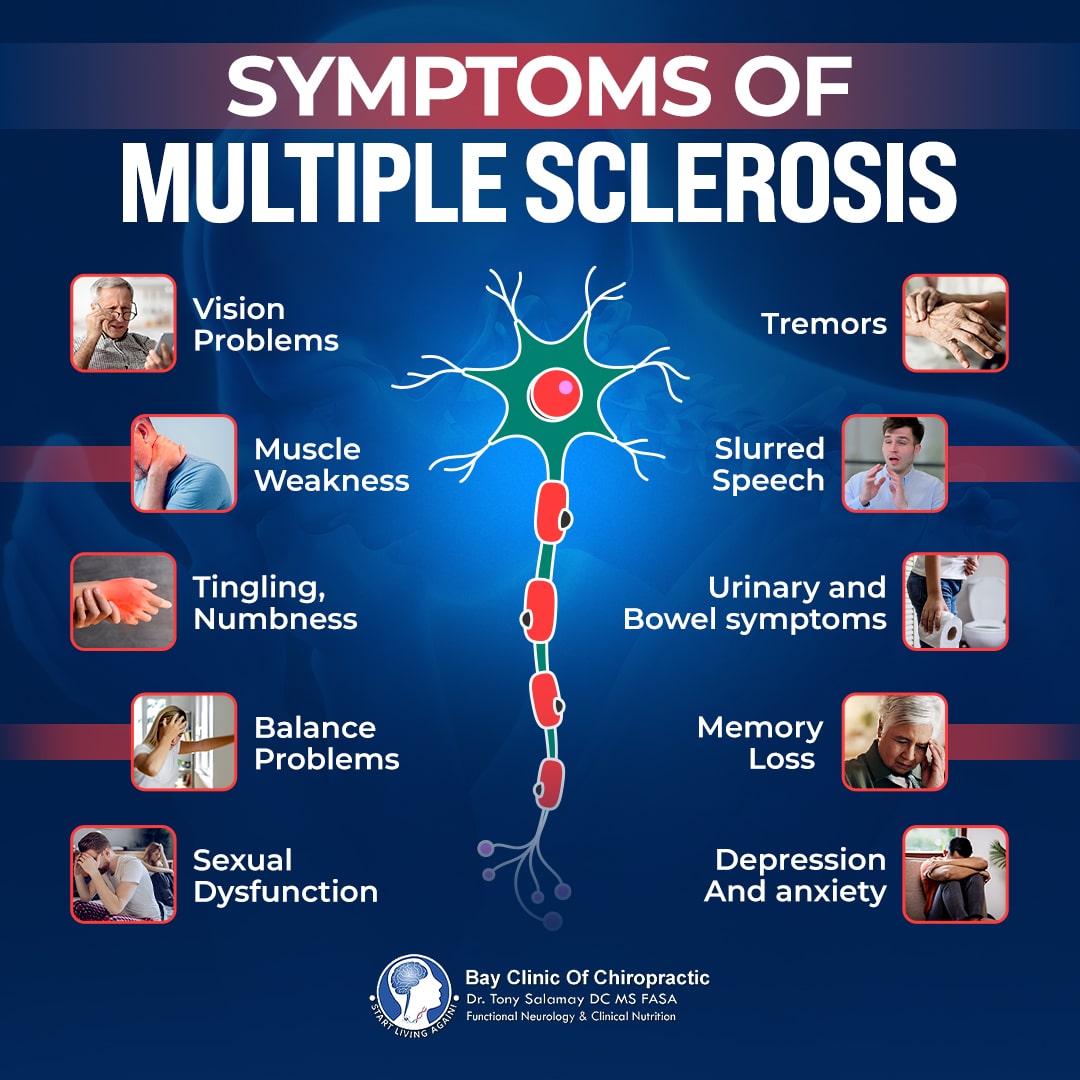
- Vision problems
- Muscle weakness
- Tingling, numbness, and pain in the hands, legs, and face
- Balance problems
- Sexual dysfunction
- Tremors
- Urinary and bowel symptoms, like constipation, diarrhea, incontinence, retention, urgency
- Memory loss
- Depression and anxiety
- Slurred speech
What are the Causes of Multiple Sclerosis?
No one knows the exact cause of multiple sclerosis, and this is consistent with other autoimmune conditions. However, we do know that environmental factors (like infections) and genetics play a role in the development of the condition.
Some environmental factors include exposure to sunlight and certain infections, like the Epstein-Barr virus. Certain gene variants are also believed to be associated with a higher risk of multiple sclerosis. Your risk of having multiple sclerosis is higher if you have family members with the condition since genes can be transmitted down family lines.
Conventional Treatment of Multiple Sclerosis
The treatment of multiple sclerosis in conventional medicine usually falls under two main categories: symptom management and disease-modifying. We will consider these categories below and seek to assess their effectiveness, safety, and long-term prospects.
Symptom Management
Symptom management involves medications and agents that can manage symptoms of the condition rather than addressing the condition itself. For instance, healthcare providers may recommend using skeletal muscle relaxants like baclofen if the patient reports muscle spasms. The medication of choice is typically oxybutynin if the symptom is bladder frequency or urgency. Conventional medicine practitioners may turn to amantadine for fatigue.
Some individuals may experience symptoms that are not so easy to manage, like pain, sexual dysfunction, weakness, tremors, cognitive changes, and different sensory symptoms. Even then, there are always drugs on the market that can address these symptoms in some way, and conventional health practitioners may not shy away from them at all.
The standard conventional treatment for acute attacks is oral or intravenous steroids like methylprednisolone. This therapy of steroids usually lasts three to seven days before the patient is gradually taken off the medications. Plasma exchange (a procedure where the proteins attacking the healthy cells are removed from the blood plasma) can be considered if steroid medications don’t work, usually following the same course as the steroid medications.
Disease-Modifying Therapy
Disease-modifying therapy involves the use of medications and agents that slow down the progression of the condition. Disease-modifying therapy is designed to modulate or suppress the inflammation response associated with multiple sclerosis.
The ultimate goal of disease-modifying therapy is to reduce disease activity and prevent the risk of long-term disability. The medications in disease-modifying therapy have different mechanisms of action, targeting different areas of the disease process.
Some examples of disease-modifying medications are:
- Infusion treatments: natalizumab, ocrelizumab, alemtuzumab
- Oral treatments: fingolimod, dimethyl fumarate, teriflunomide, cladribine
- Injectable medications: beta interferons, glatiramer acetate
Assessment of Conventional Medicine Treatment of Multiple Sclerosis
There is no doubt that the conventional medicine options for the management of multiple sclerosis offer some relief to people who have the condition. However, the problem with conventional medications is not with symptomatic relief but with the medications’ safety.
Disease-modifying therapies often come with pretty significant adverse effects despite being accepted as standard in the conventional treatment of multiple sclerosis. The adverse effects of medications in conventional medicine generally depend on their type and how they work in the body.
There is a wide range of adverse effects that may be associated with using medications for multiple sclerosis since the available therapeutic options have different mechanisms of action in the body. Some of the adverse effects patients report when using conventional medications for multiple sclerosis include blood problems, mood disorders, gastrointestinal issues, headaches, back pain, joint pain, cancers, heart problems, and menstrual disorders.
Adverse drug effects are not restricted just to disease-modifying therapies. Specifically, baclofen (for muscle spasms) can cause muscle weakness, nausea, confusion, dizziness, and paresthesia (pins and needles) in up to 75% of people who use it. Oxybutynin, another common medication used, can cause at least one of dry mouth, dizziness, constipation, dizziness, nausea, blurred vision, and gastrointestinal disturbances in more than 70% of patients.
Generally, the relatively common use of pain medications like NSAIDs (non-steroidal anti-inflammatory drugs – aspirin, diclofenac, ibuprofen) can cause gastrointestinal, cardiovascular, and kidney issues. The chances that these side effects will occur increase with increasing duration of use. What’s more, the risk of adverse effects is naturally higher since multiple sclerosis is a chronic condition (long-lasting)
Further, these medications for multiple sclerosis may not even work for everyone. The very familiar problem with conventional medicine of finding personalized treatment (a treatment that will factor in the individual differences in the patient) also persists in the conventional treatment of multiple sclerosis. The cost factor is also too significant to overlook, with people in the US spending around 3 times more on conventional treatment compared to other countries.
Assessing The Functional Medicine Treatment of Multiple Sclerosis
Many people are moving to functional medicine to treat their multiple sclerosis, possibly due to the safety, efficacy, and cost problems that exist with conventional medicine. Around 75% of people with multiple sclerosis use complementary and alternative treatment options (like functional medicine). In fact, multiple sclerosis patients see professionals in these non-conventional medicine fields more than conventional health practitioners.
Is this then saying that functional medicine has no flaws in treating multiple sclerosis? No. However, functional medicine takes an approach that conventional medicine lacks—personalized treatment that promises holistic healing of patients.
Functional medicine is guided by the fact that individuals are different and that our unique differences are important in the management of health conditions, including multiple sclerosis. This fact may seem simple enough, but conventional medicine fails to fully incorporate it into its different treatment plans.
Also, there is the prospect of holistic treatment of conditions, which means the management of conditions goes beyond just the symptoms and the disease activity and processes. Instead, management includes an assessment of the root causes and potential triggers of the condition. Therefore, the treatment focuses on the whole system and, as you can imagine, can help reduce the severity and extent of the condition, all while improving the patient’s health.
Of course, there is no single treatment option that is perfect and without any shortcomings, especially in the management of a chronic condition like multiple sclerosis. So, you may need some kind of integrative therapy (which combines functional medicine with other treatment types), especially if you have underlying conditions.
Functional Medicine Treatment of Multiple Sclerosis
There are different components to the functional medicine treatment of multiple sclerosis. Through functional testing, the functional health practitioner establishes that the patient has multiple sclerosis. The next step is designing a treatment plan that considers the uniqueness of the patient. Typically, this treatment plan revolves around diet and mind-body therapies, which we will consider below.
Nutritional Therapy
Nutritional therapy involves the use of nutritional components (foods and supplements) to manage or treat health conditions. Nutrition and dietary factors influence the mechanisms (neurodegeneration, oxidative stress, and mitochondrial injury) that affect the development and progression of multiple sclerosis. Since different foods and supplements affect these mechanisms, the right combination of these foods and supplements can help manage multiple sclerosis.
We will explain in more detail below.
Foods
There are foods that can affect the different mechanisms involved in the development and progression of multiple sclerosis. Even more, there are also other indirect ways diet affects the treatment of multiple sclerosis. One of these indirect ways is the effect of diet on metabolic factors like body weight and cholesterol levels, which are risk factors for multiple sclerosis.
Another way diet can play a role is in its interaction with the gut microbiota (normal microorganisms in the gut) and the chemical substances produced by these microorganisms. Note that it goes both ways with foods. Therefore, some foods actively contribute to the development of multiple sclerosis. Here’s a list that covers them both.
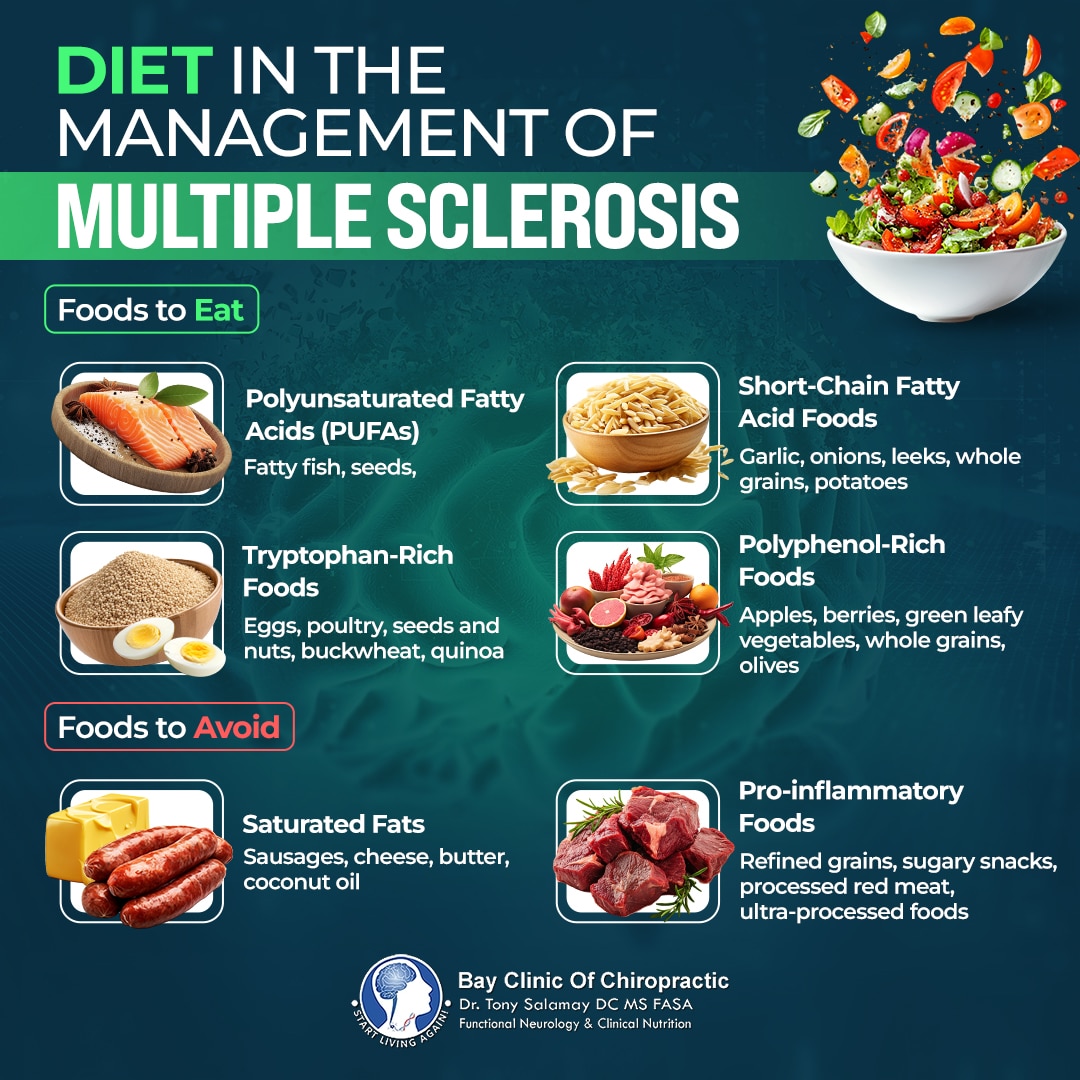
Foods to Eat
- Polyunsaturated fatty acids (PUFAs): walnuts, fatty fish, seeds,
- Short-chain fatty acid foods: garlic, onions, leeks, whole grains, potatoes
- Tryptophan-rich foods: eggs, poultry, seeds and nuts, buckwheat, quinoa
- Polyphenol-rich foods: apples, berries, green leafy vegetables, whole grains, olives
Foods to Avoid
- Saturated fats: sausages, cheese, butter, coconut oil
- Pro-inflammatory foods: refined grains, sugary snacks, processed red meat, ultra-processed foods
Supplements
Supplements are nutritional products designed to provide further nutrients that a normal diet does not provide. You would want antioxidant and anti-inflammatory supplements, as they can help fight the mechanisms involved in the development and progression of multiple sclerosis.
Supplements that can modulate the immune system can also help in the management of multiple sclerosis. Modulating the immune system means helping to improve or reduce certain immune functions and processes. Usually, suppressing the immune system is the immediate goal in autoimmune conditions. Immune suppression reduces the risk that immune cells will attack healthy body cells.
There are many immunomodulatory supplements, but for the management of multiple sclerosis, vitamin D is the most important immunomodulator. Vitamin D supplementation can produce anti-inflammatory and immunomodulatory effects and help reduce oxidative stress.
Low levels of vitamin D are associated with higher risks of developing multiple sclerosis. Some trends appear when comparing the incidence of multiple sclerosis and the development of multiple sclerosis. Simply put, the higher the sunlight an individual is exposed to, the lower the risk of multiple sclerosis. The argument for the use of vitamin D in MS gets even stronger when you consider that the marker of vitamin D in the blood is directly produced by the exposure of the skin to sunlight
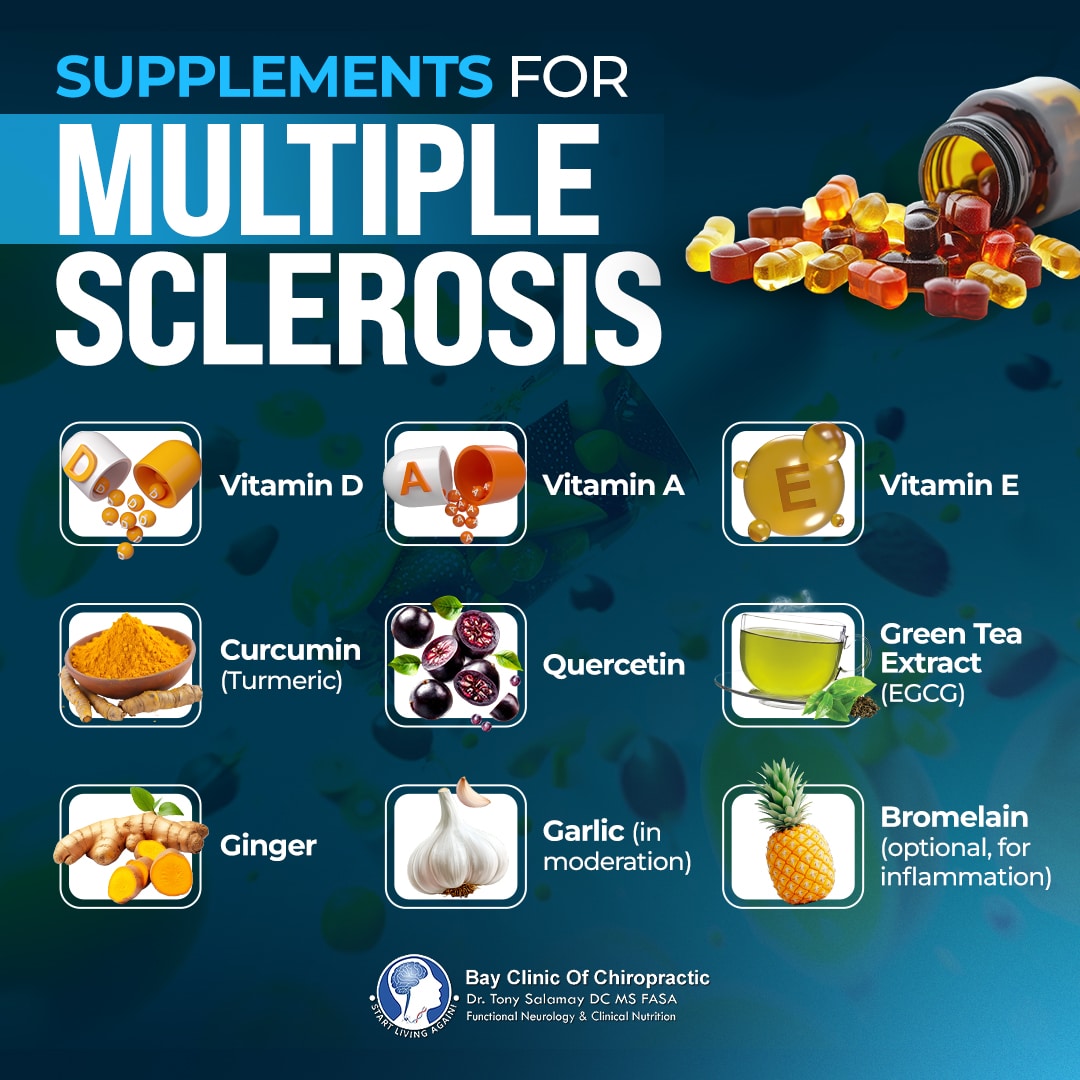
Here is a list of some supplements that will help in the management of multiple sclerosis:
- Vitamins A, C, D, E
- Quercetin
- Curcumin
- Green tea
- Ginger
- Garlic
- Bromelain
- Colchicine
- Capsaicin
Mind-body Interventions
Mind-body therapy is a practice that focuses on the relationship between the brain, physical body, mind, and behavior. When many people think of medicine, they think of medications, surgeries, and even supplements. We understand why this is, but you must know that there’s more to medicine than these and this is one area where functional medicine shines.
One of the common non-conventional medicine treatments for the management of multiple sclerosis is mind-body therapy. Mind-body interventions use this relationship to alter physical function and promote overall health. How does this carry over to the management of multiple sclerosis?
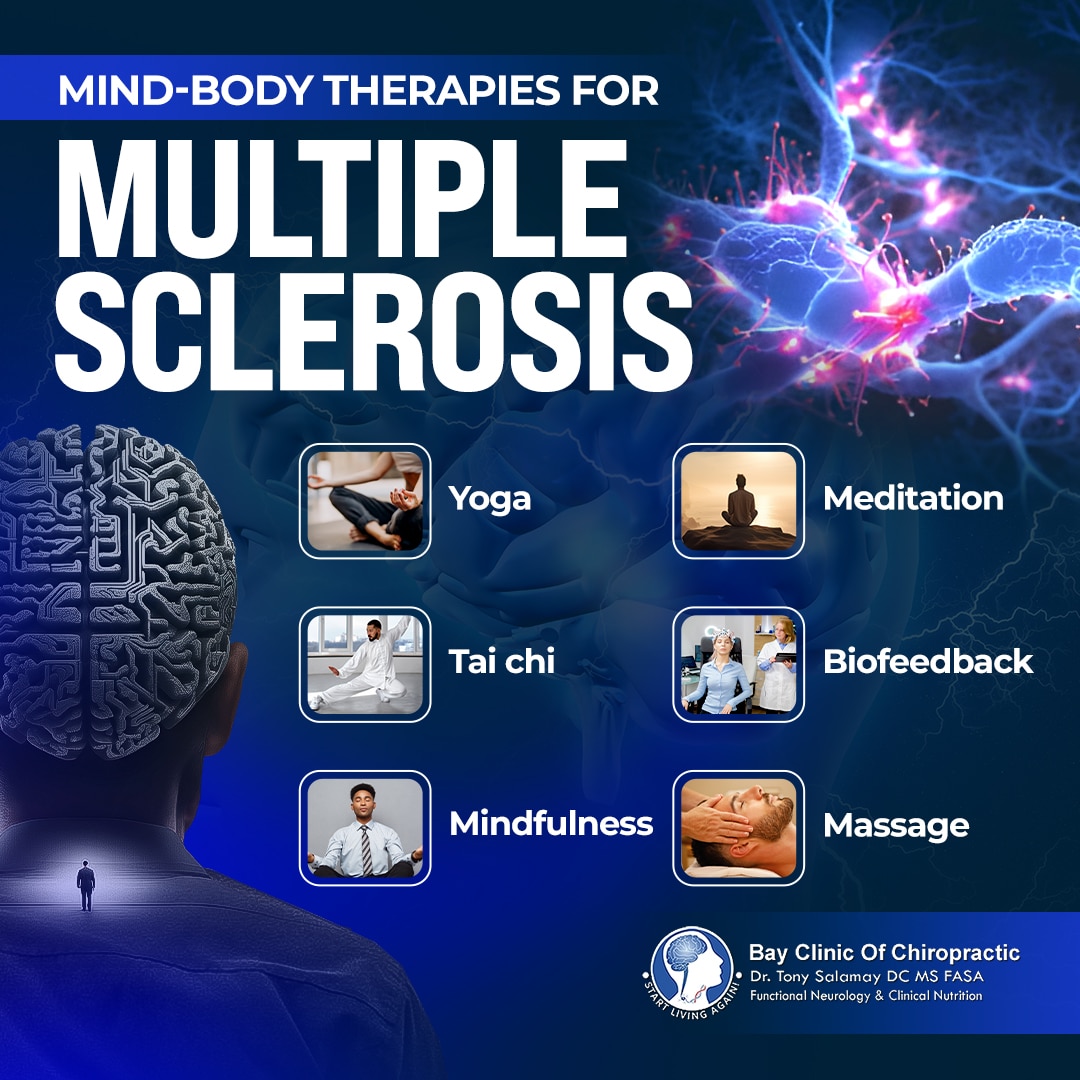
Well, there is a link between psychological stress and the immune system, which then affects the body’s susceptibility to different conditions. Mind-body therapies have also been associated with alterations in the brain and immune system in conditions like multiple sclerosis. Some of the mind-body interventions that can have a positive influence on the management of multiple sclerosis are:
- Yoga
- Meditation
- Tai chi
- Biofeedback
- Mindfulness
- Massage
Frequently Asked Questions
Can Functional Medicine Prevent Multiple Sclerosis?
No treatment option can prevent multiple sclerosis, and this includes functional medicine. However, functional medicine practitioners can provide individuals with the right information about risk factors and potential triggers of the condition. In turn, knowledge and implementation of risk factors can reduce the risk of developing the condition. Examples of these risk factors include smoking, stress, obesity, physical inactivity, and vitamin D deficiency.
Will Multiple Sclerosis Symptoms Go Away on Their Own?
Multiple sclerosis symptoms may go away on their own without any treatment, known as remission. However, remission does not mean the condition is no longer there, and the symptoms may return after some time. When these symptoms do return, the damage to the nerves in the body may be even more and the experience of the symptoms may be worse.
Is There a Cure for Multiple Sclerosis?
There is no cure for multiple sclerosis; damaged nerves cannot be returned to their original state. But, there are treatment options, including functional medicine, that can help in the management of the condition. These treatment options can help reduce the frequency and severity of attacks, minimize ongoing damage, relieve symptoms, and speed the recovery process after attacks.
How Does Functional Medicine Treat Multiple Sclerosis?
Functional medicine addresses multiple sclerosis through personalized treatment plans that focus on nutrition (considering food and diet) and mind-body therapies. The functional medicine approach aims to support the immune system, manage symptoms, and improve overall health, often reducing the frequency and severity of MS attacks.
Can Yoga Help in Multiple Sclerosis Management?
Yes, yoga can help in multiple sclerosis management by reducing stress and improving overall mental health, which are two of the biggest factors involved in multiple sclerosis. Yoga also improves flexibility, balance, and muscle strength, assisting in symptomatic relief among patients with multiple sclerosis.
Conclusion
Multiple sclerosis is a chronic condition that affects the central nervous system, causing various neurological and peripheral symptoms. There is no cure for multiple sclerosis, and conventional and functional medicine are common treatment options. While conventional medicine offers some relief, there remain concerns about its safety, cost, and the personalization of treatment.
Functional medicine, on the other hand, targets holistic healing of the condition through patient-centered, science-backed treatment strategies. These treatment strategies include nutritional therapy, mind-body interventions, and various lifestyle recommendations by functional medicine professionals.
Choosing the right treatment option is key to effective management. However, the right choice does not always have to be either of the two options; it may be an integrative strategy that combines areas of both parts. You can talk to your healthcare provider and functional health practitioners to reach a suitable solution.
References
- Wallin MT, Culpepper WJ, Campbell JD, Nelson LM, Langer-Gould A, Marrie RA, et al. The prevalence of MS in the United States. Neurology [Internet]. 2019 Feb 16;92(10). Available from: https://pmc.ncbi.nlm.nih.gov/articles/PMC6442006/
- Tafti D, Ehsan M, Xixis KL. Multiple sclerosis [Internet]. StatPearls – NCBI Bookshelf. 2024. Available from: https://www.ncbi.nlm.nih.gov/books/NBK499849/
- Morell P, Quarles RH. The Myelin Sheath [Internet]. Basic Neurochemistry – NCBI Bookshelf. 1999. Available from: https://www.ncbi.nlm.nih.gov/books/NBK27954/
- Murray TJ. Diagnosis and treatment of multiple sclerosis. BMJ [Internet]. 2006 Mar 2;332(7540):525–7. Available from: https://pmc.ncbi.nlm.nih.gov/articles/PMC1388131/
- Ghanavatian S, Derian A. Baclofen [Internet]. StatPearls – NCBI Bookshelf. 2024. Available from: https://www.ncbi.nlm.nih.gov/books/NBK526037/
- Dwyer J, Tafuri SM, LaGrange CA. Oxybutynin [Internet]. StatPearls – NCBI Bookshelf. 2023. Available from: https://www.ncbi.nlm.nih.gov/books/NBK499985/
- Chang C, Ramphul K. Amantadine [Internet]. StatPearls – NCBI Bookshelf. 2023. Available from: https://www.ncbi.nlm.nih.gov/books/NBK499953/
- Arrambide G, Iacobaeus E, Amato MP, Derfuss T, Vukusic S, Hemmer B, et al. Aggressive multiple sclerosis (2): Treatment. Multiple Sclerosis Journal [Internet]. 2020 Jun 12;26(9):1045–63. Available from: https://pmc.ncbi.nlm.nih.gov/articles/PMC7412878/
- Hauser SL, Cree BAC. Treatment of Multiple sclerosis: a review. The American Journal of Medicine [Internet]. 2020 Jul 17;133(12):1380-1390.e2. Available from: https://pmc.ncbi.nlm.nih.gov/articles/PMC7704606/
- Multiple sclerosis [Internet]. National Institute of Neurological Disorders and Stroke. Available from: https://www.ninds.nih.gov/health-information/disorders/multiple-sclerosis#toc-what-is-multiple-sclerosis-
- Robertson D, Moreo N. Disease-Modifying Therapies in Multiple Sclerosis: Overview and Treatment Considerations [Internet]. 2016. Available from: https://pmc.ncbi.nlm.nih.gov/articles/PMC6366576/
- Ertzgaard P, Campo C, Calabrese A. Efficacy and safety of oral baclofen in the management of spasticity: A rationale for intrathecal baclofen. Journal of Rehabilitation Medicine [Internet]. 2017 Jan 1;49(3):193–203. Available from: https://medicaljournalssweden.se/jrm/article/view/10371
- Hauser SL, Chan JR, Oksenberg JR. Multiple sclerosis: Prospects and promise. Annals of Neurology [Internet]. 2013 Aug 16;74(3):317–27. Available from: https://onlinelibrary.wiley.com/doi/10.1002/ana.24009
- Hartung DM, Bourdette DN, Ahmed SM, Whitham RH. The cost of multiple sclerosis drugs in the US and the pharmaceutical industry. Neurology [Internet]. 2015 Apr 25;84(21):2185–92. Available from: https://pmc.ncbi.nlm.nih.gov/articles/PMC4451044/
- Yadav V, Shinto L, Bourdette D. Complementary and alternative medicine for the treatment of multiple sclerosis. Expert Review of Clinical Immunology [Internet]. 2010 May 1;6(3):381–95. Available from: https://pmc.ncbi.nlm.nih.gov/articles/PMC2901236/
- Gordon JS. Holistic Medicine: Advances and shortcomings [Internet]. 1982. Available from: https://pmc.ncbi.nlm.nih.gov/articles/PMC1273970/
- Olsen SA. A review of complementary and alternative medicine (CAM) by people with multiple sclerosis. Occupational Therapy International [Internet]. 2009 Feb 16;16(1):57–70. Available from: https://onlinelibrary.wiley.com/doi/10.1002/oti.266
- Stoiloudis P, Kesidou E, Bakirtzis C, Sintila SA, Konstantinidou N, Boziki M, et al. The Role of Diet and Interventions on Multiple Sclerosis: A review. Nutrients [Internet]. 2022 Mar 9;14(6):1150. Available from: https://pmc.ncbi.nlm.nih.gov/articles/PMC8955724/
- Sand IK. The role of diet in multiple sclerosis: mechanistic connections and current evidence. Current Nutrition Reports [Internet]. 2018 Aug 16;7(3):150–60. Available from: https://pmc.ncbi.nlm.nih.gov/articles/PMC6132382/
- Penesová A, Bán J, Jurenka R, et al. Nutritional intervention as an essential part of multiple sclerosis: a review. Physiol Res. 2018;67:521–33. Available from: https://www.biomed.cas.cz/physiolres/pdf/67/67_521.pdf
- Cornall LM, Mathai ML, Hryciw DH, McAinch AJ. The therapeutic potential of GPR43: a novel role in modulating metabolic health. Cellular and Molecular Life Sciences [Internet]. 2013 Jul 13;70(24):4759–70. Available from: https://pmc.ncbi.nlm.nih.gov/articles/PMC11113592/
- Wirthgen E, Hoeflich A, Rebl A, Günther J. Kynurenic acid: the Janus-Faced role of an immunomodulatory tryptophan metabolite and its link to pathological conditions. Frontiers in Immunology [Internet]. 2018 Jan 10;8. Available from: https://pmc.ncbi.nlm.nih.gov/articles/PMC5770815/
- Correia M, Gomes ATPC, Moreira I, Maghariki JE, Mendes K, Correia MJ, et al. Unraveling the extra virgin olive oil effect on inflammation and on gut and saliva microbiota. Biomolecules [Internet]. 2025 Feb 26;15(3):338. Available from: https://pmc.ncbi.nlm.nih.gov/articles/PMC11940808/
- Zebeaman M, Tadesse MG, Bachheti RK, Bachheti A, Gebeyhu R, Chaubey KK. Plants and Plant‐Derived molecules as natural immunomodulators. BioMed Research International [Internet]. 2023 Jan 1;2023(1). Available from: https://onlinelibrary.wiley.com/doi/10.1155/2023/7711297
- Passos GRD, Sato DK, Becker J, Fujihara K. TH17 cells Pathways in multiple sclerosis and neuromyelitis Optica Spectrum Disorders: Pathophysiological and therapeutic implications. Mediators of Inflammation [Internet]. 2016 Jan 1;2016:1–11. Available from: https://pmc.ncbi.nlm.nih.gov/articles/PMC4749822/
- Tremlett H, Zhu F, Ascherio A, Munger KL. Sun exposure over the life course and associations with multiple sclerosis. Neurology [Internet]. 2018 Mar 7;90(14). Available from: https://pmc.ncbi.nlm.nih.gov/articles/PMC5890609/
- Mayden KD. Mind-Body Therapies: Evidence and implications in advanced oncology practice [Internet]. 2012. Available from: https://pmc.ncbi.nlm.nih.gov/articles/PMC4093363/
- Multiple Sclerosis International Federation. MS in focus: complementary and alternative therapies [Internet]. Issue 15, 2010. Available from: https://www.msif.org/wp-content/uploads/2014/09/MS-in-focus-15-Complementary-and-alternative-therapies-English.pdf