You wake up tired, your skin feels dull, your digestion’s off, and no matter what you try, you experience low energy, dull skin, and digestive sluggishness. These everyday symptoms often point to one thing- your body’s detox systems are overwhelmed. Toxins from food, air, water, stress, and even your skincare can build up and slow your natural ability to clear waste.
Detoxification is the process your body uses to filter and eliminate harmful substances through your liver, kidneys, gut, lungs, and skin. When these systems get backed up, everything else suffers- your energy, your mood, your metabolism.
According to Dr. Mahdi Balali-Mood from the Birjand University of Medical Sciences, Iran, chronic exposure to environmental toxins like mercury and lead can overwhelm the body’s detox systems, leading to oxidative stress linked to fatigue, cognitive issues, and metabolic dysfunction.
This article breaks down what detox actually is- and what it isn’t!. You’ll learn how hydration, movement, nutrition, gut support, and sleep all play a role in full-body detox. We’ll also clear up popular myths and show you practical ways to reduce your daily exposure to toxins without extreme cleanses or gimmicks.
If you’ve been feeling stuck, foggy, or just not like yourself, you’re not imagining it. Your body is asking for a reset- let’s walk through how to give it one that works.
What Is Detoxification?
Detoxification is your body’s natural way of removing waste and harmful substances. It happens every day, mostly in your liver, kidneys, lungs, digestive tract, and skin.
Your liver breaks down toxins so your body can safely eliminate them. Your kidneys filter your blood and send waste out through urine. Your lungs release carbon dioxide with every breath. Your gut processes waste through stool. Even your skin plays a role by releasing toxins through sweat.
When people talk about “doing a detox,” they often mean helping these organs work better. This can involve changes in diet, hydration, movement, and reducing exposure to everyday chemicals.
You do not need extreme juice cleanses or starvation diets. In fact, they can do more harm than good. Your body already knows how to detox. You just need to support the process.
Detoxification Myths
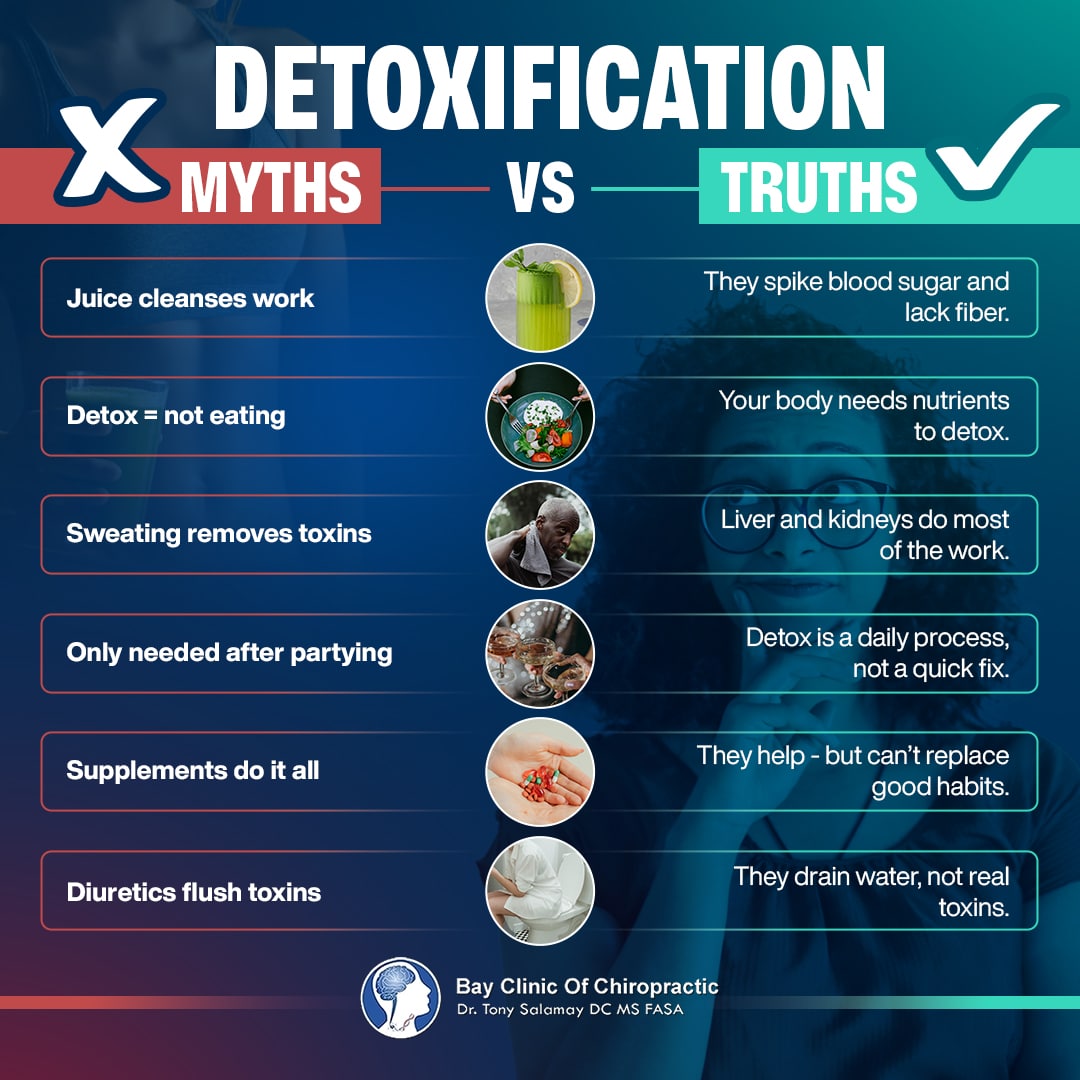
Many detox claims sound convincing but don’t hold up. Here are common myths that can actually slow down your progress:
- Juice cleanses detox your body: Juices are low in fiber and protein. They spike your blood sugar and leave you tired. Whole foods support detox better.
- Detox means not eating: Skipping meals slows your metabolism and weakens your body’s ability to process toxins. You need nutrients to detox effectively.
- Sweating removes all toxins: Sweating helps a little, but your liver, kidneys, and gut do most of the detox work. Sweat is not your main detox pathway.
- You only need to detox after partying or overeating: Your body deals with toxins daily from food, air pollution, water, and personal care products. Detox works best when it becomes part of your regular routine.
- Supplements are all you need: Supplements can support detox, but they do not replace good nutrition, hydration, or sleep. Lifestyle changes matter more.
- Taking diuretics flushes out toxins: Diuretics force your body to lose water and electrolytes. They can cause dehydration and strain your kidneys without actually removing toxins.
Feeling stuck, foggy, or off despite your efforts? At Bay Clinic of Chiropractic discover how our Panama City functional medicine practitioner can help reset your detox systems and restore your energy.
What Are The Benefits Of Detoxification?
Supporting your body’s detox systems can improve how you feel and function every day. Here’s what detox can help with:
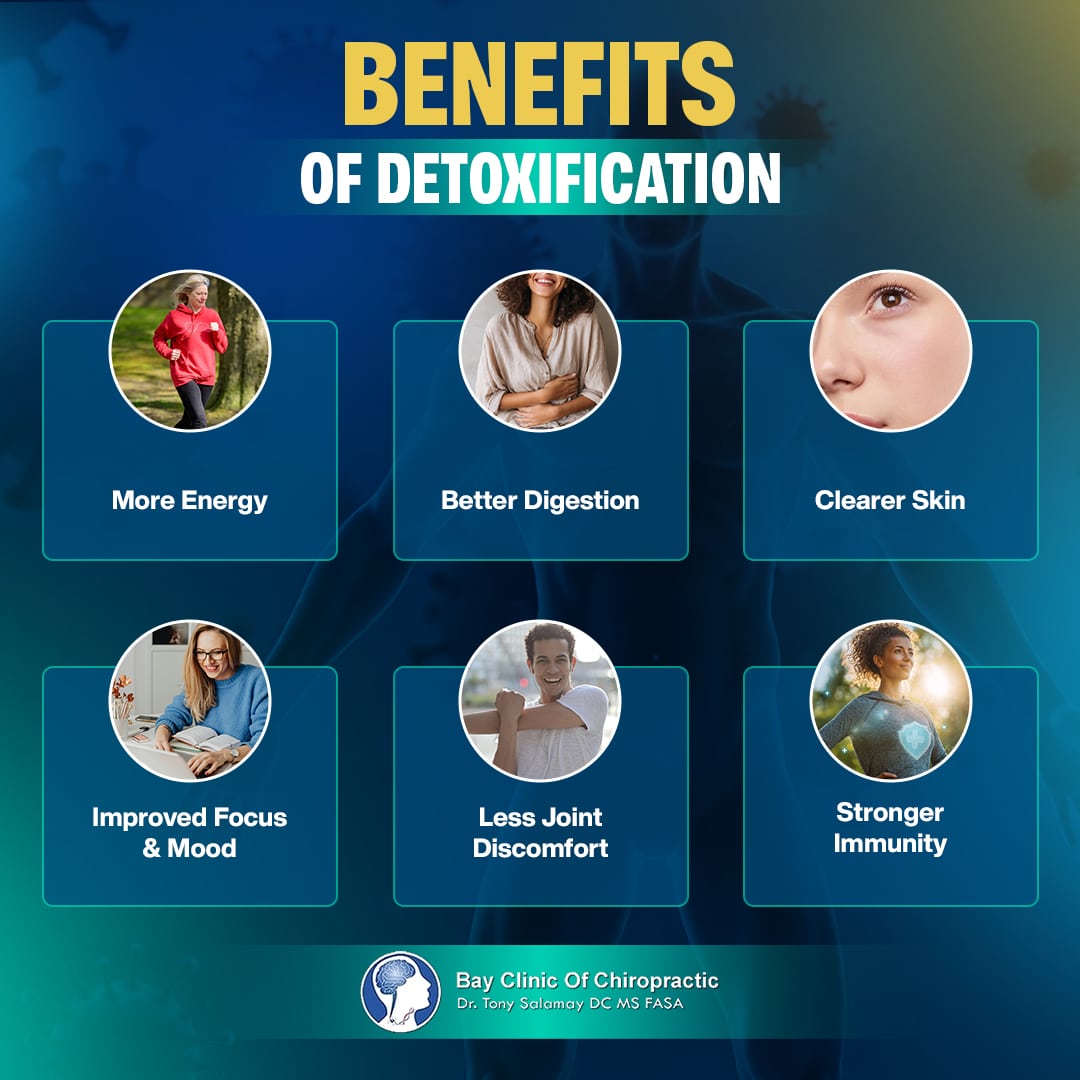
- More energy: When your liver and gut work efficiently, your body uses nutrients better. That leads to steadier energy throughout the day.
- Better digestion: A cleaner diet with fiber and hydration supports gut function. This helps reduce bloating, gas, and constipation.
- Clearer skin: Removing processed foods and alcohol can lower internal inflammation, which often shows up on your skin.
- Improved focus and mood: Reducing sugar, alcohol, and processed ingredients helps stabilize blood sugar and supports brain function.
- Reduced joint discomfort: A study by Dr. Roger Pamphlett from The University of Sydney, Sydney, NSW, Australia, found that mercury is taken up selectively by cells involved in joint, bone, and connective tissues, provoking autoimmune and inflammatory changes associated with joint disorders like rheumatoid arthritis and osteoarthritis. A lower toxic load can help decrease inflammation, which may ease joint stiffness and aches.
- Stronger immune system: Supporting gut health and reducing toxin exposure frees your immune system to do its job more effectively.
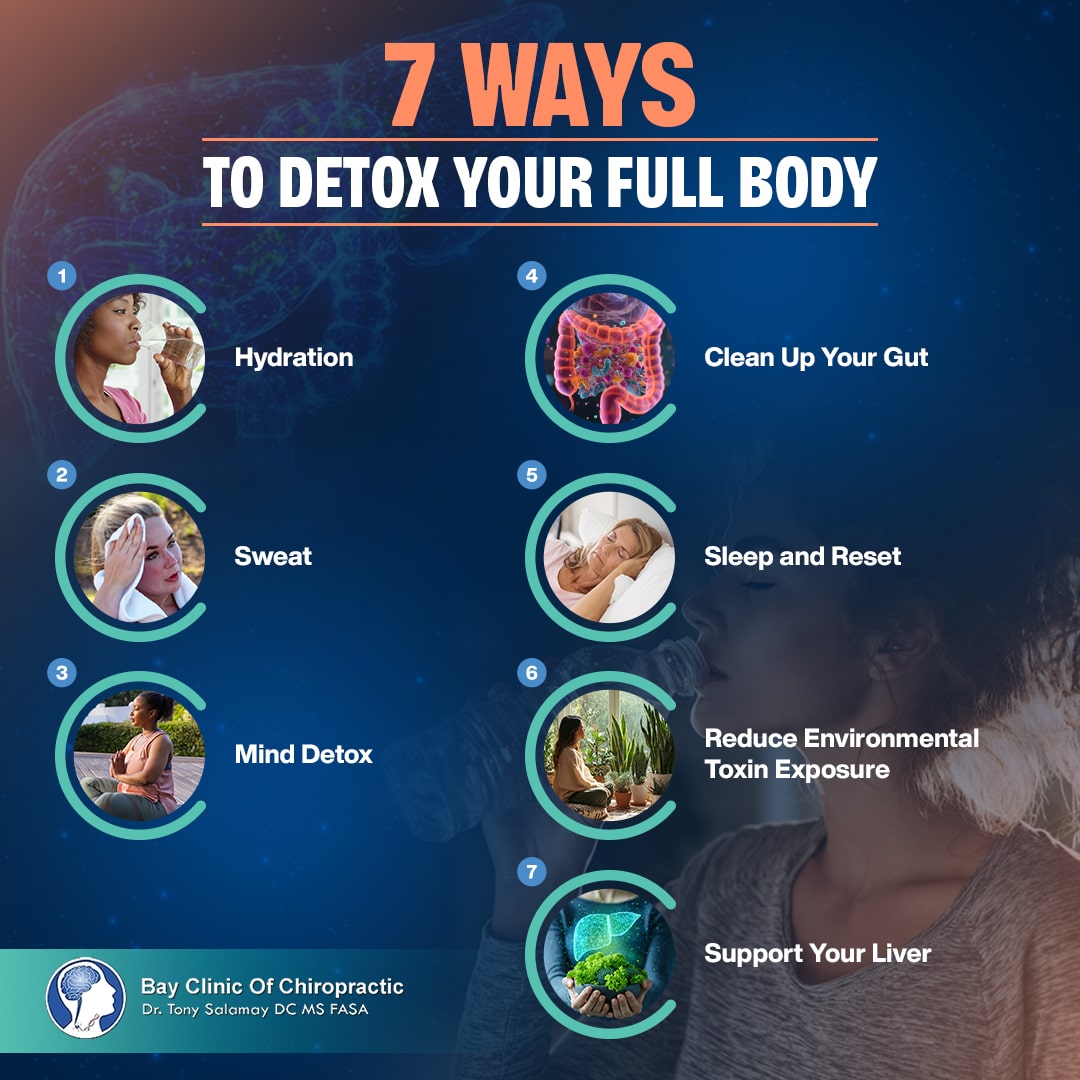
7 Natural Ways To Detox Your Full Body
1. Hydration
Water is one of the simplest and most effective ways to support detox. Your kidneys rely on proper hydration to filter your blood and remove waste through urine. Without enough fluid, your body struggles to clear out toxins, which can leave you feeling sluggish.
Your liver also needs water to function. The enzymes that break down harmful substances depend on hydration to work efficiently. If you’re dehydrated, detox slows down and your body holds on to waste longer than it should.
Constipation is another sign that your detox system is backed up. Water keeps your digestive system moving, helping you pass stool regularly. If you are not drinking enough, waste can sit in your gut and reabsorb into your bloodstream.
According to the National Academy of Medicine, healthy adult men should aim to drink around 3.7 liters (125 fluid ounces) of water daily, while women should target about 2.7 liters (91 fluid ounces). A general guideline is to drink at least 8 to 10 cups each day, with increased intake recommended during physical activity or in hot climates.
Stick with clean, filtered water when possible. Avoid sugary drinks and excess caffeine. Both can dehydrate you and add more stress to your body’s detox systems.
2. Sweat
Sweating helps your body release small amounts of toxins through your skin. While your liver and kidneys remain your body’s primary detox organs, sweating still plays a secondary, supportive role.
When you move your body, your circulation improves. That helps your blood carry waste products to your liver and kidneys for processing. Regular exercise also boosts lymph flow, which is key to clearing waste from your tissues.
Saunas and steam rooms can increase sweat and improve circulation. Some research shows they may help eliminate heavy metals and other fat-stored toxins. Just make sure to hydrate before and after to replace lost fluids.
Dr. Ming Chi from the University of Technology, New Taipei, states “Physiologists have long regarded sweating as an effective and safe means of detoxification, and heavy metals are excreted through sweat to reduce the levels of such metals in the body.”
You do not need extreme workouts. Light cardio, walking, or strength training a few times a week can keep your detox systems active. Even short bursts of movement during the day support better flow and waste removal.
If you rarely sweat, that may signal sluggish circulation or dehydration. Make movement a daily habit to help your body stay clear and balanced.
3. Support Your Liver
Your liver is your main detox organ. It filters your blood, breaks down harmful substances, and turns them into forms your body can safely remove. Supporting your liver means making choices that reduce stress on this system and help it function well.
Simple changes can go a long way:
- Cut alcohol: Alcohol strains your liver and slows detox. Even moderate drinking can affect liver enzyme function.
- Eat liver-friendly foods: Cruciferous vegetables like broccoli, kale, and Brussels sprouts support detox enzymes. Garlic, beets, and leafy greens also help.
- Get enough protein: Your liver uses amino acids (from protein) to convert toxins into water-soluble forms. Without enough, detox slows down.
- Avoid processed foods: Preservatives, additives, and artificial ingredients create more work for your liver. Stick with whole, minimally processed foods.
- Limit over-the-counter medications: Pain relievers like acetaminophen can be hard on the liver, especially when used frequently or in high doses.
- Add key nutrients: B vitamins, glutathione, and magnesium all play a role in liver detox. A well-rounded diet usually provides enough, but supplements may help if levels are low.
A healthy liver works quietly in the background. When it’s overloaded, you may feel fatigued, irritable, or notice digestion issues. Small daily habits can help your liver do its job without getting overwhelmed.
4. Clean Up Your Gut
Your gut plays a key role in detox. It eliminates waste through stool and also helps regulate inflammation, immunity, and nutrient absorption. If your gut is sluggish or inflamed, toxins can get reabsorbed instead of removed.
Constipation is one of the biggest signs your detox system is backed up. Bowel movements should happen at least once daily. If waste sits too long in your colon, toxins may re-enter your bloodstream.
A study by Dr. Qi Zhao from the Shaanxi University of Chinese Medicine, Xi’an, China, discusses how delayed colonic transit can enhance the reabsorption of certain substances, potentially impacting detoxification processes.
To keep things moving and support gut health:
- Eat more fiber: Soluble fiber (from oats, apples, and chia seeds) and insoluble fiber (from veggies, nuts, and whole grains) help bulk and move waste.
- Add fermented foods: Yogurt, sauerkraut, kefir, and kimchi contain probiotics that help balance gut bacteria and reduce inflammation.
- Stay hydrated: Water keeps stool soft and easy to pass. Without it, fiber can actually back things up.
- Limit sugar and processed foods: These disrupt gut bacteria and promote inflammation, slowing detox.
- Protect your gut lining: Bone broth, collagen, and zinc may help repair the gut barrier and reduce leakiness.
A healthy gut improves your ability to absorb nutrients, eliminate waste, and support your liver. When your digestion works well, your whole detox system runs smoother.
5. Sleep And Reset
Your body does some of its most important detox work while you sleep. During deep sleep, your brain activates the glymphatic system. This system clears out waste, including proteins that can build up and affect memory and mood. Without enough sleep, this process slows down, and toxins stay in your brain longer than they should.
Sleep also allows your liver to process and sort waste more efficiently. Hormones that control appetite, inflammation, and stress all reset while you rest. Poor sleep leads to higher stress hormones, which can block detox functions and slow your metabolism.
According to the National Sleep Foundation, most adults need 7 to 9 hours of sleep each night. Going to bed and waking up at consistent times helps your body stay in rhythm. Avoiding screens and heavy meals before bed can also improve sleep quality.
Sleep is not just about rest. It is your body’s reset button. When you get enough of it, your detox systems can work the way they are meant to.
6. Reduce Environmental Toxin Exposure
You come into contact with toxins every day through air, water, food, and personal care products. While you can’t avoid all of them, you can lower your exposure and make it easier for your body to keep up.
Start by looking at what you use in your home. Many cleaning products, air fresheners, and laundry products contain chemicals that can irritate your lungs, skin, and nervous system. Switching to unscented, non-toxic, or natural options can reduce your daily toxic load. Check your home for mold.
Personal care products are another common source. Lotions, deodorants, shampoos, and makeup may contain parabens, phthalates, and other endocrine disruptors. These can interfere with hormone balance and stress your liver. Choose simpler ingredient lists and look for fragrance-free options.
Even the food you eat matters. Pesticides, additives, and plastic packaging can introduce toxins into your body. Washing produce, choosing organic when possible, and storing food in glass containers can make a difference.
A comprehensive review by Dr. Salia S. Sheriff from the University of Liberia, discusses how chemicals from food packaging materials, such as bisphenol A (BPA) and phthalates, can leach into food and beverages, posing health risks.
Lowering your daily exposure helps your detox systems stay focused on removing waste instead of dealing with constant new threats.
7. Mind Detox
Mental clutter and stress affect your body’s ability to detox. Chronic stress raises cortisol, a hormone that can slow digestion, weaken immunity, and overload your liver. If your mind is constantly overstimulated, your body stays in survival mode and detox takes a back seat.
Your nervous system needs downtime to reset. Just like your gut and liver, your brain benefits from periods of rest, calm, and focus. Even short breaks from screens, notifications, and noise can make a difference.
Simple habits can help clear mental overload. Deep breathing, walking outside, or just sitting in silence for a few minutes can shift your body into a relaxed state. Meditation and mindfulness practices lower stress and help your body return to balance.
Sleep also supports mental detox. During rest, your brain clears waste and resets memory, mood, and focus. When your mind is clear, your body functions better. Detox is not just physical. It’s mental too.
Frequently Asked Questions
Is Ginger Good For Detoxification?
Yes, ginger supports detox by aiding digestion, reducing inflammation, and stimulating circulation. It also helps the liver process waste more efficiently. A 2016 study by Dr. Nargeskhatoon Shoaibinobarian from the Islamic Azad University, Iran found that ginger enhances liver enzymes involved in detoxification and protects against oxidative stress.
Does Detoxification Help With Weight Loss?
Detox alone will not cause lasting weight loss, but it can support weight goals by improving digestion, reducing inflammation, and lowering toxic load. Reducing processed foods, supporting liver function, and improving gut health can help your body work more efficiently. Additionally, environmental toxins, known as obesogens, can disrupt metabolism and promote fat storage. A review by Dr. Y.-M. Lee from the Kyungpook National University, Daegu, Korea, highlights that persistent organic pollutants in adipose tissue may contribute to obesity.
Can Detoxification Help With Chronic Fatigue?
Yes, detoxification may support chronic fatigue by improving liver function, reducing oxidative stress, and enhancing energy metabolism. A study by Dr. Elardus Erasmu from the North-West University (Potchefstroom Campus), South Africa, found that women with chronic fatigue exhibited increased phase II liver detoxification activity, suggesting a compensatory response to toxin overload.
Does Detox Improve Mood and Brain Fog?
Yes, detoxification can enhance mood and reduce brain fog by improving liver function, balancing neurotransmitters, and reducing inflammation. Research by Dr. Mengyao Yan from the Tianjin University of Science & Technology, Tianjin, China, highlights the role of the gut-liver-brain axis in neurological disorders, indicating that gut dysbiosis and liver dysfunction can lead to cognitive impairments and mood disorders.
Conclusion
Your body already knows how to detox, but daily habits can make or break that process. Staying hydrated, eating whole foods, sweating regularly, and supporting your liver, gut, and sleep all help your body clear waste more effectively. Reducing exposure to toxins in your environment and managing stress also play key roles. Together, these habits support more energy, better focus, lighter digestion, and stronger immune function.
Here’s the truth- detox isn’t a quick fix. It’s a maintenance plan for your whole system.
At the Bay Clinic of Chiropractic in Panama City, Florida, we take a whole-body approach to help you feel and function your best. Dr. Tony Salamay understands how toxins, stress, and inflammation affect your nervous system, digestion, and energy. With advanced testing, targeted therapies, and customized care plans, he helps you reset your body from the inside out.
If you’re ready to feel clearer, lighter, and stronger, let’s talk. Contact the Bay Clinic of Chiropractic today and find out how a true reset starts here!
References
- Balali-Mood M, Naseri K, Tahergorabi Z, Khazdair MR, Sadeghi M. Toxic Mechanisms of Five Heavy Metals: Mercury, Lead, Chromium, Cadmium, and Arsenic. Frontiers in Pharmacology [Internet]. 2021 Apr 13;12:643972. Available from: https://www.frontiersin.org/journals/pharmacology/articles/10.3389/fphar.2021.643972/full
- Kalra A, Yetiskul E, Wehrle CJ, Tuma F. Physiology, liver [Internet]. StatPearls – NCBI Bookshelf. 2023b. Available from: https://www.ncbi.nlm.nih.gov/books/NBK535438/
- Rosell M, Nyström CD. Fruit juice – a scoping review for Nordic Nutrition Recommendations 2023. Food & Nutrition Research [Internet]. 2024 Feb 6;68. Available from: https://pmc.ncbi.nlm.nih.gov/articles/PMC10870970/
- Manisalidis I, Stavropoulou E, Stavropoulos A, Bezirtzoglou E. Environmental and Health Impacts of Air Pollution: A review. Frontiers in Public Health [Internet]. 2020b Feb 20;8:14. Available from: https://pmc.ncbi.nlm.nih.gov/articles/PMC7044178/
- Cummings DE, Overduin J. Gastrointestinal regulation of food intake. Journal of Clinical Investigation [Internet]. 2007 Jan 2;117(1):13–23. Available from: https://pmc.ncbi.nlm.nih.gov/articles/PMC1716217/
- Pamphlett R, Jew SK. Mercury is taken up selectively by cells involved in joint, bone, and connective tissue disorders. Frontiers in Medicine [Internet]. 2019 Jul 19;6:168. Available from: https://www.frontiersin.org/journals/medicine/articles/10.3389/fmed.2019.00168/full
- Winans B, Humble MC, Lawrence BP. Environmental toxicants and the developing immune system: A missing link in the global battle against infectious disease? Reproductive Toxicology [Internet]. 2010 Sep 22;31(3):327–36. Available from: https://pmc.ncbi.nlm.nih.gov/articles/PMC3033466/
- Nationalacademies.org. 2026 [cited 2026 Jan 29]. Available from: https://www.nationalacademies.org/read/10925/chapter/6#79
- Kuan WH, Chen YL, Liu CL. Excretion of Ni, Pb, Cu, As, and Hg in Sweat under Two Sweating Conditions. International Journal of Environmental Research and Public Health [Internet]. 2022 Apr 4;19(7):4323. Available from: https://pmc.ncbi.nlm.nih.gov/articles/PMC8998800/
- Osna NA. Alcohol and liver. World Journal of Gastroenterology [Internet]. 2009 Jan 1;15(10):1162. Available from: https://pmc.ncbi.nlm.nih.gov/articles/PMC2659541/
- Gerriets V, Anderson J, Patel P, Nappe TM. Acetaminophen [Internet]. StatPearls – NCBI Bookshelf. 2024. Available from: https://www.ncbi.nlm.nih.gov/books/NBK482369/
- Zhao Q, Chen YY, Xu DQ, Yue SJ, Fu RJ, Yang J, et al. Action mode of gut motility, fluid and electrolyte transport in chronic constipation. Frontiers in Pharmacology [Internet]. 2021 Jul 27;12:630249. Available from: https://pmc.ncbi.nlm.nih.gov/articles/PMC8353128/
- Kieffer DA, Martin RJ, Adams SH. Impact of dietary fibers on nutrient management and detoxification organs: gut, liver, and kidneys. Advances in Nutrition [Internet]. 2016 Nov 1;7(6):1111–21. Available from: https://pmc.ncbi.nlm.nih.gov/articles/PMC5105045/
- Jessen NA, Munk ASF, Lundgaard I, Nedergaard M. The Glymphatic System: A Beginner’s Guide. Neurochemical Research [Internet]. 2015 May 6;40(12):2583–99. Available from: https://pmc.ncbi.nlm.nih.gov/articles/PMC4636982/
- National Sleep Foundation Recommends New Sleep Times [Internet]. [cited 2026 Jan 29]. Available from: https://els-jbs-prod-cdn.jbs.elsevierhealth.com/pb/assets/raw/Health%20Advance/journals/sleh/NSF_press_release_on_new_sleep_durations_2-2-15.pdf
- Archangelidi O, Sathiyajit S, Consonni D, Jarvis D, De Matteis S. Cleaning products and respiratory health outcomes in occupational cleaners: a systematic review and meta-analysis. Occupational and Environmental Medicine. 2020 Nov 24;78(8):604–17. Available from: https://oem.bmj.com/content/oemed/78/8/604.full.pdf
- A comprehensive review on exposure to toxins and health risks from plastic waste: Challenges, mitigation measures, and policy interventions [Internet]. ResearchGate. Available from: https://www.researchgate.net/publication/390688310_A_comprehensive_review_on_exposure_to_toxins_and_health_risks_from_plastic_waste_Challenges_mitigation_measures_and_policy_interventions
- Hannibal KE, Bishop MD. Chronic Stress, Cortisol Dysfunction, and Pain: A Psychoneuroendocrine Rationale for Stress Management in Pain Rehabilitation. Physical Therapy [Internet]. 2014 Jul 18;94(12):1816–25. Available from: https://pmc.ncbi.nlm.nih.gov/articles/PMC4263906/
- Bentley TGK, D’Andrea-Penna G, Rakic M, Arce N, LaFaille M, Berman R, et al. Breathing Practices for Stress and Anxiety Reduction: Conceptual Framework of Implementation Guidelines based on a systematic review of the published literature. Brain Sciences [Internet]. 2023 Nov 21;13(12):1612. Available from: https://pmc.ncbi.nlm.nih.gov/articles/PMC10741869/
- Effect of ginger Supplementation on liver Enzymes: A Systematic Review and Meta-Analysis [Internet]. ResearchGate. Available from: https://www.researchgate.net/publication/383656301_Effect_of_Ginger_Supplementation_on_Liver_Enzymes_A_Systematic_Review_and_Meta-Analysis
- Lee Y ‐m., Kim K ‐s., Jacobs DR, Lee D ‐h. Persistent organic pollutants in adipose tissue should be considered in obesity research. Obesity Reviews [Internet]. 2016 Dec 2;18(2):129–39. Available from: https://onlinelibrary.wiley.com/doi/10.1111/obr.12481
- Erasmus E, Steffens FE, Van Reenen M, Vorster BC, Reinecke CJ. Biotransformation profiles from a cohort of chronic fatigue women in response to a hepatic detoxification challenge. PLoS ONE [Internet]. 2019 May 10;14(5):e0216298. Available from: https://pmc.ncbi.nlm.nih.gov/articles/PMC6510445/
- Yan M, Man S, Sun B, Ma L, Guo L, Huang L, et al. Gut liver brain axis in diseases: the implications for therapeutic interventions. Signal Transduction and Targeted Therapy [Internet]. 2023 Dec 6;8(1):443. Available from: https://www.nature.com/articles/s41392-023-01673-4