Few things disrupt your day like a runny stomach that causes endless trips to the restroom. The consolation for most people is that it only lasts a day or two – at least, it should only last a day or two. But some people have this condition for several days, even weeks, a sign of something more serious. Whether you’re dealing with a regular episode or a stubborn case, understanding its causes and natural remedies is key to getting back on track.
Diarrhea is characterized by loose or watery stools that occur at least three times in 24 hours. It results from the body’s inability to properly reabsorb water from stool. Symptoms often include nausea, vomiting, fever, bloating, and abdominal pain. When prolonged, diarrhea can lead to complications like dehydration and malabsorption, causing dizziness, fatigue, and unintended weight loss.
Acute diarrhea, lasting under 2 weeks, is commonly triggered by infections, food poisoning, or medication side effects. On the other hand, chronic diarrhea persists for over 4 weeks and is often linked to conditions like IBS, celiac disease, or inflammatory bowel diseases.
Managing diarrhea can be challenging, but natural treatment options can provide relief while supporting gut health. These natural treatments include proper hydration to replenish lost fluids, dietary changes such as the BRAT diet (bananas, rice, applesauce, and toast), and supplements like probiotics, zinc, and glutamine to support gut health and aid recovery.
Let’s dive into the symptoms, causes, and natural treatment options for diarrhea so you can restore digestive balance and finally take a break from the toilet seat.
What Is Diarrhea?
Diarrhea is defined as loose or watery stools occurring at least three times within 24 hours. It results from the body’s inability to properly reabsorb water from stool, leading to increased fluid content.
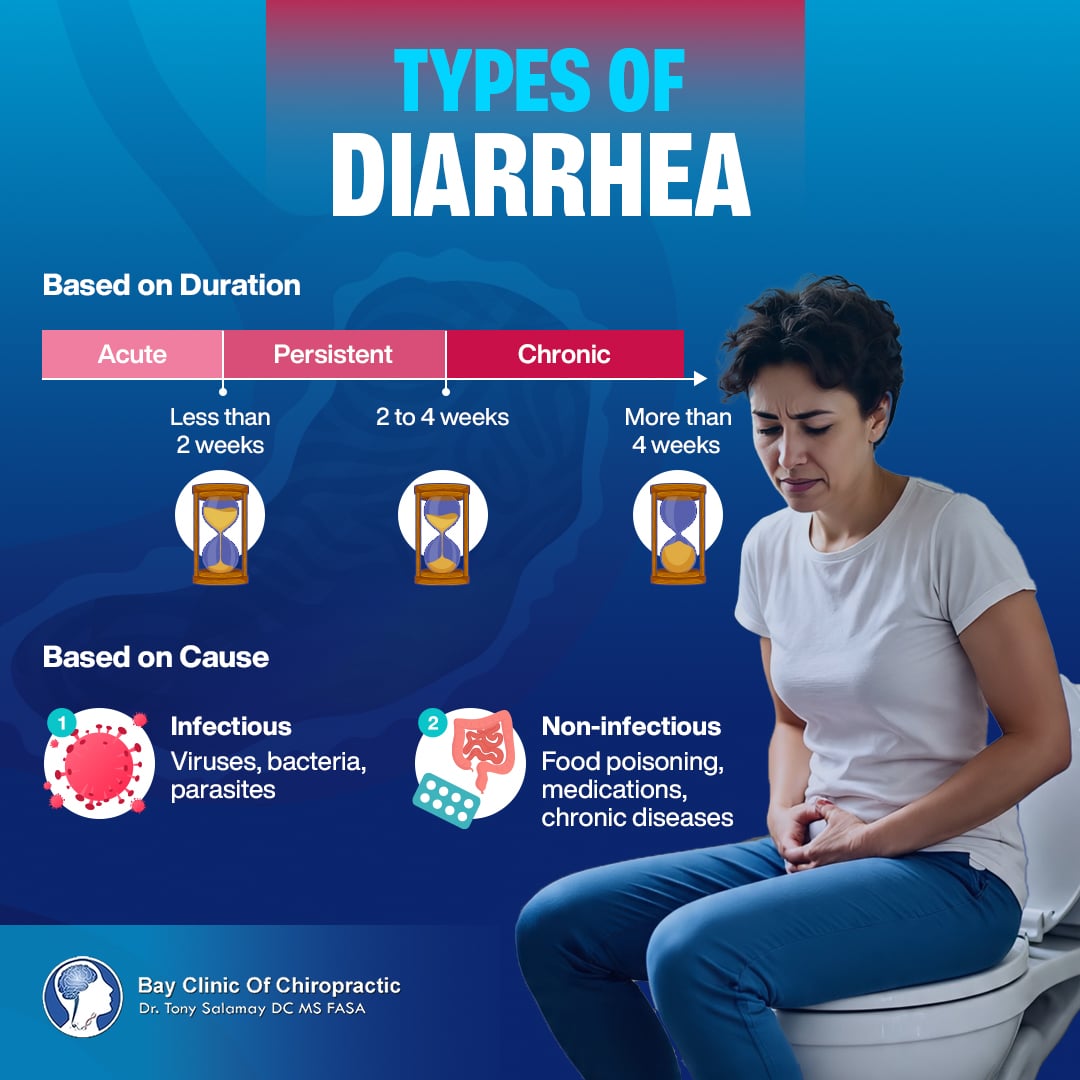
Diarrhea can be classified into different groups based on the duration of and cause of the condition. These groups are outlined below.
Based on Duration
- Acute diarrhea lasts less than 2 weeks.
- Persistent diarrhea lasts more than 2 weeks but less than 4 weeks.
- Chronic diarrhea lasts longer than 4 weeks, and symptoms may be ongoing, or they may come and go.
Based on Cause
- Infectious diarrhea is caused by an infection, usually from viruses but may also be from bacteria or parasites.
- Non-infectious diarrhea has non-infectious causes, such as food poisoning, certain medications (like antibiotics), or chronic diseases.
Knowing the type of diarrhea a person has is essential before proper treatment and management can commence.
What Are the Symptoms of Diarrhea?
The primary symptom of diarrhea is loose and watery stool, often accompanied by other symptoms like nausea, vomiting, fever, headaches, abdominal pain, and altered bowel habits. Health complications like dehydration and malabsorption of nutrients and foods may also arise and bring their group of symptoms.

Here are some of the common symptoms of diarrhea:
- Loose and watery stools 3 or more times a day – Frequent bowel movements with thin or liquid consistency are the hallmark of diarrhea. This happens when the intestines do not absorb enough water, leading to fluid loss and potential dehydration if prolonged.
- Nausea and vomiting – Digestive irritation or infection can trigger nausea and, in some cases, vomiting. This may further increase the risk of dehydration and electrolyte imbalance.
- Fever – A mild to moderate fever may indicate that the body is fighting off an infection, such as a viral or bacterial cause of diarrhea. Persistent or high fever may require medical evaluation.
- Abdominal pain and cramps – Cramping occurs when the intestinal muscles contract more frequently and intensely than normal. This can cause sharp or dull pain that often improves temporarily after a bowel movement.
- Bloating – Excess gas and fluid buildup in the intestines can create a feeling of fullness, tightness, or swelling in the abdomen.
- Appetite loss – Ongoing digestive discomfort can reduce hunger. Nausea, cramping, and general fatigue often make eating less appealing during episodes of diarrhea.
- Headache – Dehydration and electrolyte loss from frequent loose stools can trigger headaches, dizziness, or lightheadedness.
- A strong and urgent need to use the restroom – Also known as bowel urgency, this symptom creates a sudden, difficult-to-control need to have a bowel movement, which can be distressing and disruptive to daily activities.
Aside from these symptoms, the individual may also experience additional symptoms if diarrhea-related complications arise. Two of the most common complications are dehydration and malabsorption of nutrients.

Dehydration occurs in 85% of severe diarrhea cases (usually lasting more than 1 week). Some of the symptoms associated with dehydration in diarrhea patients include:
- Extreme thirst – Persistent diarrhea causes significant fluid loss, prompting the body to signal intense thirst as it attempts to restore hydration levels.
- Dry mouth – Reduced body fluids decrease saliva production, leading to a dry, sticky feeling in the mouth and sometimes cracked lips.
- Dark-colored urine – Concentrated, deep yellow or amber urine is a common sign of dehydration, indicating the kidneys are conserving water.
- Lightheadedness and dizziness – Low fluid volume can reduce blood pressure, especially when standing up, causing dizziness or a faint feeling.
- Significantly reduced urination – Dehydration leads to less frequent urination and smaller amounts of urine as the body tries to retain fluids.
- Fatigue – Fluid and electrolyte imbalances can reduce circulation efficiency and muscle function, leading to weakness and low energy.
- Sunken eyes – Noticeable hollowing around the eyes can occur in moderate to severe dehydration due to fluid loss in surrounding tissues.
In children with dehydration and diarrhea, there may also be little to no tears when crying, grey skin, sunken soft spot on the head, and a lack of wet diapers for up to a day.

Symptoms of malabsorption (impaired absorption of nutrients such as fats, carbohydrates, proteins, vitamins, minerals, and trace elements) among diarrhea patients include:
- Bloating – Poor absorption of nutrients, especially carbohydrates and fats, can lead to fermentation in the intestines. This produces excess gas and a feeling of fullness or abdominal swelling.
- Unintentional weight loss – When the body cannot properly absorb calories, protein, and essential nutrients, it may begin breaking down fat and muscle for energy, leading to gradual or rapid weight loss.
- Foul-smelling stools – Inadequately digested fats and other nutrients can cause stools to have a strong, unpleasant odor. Fat malabsorption in particular may result in greasy or oily stools.
- Flatulence – Undigested carbohydrates that reach the colon are fermented by gut bacteria, producing excess gas and increased passing of gas.
- Rumbling sounds in the stomach – Also known as borborygmi, these loud gurgling or rumbling noises occur as gas and fluid move through the intestines during improper digestion.
- Abdominal pain – Cramping or discomfort may result from gas buildup, intestinal irritation, or increased intestinal contractions related to nutrient malabsorption.
What Are the Causes of Diarrhea?
There are multiple potential causes of diarrhea, and different types have different causes. Acute diarrhea is commonly caused by infections, food poisoning, drinking contaminated water, or side effects of specific medications. Chronic diarrhea is typically caused by gastrointestinal health conditions, gut-brain disorders, allergies, and infections.

Acute Diarrhea
Here are some of the causes of acute diarrhea:
- Infections: Viral infections are the most common cause of acute diarrhea. The commonly implicated viruses include norovirus, rotavirus, and adenovirus.
- Food poisoning: Contaminated foods and drinks may have pathogenic (disease-causing) viruses, bacteria, and parasites. Some bacteria and parasites involved in food poisoning are Staphylococcus aureus, Escherichia coli, and Clostridium perfringens. Contamination from food and drinks while traveling is often called traveler’s diarrhea.
- Medication side effects: Some medications, particularly antibiotics, can disrupt the gastrointestinal microbiota (normal organisms living in the gut), potentially resulting in diarrhea. Other medications that may cause diarrhea are cancer medications and magnesium-containing antacids.
Chronic Diarrhea
Here are some of the potential causes of chronic diarrhea:
- Underlying conditions: Chronic gastrointestinal conditions like irritable bowel syndrome (IBS), celiac disease, Crohn’s disease, and ulcerative colitis can cause chronic diarrhea. Conditions like pancreatitis and malabsorption syndrome can also cause diarrhea.
- Chronic infections: Some long-lasting infections of the GIT (like Escherichia coli, Clostridioides difficile, Vibrio cholerae, Salmonella, and Shigella) may cause diarrhea.
- Food allergy: Some people have problems digesting certain foods, and eating them may disturb the GIT and cause diarrhea. Intolerances of lactose (found in milk), sucrose (found in table sugar), and dietary fructose (found in many sodas and fruit drinks) are common allergies that may cause diarrhea.
- Surgeries: Surgical procedures carried out on the gall bladder, appendix, intestine, stomach, esophagus, liver, or pancreas can potentially cause diarrhea.
Natural Remedies for Diarrhea
The natural treatments of diarrhea typically revolve around dietary interventions, targeting drinks, foods, and supplements. The right diet can help improve the symptoms of diarrhea and ensure a better quality of life during and after the diarrhea is treated.
Most diarrhea cases are self-limiting, meaning they usually go away in a few days (around 4 days on average) without specific treatments. Even then, these cases may still require natural treatment strategies that make the recovery process very smooth. For the non-self-limiting cases (those that last more than 5 days), these natural treatments are more of a necessity than a luxury for patients.
However, before using these natural treatment strategies for non-self-limiting diarrhea cases, seek professional guidance, as underlying conditions may be involved. Persistent digestive symptoms often require comprehensive evaluation to identify the root cause rather than just managing surface-level symptoms.
Through advanced gut health testing and personalized care, functional medicine addresses chronic diarrhea naturally by targeting imbalances in digestion, inflammation, microbiome health, and nutrient absorption. If you are looking natural and long term solution for managing diarrhea, Dr. Tony Salamay a functional medicine doctor in Panama City, FL at the Bay Clinic of Chiropractic provides individualized testing and treatment plans designed to restore gut function and long-term digestive health. Contact the Bay Clinic of Chiropractic at (850) 785-9372 or email us today at info@thebaydoctor.com.
Below we explained the remedies for supporting diarrhea naturally.
Hydration

The biggest health concern among people with diarrhea is dehydration, which can cause several symptoms, including dizziness and fatigue. Dehydration can also be potentially life-threatening in children. Therefore, hydration, which replenishes lost fluids and electrolytes, is one of the most important natural treatments when managing diarrhea.
Different drinks can replenish lost fluids and electrolytes, one of which is oral rehydration salt (ORS) solutions. An ORS solution is a glucose, sodium, and potassium solution that helps replenish lost fluids and electrolytes during diarrhea episodes. ORS solutions are commercially available in premixed powder packs, which dissolve in water to create a solution. You can also make ORS solutions at home with 1 liter of clean water, 1/2 teaspoon of table salt, and 6 teaspoons of sugar.
We cannot overstate the importance of caution if you make homemade ORS solutions. The water must be clean, and your measurements must be exact since ORS contains glucose and sodium in standard, specified concentrations. Our advice is to go for prepackaged ORS solutions if you cannot guarantee the safety and proper measurements of ingredients.
Aside from ORS, there are other drinks containing electrolytes that people managing diarrhea can take. Examples of these electrolyte-rich drinks include sports drinks and diluted fruit drinks. There is also evidence in the National Library of Medicine supporting the use of coconut water, with the added advantage of providing more energy than sports drinks. Polymer-based ORS (made using rice water) may also be better than glucose-based ORS solutions for rehydration in diarrhea patients.
Older adults, people with weakened immune systems, and people with underlying health conditions should consult their healthcare provider before taking electrolyte solutions.
Foods
Diet is essential to managing diarrhea, and choosing the right foods can significantly improve the severity and frequency of symptoms. The BRAT diet is often the go-to dietary intervention for managing diarrhea symptoms, consisting of four well-tolerated, easily digestible foods: bananas, rice, applesauce, and toast. Bananas also help replenish lost electrolytes, particularly potassium. The BRAT diet is a type of a bland diet.
A bland diet refers to a diet consisting of soft, low-fiber, easily digestible foods. The benefit of the bland diet in managing diarrhea is the ability of these low-fiber foods to reduce stress on the gastrointestinal tract, aid its healing, and make stool firmer. Examples of foods that can be incorporated into a bland diet include eggs, broth, tofu, plain cereals, skinless chicken, fish, and bland vegetables (like spinach, carrots, and beets).

Despite the positive effects the BRAT diet can have on diarrhea symptoms, it is a restrictive diet plan and does not supply all the nutrients needed for maintaining gut and overall health. Therefore, you should not rely on a BRAT diet for more than 2 days and should also not feed it to children. A bland diet is more extensive but also just a temporary fix and should not be relied upon long-term.
Supplements
Supplements are dietary products that aim to provide additional nutrients that the diet does not provide. Several supplements are marketed today as effective in treating diarrhea and managing its symptoms. The choice of which supplements are truly effective for diarrhea is heavily informed by the supplement’s ingredients and its scientific backing.
You should consult your healthcare provider before using any supplement, including the ones listed for managing diarrhea, especially if you have underlying health conditions.
Here are some supplements that may help manage diarrhea symptoms:
- Zinc is a vital micronutrient that can help maintain gut integrity, support the immune system, aid protein synthesis, and regulate the intestinal transport of water and electrolytes. These benefits are important in managing diarrhea. The WHO estimates that zinc supplements can reduce the duration of diarrhea episodes by as much as 25% and reduce stool volume by 30%.
- Probiotics are live microorganisms (usually bacteria) that can benefit the gut. Probiotics may help improve intestinal health and regulate the gastrointestinal microbiota (normal organisms in the gut), making it important for addressing the root cause of diarrhea. Aside from commercial probiotic products, some foods are rich in probiotics, like yogurt, sauerkraut, kimchi, kefir, and miso.
- Glutamine is one of the 20 amino acids (used to make proteins) in the body. This amino acid is useful in maintaining a healthy gut, mainly by providing energy to intestinal cells. Research from the National Library of Medicine finds that glutamine supplementation can help manage diarrhea and improve its symptoms.
Supplementation is always a viable natural treatment for many gastrointestinal conditions, but it is not always necessary for all conditions.
Frequently Asked Questions
Does Diarrhea Go Away on Its Own?
Yes, most cases of diarrhea go away on their own, typically within 2 days. Diarrhea that lasts this short is known as acute diarrhea. While acute diarrhea is any diarrhea that lasts less than 2 weeks, most cases run their course before even reaching the 5th day, much less 14 days.
Although acute diarrhea cases tend to resolve and do not require any specific medical treatment, it is still important to rehydrate while recovering. Ensure you drink lots of fluids, like water and oral rehydration solutions, to replace lost fluids and electrolytes. If your diarrhea lasts longer than 5 days or comes with bloody stools, you should seek medical care immediately.
Can You Prevent Diarrhea?
Yes, you can usually prevent most diarrhea cases by drinking only safe water, cooking food thoroughly before eating, properly storing food, improving sanitation, and frequently washing your hands. These practices can help reduce the risk of getting diarrhea due to infections.
However, preventing diarrhea is not always possible, especially when the cause is non-infectious, like chronic diseases. For instance, up to 40% of people with diarrhea-predominant irritable bowel syndrome (IBS-D) have diarrhea as the main bowel symptom. Improving hygiene and reducing infection or contamination may not be sufficient to prevent diarrhea in these patients.
Can You Treat Chronic Diarrhea Naturally?
Yes, there are natural treatment options for chronic diarrhea. However, these treatments are not standalone and should only supplement other treatments suggested by medical professionals. Chronic diarrhea lasts over 4 weeks and is often associated with underlying medical conditions. Therefore, any treatment for chronic diarrhea must first consider these underlying conditions.
Managing many of the underlying conditions associated with chronic diarrhea requires professional help. You can talk to a functional health practitioner or your regular healthcare provider for more information about these conditions and their management. However, when managing the underlying conditions associated with chronic bacteria, you can consider natural treatment strategies like dietary modifications and supplements.
Is Diarrhea the Same as Gastroenteritis?
No, diarrhea is not the same as gastroenteritis, although both terms are often used interchangeably. Gastroenteritis is inflammation in the stomach and intestines that may cause diarrhea, vomiting, nausea, and abdominal pain. In contrast, diarrhea simply refers to loose and watery stools three or more times a day.
Unlike gastroenteritis, diarrhea does not involve both the gastric and small intestines. Diarrhea is one of the symptoms of gastroenteritis, and nearly everyone with it will have it. However, diarrhea can exist independently of gastroenteritis and may also be a sign of other conditions, such as cholera and shigellosis.
Conclusion
Diarrhea refers to loose or watery stools at least three times within 24 hours. Natural treatments for diarrhea involve dietary interventions that target drinks, foods, and supplements. Healthcare providers often turn to the BRAT diet, which consists of bananas, rice, applesauce, and toast. These foods can reduce stress on the GIT and firm up stool. Proper hydration and supplements like zinc, glutamine, and probiotics can also assist in diarrhea management and recovery.
If you live in and around Panama City, you can contact Dr. Tony Salamay at the Bay Clinic of Chiropractic at (850) 785-9372 or info@thebaydoctor.com for an assessment of your gut symptoms and a personalized plan for managing diabetes and other gut-related conditions.
References
- National Institute of Diabetes and Digestive and Kidney Diseases (NIDDK). Diarrhea: definition & facts [Internet]. NIDDK; [cited 2025 Oct 3]. Available from: https://www.niddk.nih.gov/health-information/digestive-diseases/diarrhea/definition-facts
- National Institute of Diabetes and Digestive and Kidney Diseases (NIDDK). Diarrhea: symptoms & causes [Internet]. NIDDK; [cited 2025 Oct 3]. Available from: https://www.niddk.nih.gov/health-information/digestive-diseases/diarrhea/symptoms-causes
- Lamberti LM, Walker CLF, Black RE. Systematic review of diarrhea duration and severity in children and adults in low- and middle-income countries. BMC Public Health [Internet]. 2012 Apr 6;12(1). Available from: https://pmc.ncbi.nlm.nih.gov/articles/PMC3364857/
- Dehydration and diarrhea. Paediatrics & Child Health [Internet]. 2003 Sep 1;8(7):459–60. Available from: https://pmc.ncbi.nlm.nih.gov/articles/PMC2791660/
- Zuvarox T, Goosenberg E, Belletieri C. Malabsorption syndromes [Internet]. StatPearls – NCBI Bookshelf. 2025. Available from: https://www.ncbi.nlm.nih.gov/books/NBK553106/
- RCOG Press. Fluid management [Internet]. Diarrhoea and Vomiting Caused by Gastroenteritis – NCBI Bookshelf. 2009. Available from: https://www.ncbi.nlm.nih.gov/books/NBK63837/
- O’Brien BJ, Bell LR, Hennessy D, Denham J, Paton CD. Coconut water: a sports drink alternative? Sports [Internet]. 2023 Sep 14;11(9):183. Available from: https://pmc.ncbi.nlm.nih.gov/articles/PMC10534364/
- Gregorio GV, Gonzales MLM, Dans LF, Martinez EG. Polymer-based oral rehydration solution for treating acute watery diarrhoea. Cochrane Library [Internet]. 2016 Dec 13;2016(12). Available from: https://www.cochranelibrary.com/cdsr/doi/10.1002/14651858.CD006519.pub3/full
- Nemeth V, Pfleghaar N. Diarrhea [Internet]. StatPearls – NCBI Bookshelf. 2022. Available from: https://www.ncbi.nlm.nih.gov/books/NBK448082/
- Weir SBS, Akhondi H. Bland diet [Internet]. StatPearls – NCBI Bookshelf. 2023. Available from: https://www.ncbi.nlm.nih.gov/books/NBK538142/
- World Health Organization. Zinc supplementation in the management of diarrhoea [Internet]. WHO e-LENA; 2011 Apr [cited 2025 Oct 3]. Available from: https://www.who.int/tools/elena/bbc/zinc-diarrhoea
- World Health Organization. Diarrhoeal disease [Internet]. WHO; [cited 2025 Oct 3]. Available from: https://www.who.int/news-room/fact-sheets/detail/diarrhoeal-disease
- Kechagia M, Basoulis D, Konstantopoulou S, Dimitriadi D, Gyftopoulou K, Skarmoutsou N, et al. Health benefits of Probiotics: A review. ISRN Nutrition [Internet]. 2013 Jan 2;2013:1–7. Available from: https://pmc.ncbi.nlm.nih.gov/articles/PMC4045285/
- Zhou Q, Verne ML, Fields JZ, Lefante JJ, Basra S, Salameh H, et al. Randomised placebo-controlled trial of dietary glutamine supplements for postinfectious irritable bowel syndrome. Gut [Internet]. 2018 Aug 14;68(6):996–1002. Available from: https://pmc.ncbi.nlm.nih.gov/articles/PMC9549483/
- Treatment of diarrhea [Internet]. National Institute of Diabetes and Digestive and Kidney Diseases. 2025. Available from: https://www.niddk.nih.gov/health-information/digestive-diseases/diarrhea/treatment
- Lacy B. Diagnosis and treatment of diarrhea-predominant irritable bowel syndrome. International Journal of General Medicine [Internet]. 2016 Feb 1;7. Available from: https://pmc.ncbi.nlm.nih.gov/articles/PMC4755466/
- Descoteaux-Friday GJ, Shrimanker I. Chronic diarrhea [Internet]. StatPearls – NCBI Bookshelf. 2023. Available from: https://www.ncbi.nlm.nih.gov/books/NBK544337/