
Imagine having very discomforting gastrointestinal, skin, and neurological reactions after eating certain foods. This experience sounds bad, but it gets worse when you consider that some of the foods causing these reactions are typical healthy foods. Yes, foods like fruits and vegetables can cause these reactions, which fall into a category called food sensitivity.
Food sensitivity refers to immune-mediated adverse reactions to food that do not involve the typical allergic mechanisms such as IgE antibodies. Unlike food allergies, which are usually immediate and severe, food sensitivities are often delayed and involve different immune responses.
These reactions can manifest in various ways, including gastrointestinal issues, skin problems, or neurological symptoms, and are typically associated with specific foods like cow’s milk, soy, or wheat. The causes of food sensitivities are complex and not yet fully understood, but they are believed to involve cellular immunological mechanisms and interactions with the gut microbiome.
The management of food sensitivities primarily involves dietary modifications, particularly through elimination diets, which help identify and avoid triggering foods. Alongside these diets, nutritional support is essential to prevent deficiencies and ensure a balanced intake. Read on to discover more about this often misunderstood condition and how it can be managed through proper diagnosis and treatment.
What Is Food Sensitivity?
Food sensitivities are adverse reactions to foods caused by immune mechanisms that do not involve immunoglobulin E (IgE) antibodies. Immunoglobulin E is an antibody that is heavily involved in allergies, inducing immediate allergic reactions.
Adverse reactions to food are broadly classified as immune-mediated or non-immune-mediated, depending on whether they involve the immune system. Immune-mediated adverse reactions can be further divided based on their underlying immune mechanisms into IgE-mediated, non-IgE-mediated, and mixed IgE and non-IgE-mediated. IgE-mediated reactions involve only IgE antibodies, non-IgE reactions rely on other immune mechanisms aside from IgE antibodies, and mixed reactions involve both IgE and other immune mechanisms.
Food sensitivities are non-IgE-mediated and sometimes called non-classical food allergies. The main types of food sensitivities are food protein-induced enterocolitis syndrome (FPIES), food protein-induced enteropathy (FPE), and food protein-induced allergic proctocolitis (FPIAP). Less common types include Heiner syndrome and cow’s milk protein-induced iron deficiency anemia.
What Are the Symptoms of Food Sensitivity?
Food sensitivity symptoms mainly include gastrointestinal issues, skin reactions, and respiratory symptoms. However, some individuals may experience cardiovascular and neurological symptoms. Here are some common symptoms of food sensitivity:
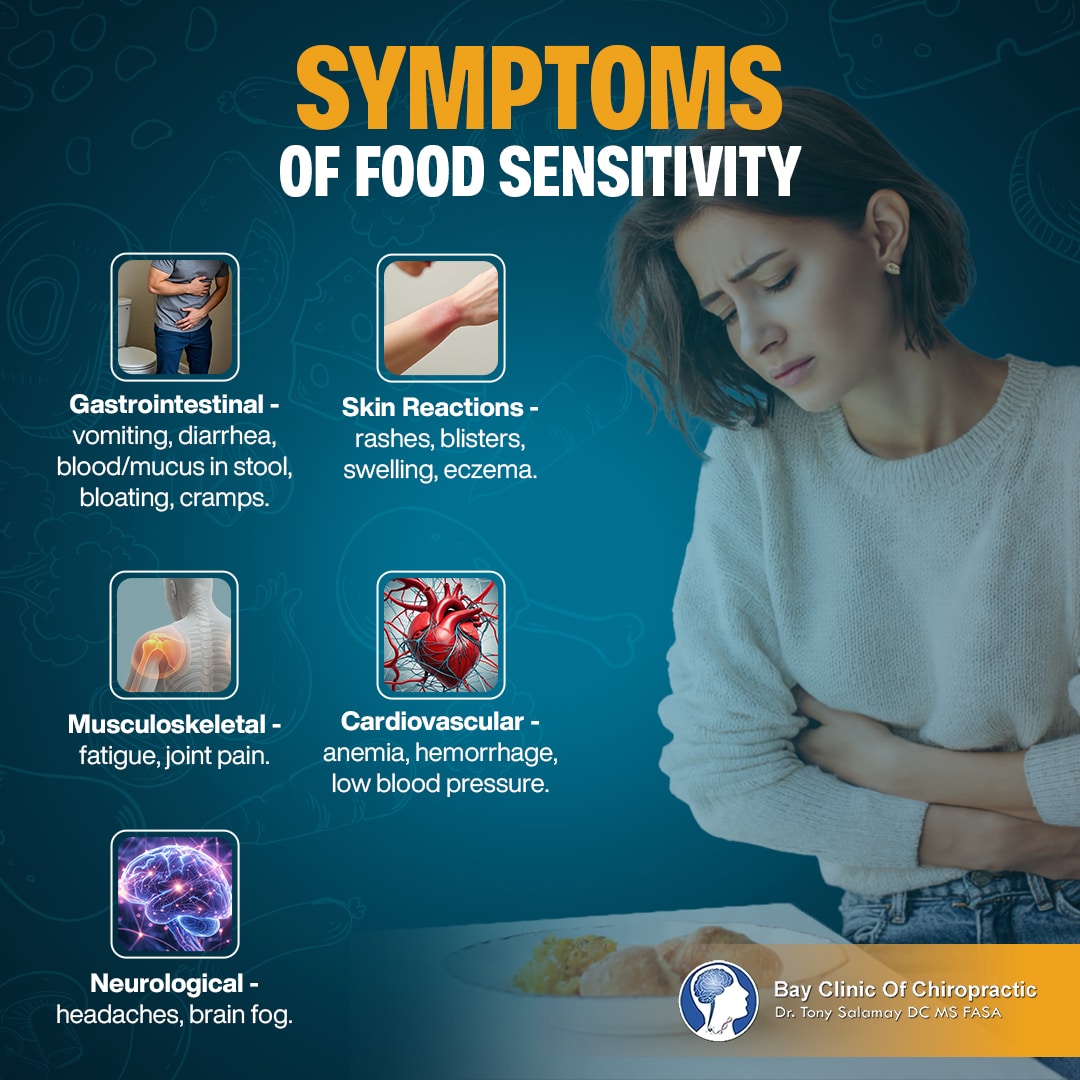
- Gastrointestinal issues, such as vomiting, diarrhea, blood or mucus in stool, abdominal bloating, pain, cramps
- Skin reactions, such as rashes, blisters, itchiness, swelling, and eczema
- Musculoskeletal symptoms, such as fatigue and joint pain
- Neurological symptoms, such as headaches and brain fog
- Cardiovascular problems, such as anemia, hemorrhage, and low blood pressure
Food sensitivity symptoms may be delayed compared to other adverse food reactions and may also become chronic. The exact symptoms a person experiences largely depend on the type of food sensitivity and the affected part of the gastrointestinal tract. FPIES can affect the entire gastrointestinal tract, FPIAP typically affects the last part of the large intestine, while FPE mostly affects the small intestine.
What Are the Causes of Food Sensitivity?
The causes of food sensitivity are not fully known, but cellular immunological mechanisms and the gut microbiome have been implicated in the main types of food sensitivity. Different foods can also trigger different types of food sensitivities.
FPIAP is characterized by white blood cells infiltrating the inner lining of where the large intestine ends and the rectum begins (rectosigmoid junction). FPIES is strongly linked to food-specific regulatory T cells (white blood cells) and cytokines (pro-inflammatory proteins). In FPE, there is an influx of cell-toxic immune cells into the small intestine.
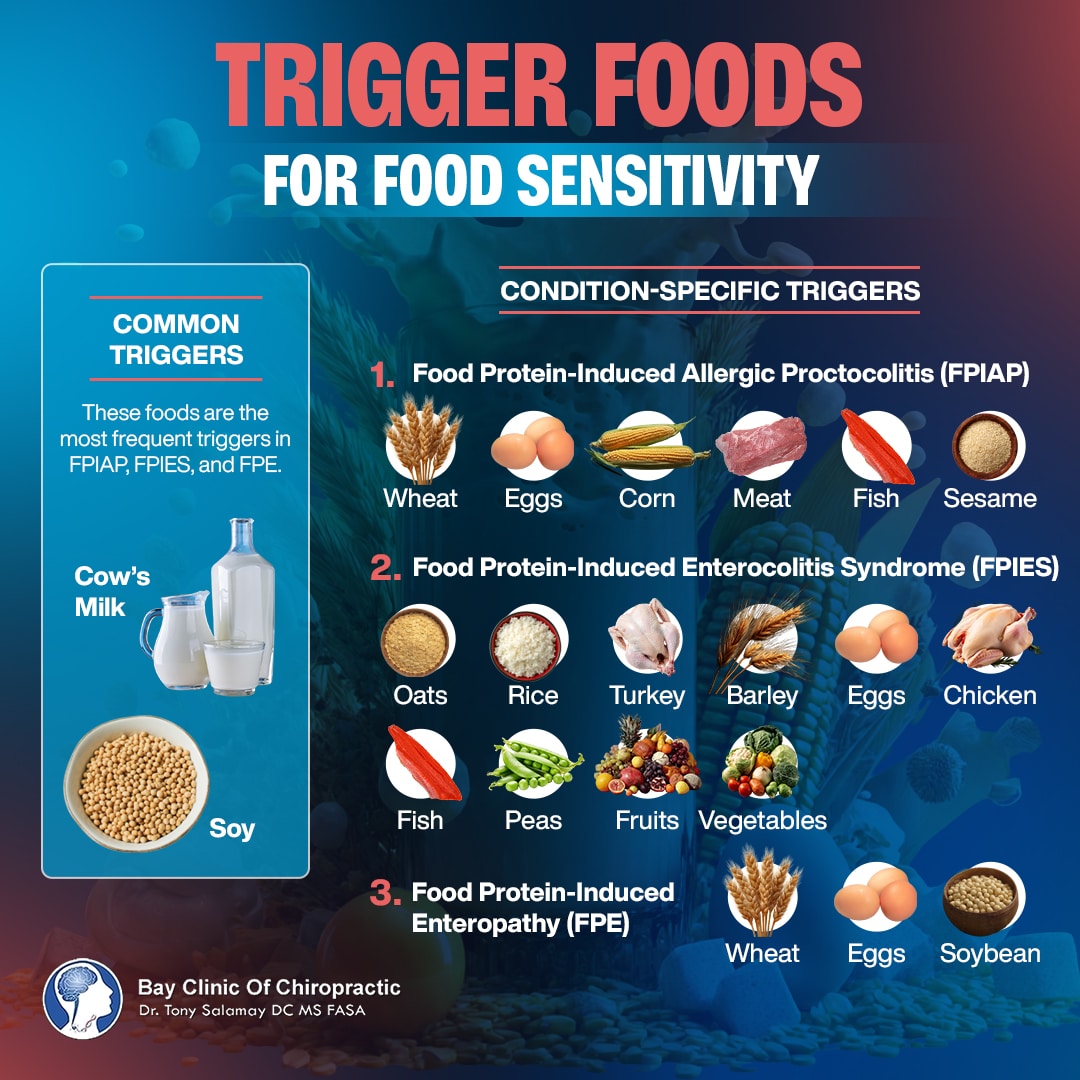
Some of the triggering foods for the different food sensitivities are:
- FPIAP: Mostly cow’s milk and soy, with less common triggers including wheat, egg, corn, meat, fish, and sesame
- FPIES: Mostly cow’s milk and soy, with less common triggers including oats, rice, turkey, barley, eggs, chicken, fish, peas, fruits, and vegetables
- FPE: Mostly cow’s milk and soy, with less common triggers including wheat, egg, soybean
How Are Food Sensitivities Diagnosed?
Food sensitivities are diagnosed through a thorough examination of medical and dietary history, assessment of symptoms, trial elimination diets, and oral food challenges (OFCs). There are no laboratory or specific diagnostic food sensitivity tests, as there are no biomarkers for non-IgE-mediated reactions.
Health professionals usually start the diagnosis process by examining your symptoms, medical history, and diet records. However, there is a significant overlap between many food sensitivity symptoms, other adverse food reactions, and gastrointestinal disorders. Therefore, these symptoms are often viewed in the context of ingested food, emphasizing cow milk and soy.
Elimination diets can also assist in diagnosis, helping health practitioners narrow the potential conditions responsible for your symptoms. An oral food challenge (OFC) involves the controlled oral administration of a suspected allergen in a standardized setting. The amount of allergen administered is gradually increased to reach an accurate diagnosis of the condition.
An OFC is the gold standard for confirming an FPIES diagnosis. If the elimination diet and symptoms already overwhelmingly indicate FPIES, there may not be a need for an OFC, which is labor- and time-intensive. Oral food challenges are generally unnecessary for FPIAP and FPE diagnoses, although they may help prevent misdiagnoses in some FPIAP cases.
The accuracy of the food sensitivity diagnosis hinges on the experience and expertise of the health professional. Food sensitivity symptoms are usually delayed compared to other food adverse reactions. These symptoms may also result from foods that are not expected to cause adverse reactions, like rice and vegetables. If you need a diagnosis of your food sensitivity in Panama City, Florida, contact us at the Bay Clinic of Chiropractic at (850) 785-9372 or info@thebaydoctor.com.
Natural Treatment of Food Sensitivity
The natural treatment of food sensitivity is heavily centered around dietary changes. These dietary changes include an elimination diet that removes triggering foods and a support diet plan that fills nutritional gaps. We will explain these natural treatments of food sensitivity in more detail below.
Elimination Diet
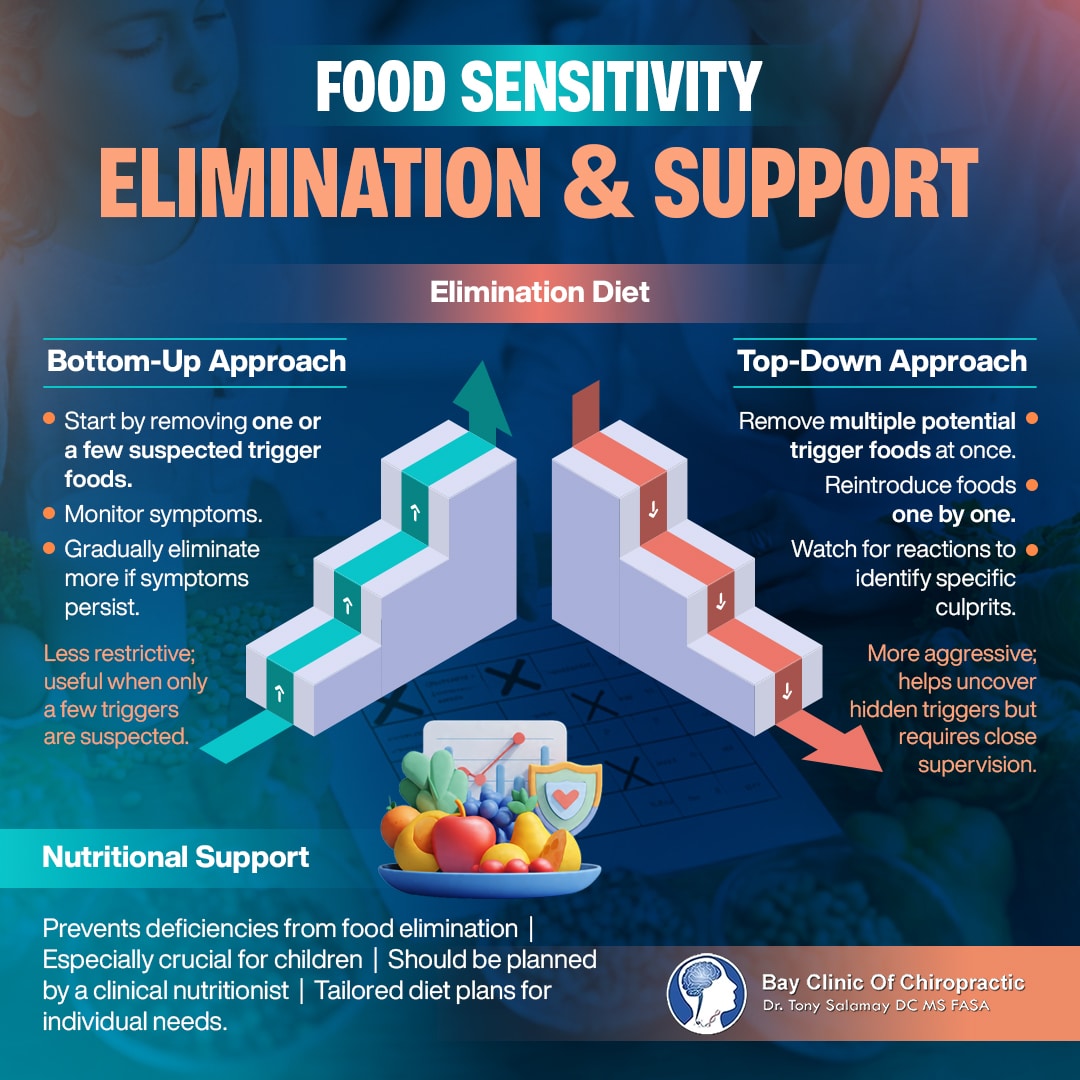
An elimination diet involves removing specific foods or food groups from the diet to identify and treat adverse food reactions, including food sensitivities. There are two main elimination diet approaches:
- Bottom-Up Approach
- Removes only suspected trigger foods
- Retains most of the individual’s usual diet
- Preferred for milder food sensitivity symptoms
- Example: Removing dairy products from the diet if lactose intolerance is suspected
- Top-Down Approach
- Removes a broad range of foods initially
- Foods are gradually reintroduced one at a time
- Preferred for severe symptoms, like dehydration or greatly reduced quality of life
- Example: Removing all foods containing histamine (including spinach, tomatoes, aged cheese, processed meat, bananas, eggplants, canned foods, legumes, shellfish, and nuts) from the diet if histamine intolerance is suspected
The top-down approach allows for more control over diet and makes it easier to spot the offending food. However, most people only need the bottom-up approach, as elimination diets try to avoid unnecessary nutritional restrictions.
Nutritional Support
Nutritional support is crucial for people on elimination diets, as many of the excluded foods provide key nutrients needed for growth and overall health. Without proper planning, nutritional gaps may appear when on an elimination diet, potentially causing nutritional deficiencies and related health conditions. This is most relevant in children or on a top-down elimination diet.
Since individual nutritional needs vary, there’s no one-size-fits-all support plan. Selecting appropriate substitute foods requires careful evaluation to meet nutrient requirements without triggering additional adverse reactions. Therefore, support diet plans should be developed by a qualified health practitioner experienced in clinical nutrition.
Dr. Tony Slamay of the Bay Clinic of Chiropractic is an experienced functional health practitioner and clinical nutritionist who can help you draft a diet plan that fits your needs. Contact us at (850) 785-9372 or through our email at info@thebaydoctor.com.
Frequently Asked Questions
Is Food Sensitivity the Same as Food Intolerance?
No, food sensitivity is not the same as food intolerance, although they are both types of adverse food reactions. Food sensitivity is an immune-mediated adverse reaction to food, while food intolerance does not involve the immune system. Food intolerances are more common in society than food sensitivities.
Food sensitivity and intolerance may also differ in the onset, duration, and severity of symptoms. Food intolerance symptoms usually occur faster, last shorter, and are less severe than food sensitivity symptoms. The amount ingested and individual differences seem to affect both adverse food interactions, though.
Some examples of food intolerances are lactose, gluten, caffeine, glutamate, and histamine intolerances. Examples of food sensitivities are food protein-induced enterocolitis syndrome (FPIES), food protein-induced enteropathy (FPE), and food protein-induced allergic proctocolitis (FPIAP). Triggering foods for food sensitivity include cow milk, soy, wheat, egg, rice, and oat.
What Is the Difference Between Food Sensitivity and Food Hypersensitivity?
Food hypersensitivity is an umbrella term for any adverse reaction to food, while food sensitivity is a specific term for a non-IgE-mediated adverse reaction to food. All food sensitivities are food hypersensitivities, but not all food hypersensitivities are food sensitivities.
Adverse food reactions that include the immune system are known as immunologic reactions (comprising food allergies and food sensitivity). In contrast, those that do not involve the immune system are non-immunologic reactions (food intolerances). Food sensitivity is a type of non-IgE immunologic reaction, meaning it involves the immune system but not through the immunoglobulin E antibody.
Do Food Sensitivities Go Away With Time?
Yes, food sensitivities may go away with time, usually during childhood. The mechanisms behind this are not fully understood, but they may be due to an adaptation by the immune system and microbiome.
Children with FPIAP typically outgrow it by 12 months of age, although it may persist until later childhood in some children. The same applies to children with FPE, which is also outgrown by early childhood. FPIES is also outgrown in childhood, but usually at later stages than other food sensitivities.
Is Celiac Disease a Type of Food Sensitivity?
No, celiac disease is not a type of food sensitivity. It is a chronic autoimmune disorder that causes an immune reaction to the protein gluten, commonly found in wheat, barley, and rye. Despite being triggered by gluten in foods, celiac disease is typically not considered a type of food sensitivity or allergy. It has distinct health implications, like long-term damage to the small intestine, anemia, and increased cancer.
However, gluten can still cause a type of food sensitivity known as non-celiac gluten sensitivity (NCGS). Unlike celiac disease, NCGS is not an autoimmune disorder and does not involve any long-term damage to the small intestine. Wheat (which contains gluten) can also cause adverse reactions in sensitive individuals, in a condition known as wheat allergy, which is distinct from celiac disease and NCGS.
Conclusion
Food sensitivities are immune-mediated adverse reactions that can cause various symptoms from gastrointestinal discomfort to skin and respiratory issues. Diagnosing food sensitivities involves a detailed history, symptom assessment, and elimination diets, as there are no definitive laboratory tests available. Proper management through dietary changes, such as elimination diets and nutritional support, can significantly improve symptoms and quality of life.
If you suspect a food sensitivity reaction, you should not hesitate to contact a professional for better profiling and management. If you live in and around Panama City, Florida, the Bay Clinic of Chiropractic is the place for you. Contact us today to schedule a consultation at (850) 785-9372 or email us at info@thebaydoctor.com.
References
- Godwin L, Sinawe H, Crane JS. Biochemistry, immunoglobulin e [Internet]. StatPearls – NCBI Bookshelf. 2022. Available from: https://www.ncbi.nlm.nih.gov/books/NBK541058/
- Staats J, Van Zyl I. Adverse reactions to food: Navigating the maze in primary health care. South African Family Practice [Internet]. 2022 Jul 21;64(1). Available from: https://pmc.ncbi.nlm.nih.gov/articles/PMC9350490/#_ad93_
- 1. Calvani M, Anania C, Cuomo B, D’Auria E, Decimo F, Indirli GC, et al. Non–IgE- or Mixed IgE/Non–IgE-Mediated Gastrointestinal Food Allergies in the First Years of Life: Old and New Tools for Diagnosis. Nutrients [Internet]. 2021 Jan 14 [cited 2025 Oct 12];13(1):226. Available from: https://pmc.ncbi.nlm.nih.gov/articles/PMC7829867/
- Labrosse R, Graham F, Caubet JC. Non-IGE-Mediated Gastrointestinal Food Allergies in Children: an update. Nutrients [Internet]. 2020 Jul 14;12(7):2086. Available from: https://www.mdpi.com/2072-6643/12/7/2086
- Lin XP, Magnusson J, Ahlstedt S, Dahlman-Höglund A, Hanson LÅ, Magnusson O, et al. Local allergic reaction in food-hypersensitive adults despite a lack of systemic food-specific IgE. Journal of Allergy and Clinical Immunology [Internet]. 2002 May 1;109(5):879–87. Available from: https://www.sciencedirect.com/science/article/abs/pii/S0091674902700171
- Nowak-Wegrzyn A, Warren CM, Brown-Whitehorn T, Cianferoni A, Schultz-Matney F, Gupta RS. Food protein–induced enterocolitis syndrome in the US population–based study. Journal of Allergy and Clinical Immunology [Internet]. 2019 Jul 6;144(4):1128–30. Available from: https://pmc.ncbi.nlm.nih.gov/articles/PMC7923683/
- Calvani M, Bianchi A, Reginelli C, Peresso M, Testa A. Oral Food Challenge. Medicina [Internet]. 2019 Sep 27;55(10):651. Available from: https://pmc.ncbi.nlm.nih.gov/articles/PMC6843825/
- Boyce JA, Assa’ad A, Burks AW, Jones SM, Sampson HA, Wood RA, et al. Guidelines for the diagnosis and management of food allergy in the United States: Summary of the NIAID-Sponsored Expert Panel report. Nutrition Research [Internet]. 2011 Jan 1;31(1):61–75. Available from: https://pmc.ncbi.nlm.nih.gov/articles/PMC4249938/#S93
- Arvola T, Ruuska T, KeräNen J, HyöTy H, Salminen S, Isolauri E. Rectal bleeding in infancy: Clinical, allergological, and microbiological examination. PEDIATRICS [Internet]. 2006 Apr 1;117(4):e760–8. Available from: https://publications.aap.org/pediatrics/article-abstract/117/4/e760/70937/Rectal-Bleeding-in-Infancy-Clinical-Allergological?redirectedFrom=fulltext
- Malone JC, Daley SF. Elimination diets [Internet]. StatPearls – NCBI Bookshelf. 2024. Available from: https://www.ncbi.nlm.nih.gov/books/NBK599543/
- Nowak-Węgrzyn A, Katz Y, Mehr SS, Koletzko S. Non–IgE-mediated gastrointestinal food allergy. Journal of Allergy and Clinical Immunology [Internet]. 2015 May 1;135(5):1114–24. Available from: https://www.jacionline.org/article/S0091-6749%2815%2900430-3/fulltext
- Tuck CJ, Biesiekierski JR, Schmid-Grendelmeier P, Pohl D. Food intolerances. Nutrients [Internet]. 2019 Jul 22;11(7):1684. Available from: https://pmc.ncbi.nlm.nih.gov/articles/PMC6682924/
- Lam HCY, Neukirch C, Janson C, Garcia-Aymerich J, Clausen M, Idrose NS, et al. Food hypersensitivity: an examination of factors influencing symptoms and temporal changes in the prevalence of sensitization in an adult sample. European Journal of Clinical Nutrition [Internet]. 2023 Mar 24;77(8):833–40. Available from: https://www.nature.com/articles/s41430-023-01284-w
- Venter C, Vieira MC, Fleischer D. Tolerance development in non-IgE mediated food allergies: lessons from Brazil. Jornal De Pediatria [Internet]. 2023 Oct 16;100(1):4–7. Available from: https://pmc.ncbi.nlm.nih.gov/articles/PMC10751694/#sec0012
- Cox AL, Sicherer SH. Classification of adverse food reactions. Journal of Food Allergy [Internet]. 2020 Sep 1;2(1):3–6. Available from: https://pmc.ncbi.nlm.nih.gov/articles/PMC11250527/#sec6
- Barbaro MR, Cremon C, Stanghellini V, Barbara G. Recent advances in understanding non-celiac gluten sensitivity. F1000Research [Internet]. 2018 Oct 11;7:1631. Available from: https://pmc.ncbi.nlm.nih.gov/articles/PMC6182669/