Your joints and muscles are stiff, achy, swollen, or tender. You have been having more gastrointestinal issues. You have a fatigue that just doesn’t respond to rest. All these symptoms may seem unrelated and from different sources, but they share one thing in common – inflammation. While inflammation is a natural defense mechanism that helps the body heal, it can contribute to serious health issues when it becomes chronic.
Inflammation is the body’s immune response to harmful stimuli, protecting against threats and promoting healing. Inflammation symptoms vary depending on the type. Acute inflammation occurs rapidly, causing redness, heat, swelling, pain, and loss of function. Chronic inflammation develops more gradually, leading to joint pain, fatigue, digestive issues, weight changes, mental health disturbances like anxiety and depression, and chronic conditions like arthritis, heart disease, and diabetes.
The causes of inflammation also vary with the type. Acute inflammation can be caused by infections, injuries, burns, or exposure to toxins. Chronic inflammation often results from unresolved infections, autoimmune disorders, pollutants, and metabolic imbalances. Psychological stress, along with unhealthy lifestyle choices like smoking, excessive alcohol consumption, and physical inactivity, can also contribute to chronic inflammation.
Conventional treatments such as non-steroidal anti-inflammatory drugs (NSAIDs) and corticosteroids can help manage inflammation, but they often come with side effects. Natural approaches, including an anti-inflammatory diet, regular exercise, stress management, quality sleep, and supplements, offer a holistic way to reduce inflammation and promote overall health.
You can learn more here about the symptoms, causes, and natural treatments of inflammation.
What Is Inflammation?
Inflammation is a process in which the immune system recognizes and removes harmful stimuli, such as infections, environmental agents (like irradiation), damaged cells, and toxic chemicals. Inflammation is a key immune mechanism for fighting infections and healing damaged tissues.
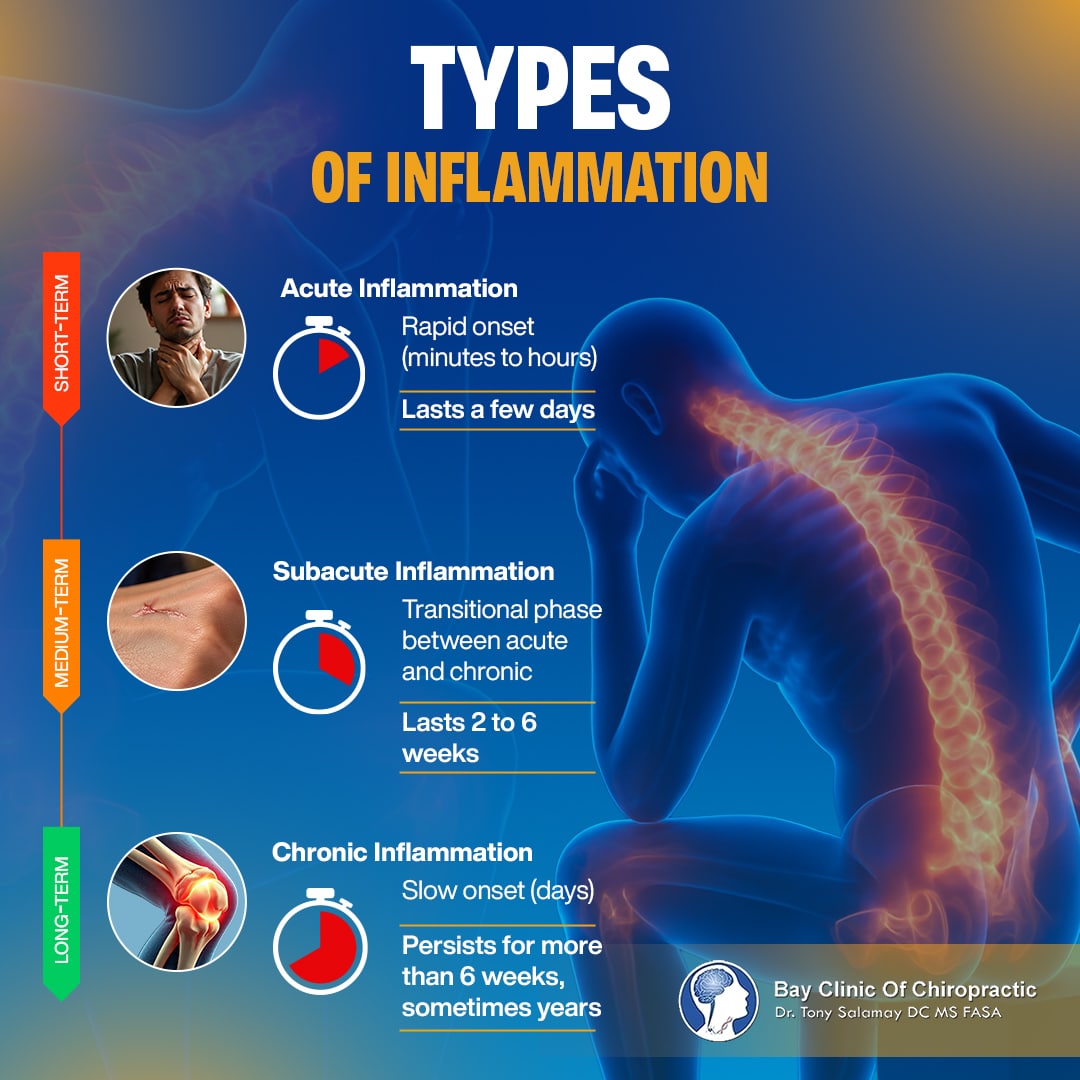
Inflammation can be classified as acute, subacute, and chronic, depending on the duration of the inflammatory response.
- Acute inflammation: Rapid onset (minutes to hours), lasts a few days
- Subacute inflammation: This lasts 2 to 6 weeks and is the transitional phase from acute to chronic inflammation.
- Chronic inflammation: Slow onset (usually days), lasts for more than 6 weeks
Inflammation is not bad in itself, but it becomes a problem when acute inflammation progresses into chronic inflammation.
What Are the Symptoms of Inflammation?
The fundamental symptoms of inflammation are loss of function, heat, pain, redness, and swelling. More symptoms may arise as inflammation progresses, with the specific symptoms relating to the affected organ or system. For instance, arthritis may cause joint pain, while Crohn’s disease may cause abdominal pain.
Symptoms of Acute Inflammation
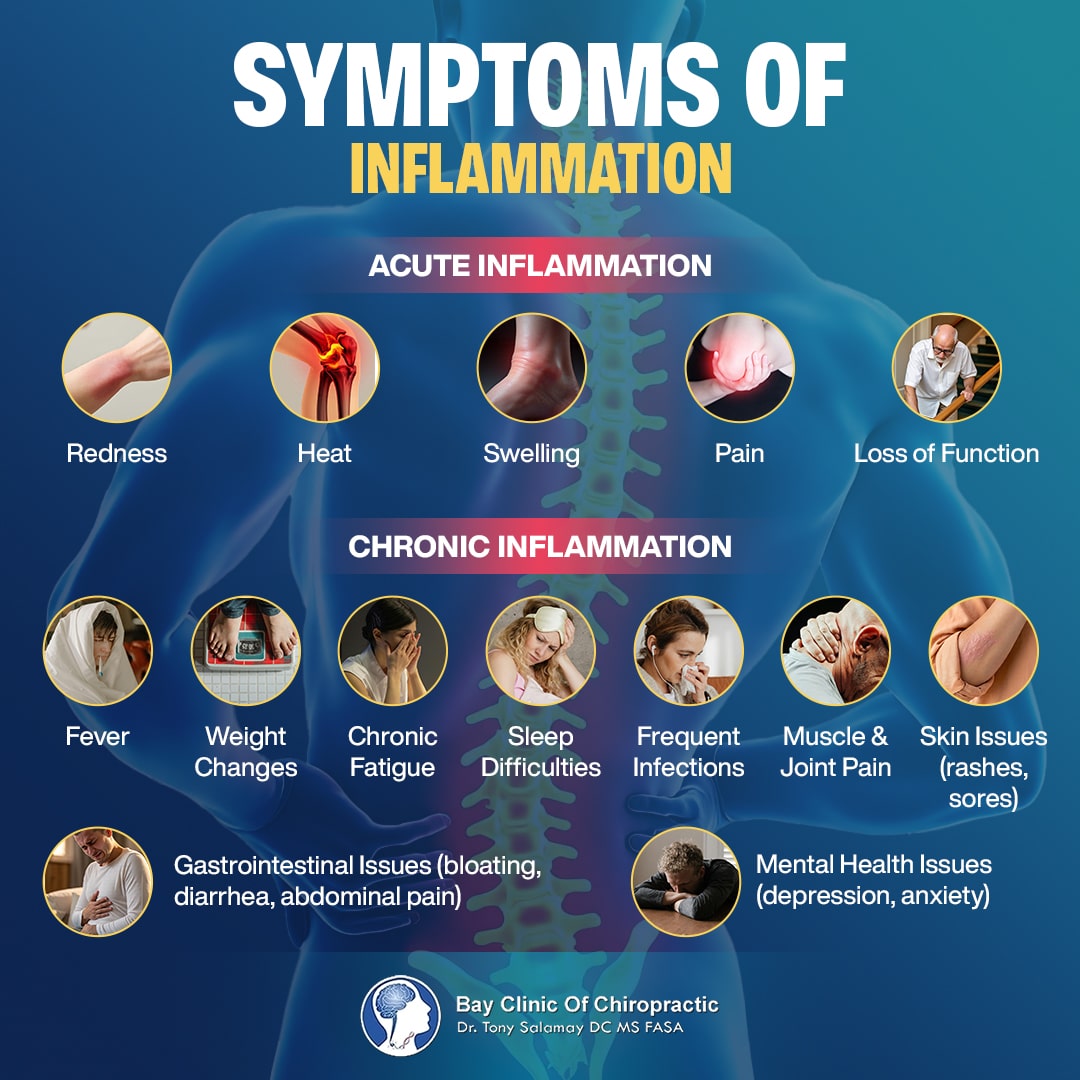
There are five fundamental symptoms of acute inflammation:
- Redness (due to an increase in blood cells passing through the injured area)
- Heat (due to increased blood flow, carrying heat from the core to cooler extremities)
- Swelling (due to fluid accumulation and widening of blood vessels)
- Pain (due to an increase in pain mediators)
- Loss of function (a combination of the inflammatory response mechanisms, particularly fluid accumulation and pain)
Inflammation does not always cause all five symptoms, and some inflammation cases may not even cause any symptoms.
Symptoms of Chronic Inflammation
The fundamental symptoms of inflammation (redness, heat, swelling, pain, and loss of function) are less prominent in chronic inflammation. Instead, the symptoms observed may be related to the health condition associated with chronic inflammation.
Chronic inflammation is associated with a wide range of conditions, including diabetes, cardiovascular diseases (such as stroke, coronary heart disease, and heart failure), arthritis, allergies, gastrointestinal conditions (like Crohn’s disease and ulcerative colitis), and respiratory conditions like chronic obstructive pulmonary disease (COPD).
Some chronic inflammation symptoms are:
- Gastrointestinal issues (such as bloating, diarrhea, abdominal pain, and cramps)
- Pain in muscles and joints
- Chronic fatigue
- Frequent infections
- Mental health disorders (such as depression and anxiety)
- Weight changes
- Sleep difficulties
- Sores and rashes
- Fever
The WHO recognizes chronic inflammatory conditions as the greatest threat to human health, and this assessment makes a lot of sense, too, considering that 3 out of 5 people globally die from chronic inflammatory disease.
What Are the Causes of Inflammation?
Inflammation can be caused by factors that can stimulate tissue damage. Examples of these factors include infections (especially from bacteria and viruses), chemical irritants (like fluoride and nickel), damaged cells, physical agents (asbestos and silica), and even psychological feelings (like excitement).

Below is a more detailed list of the causes of acute and chronic inflammation.
Causes of Acute Inflammation
The causes of acute inflammation can be divided into infectious or non-infectious factors.
Infectious factors
- Bacteria
- Viruses
- Other microorganisms
Non-infectious factors
- Physical: Frostbite, burns, trauma, ionizing radiation, physical injury, foreign bodies (asbestos, silica)
- Chemical: Glucose, fatty acids, toxins, alcohol, chemical irritants (fluoride, nickel, and other trace elements)
- Biological: Damaged cells, responses to psychological feelings like excitement
Causes of Chronic Inflammation
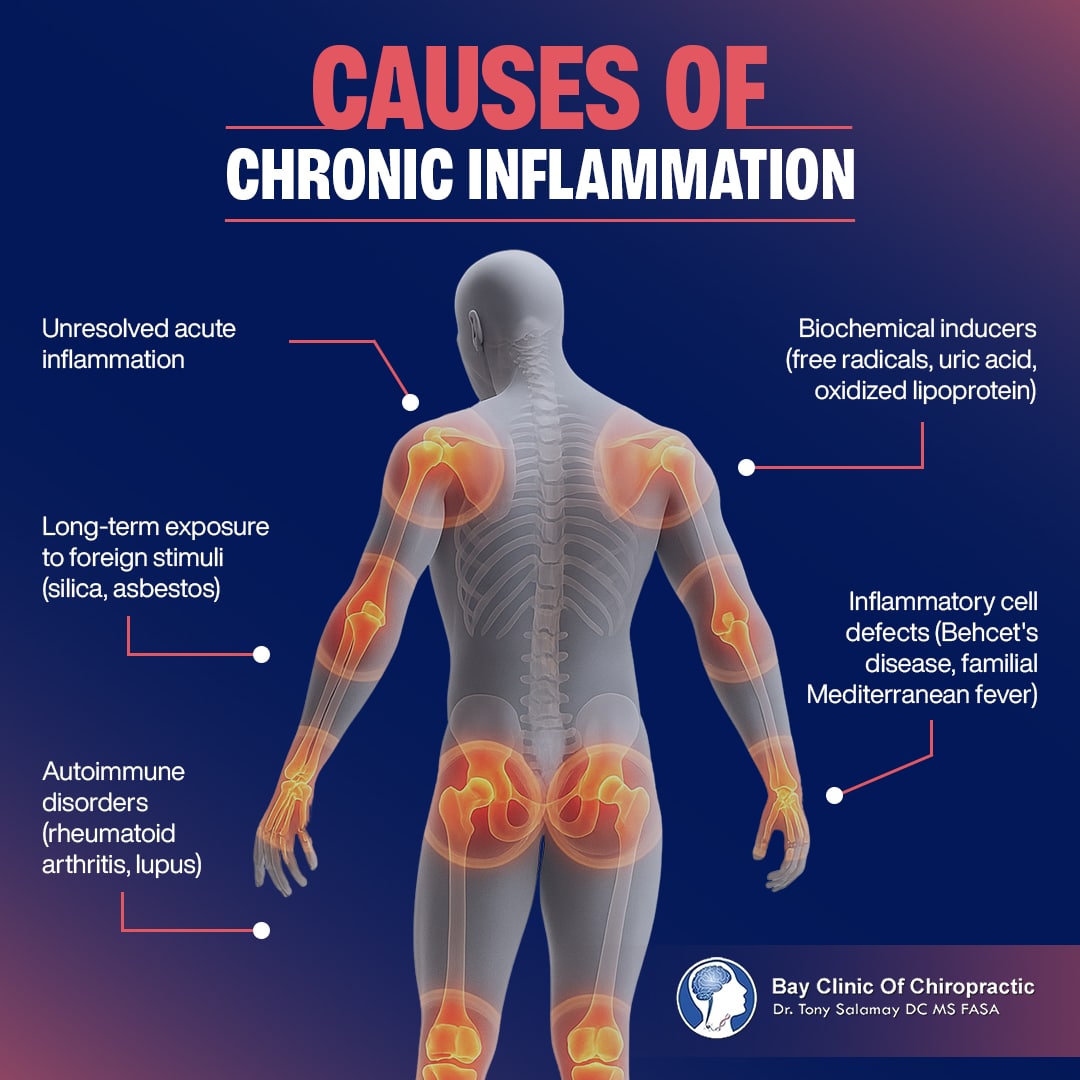
Chronic inflammation can be caused by the following:
- Unresolved acute inflammation: Normally, acute inflammation is terminated when the cause of the inflammation is removed and the damaged tissue is repaired. However, if the cause of the inflammation is not eliminated and acute inflammation persists, chronic inflammation may arise.
- Long-term exposure to foreign stimuli: Certain stimuli are difficult for the body to break down or eliminate, and long-term exposure to them can cause chronic inflammation. Examples are silica dust and asbestos.
- Autoimmune disorders: These are conditions that arise when the immune system mistakes the body’s cells as foreign and attacks them. Examples are rheumatoid arthritis and systemic lupus erythematosus (SLE).
- Inflammatory and biochemical inducers: Certain chemical and biological agents, such as free radicals, uric acid crystals, oxidized lipoprotein, homocysteine, and advanced glycation end products (AGEs), can stimulate chronic inflammation.
- Inflammatory cell defects: Problems in the normal functioning of cells that mediate inflammation can lead to chronic inflammation. These defects are usually observed in autoinflammatory diseases, such as Behcet’s disease and familial Mediterranean fever (FMF).
Natural Treatment of Inflammation
The natural treatment of inflammation centers around dietary modifications, supplement use, and lifestyle changes. These natural treatments may directly help reduce the inflammatory response and its symptoms or indirectly help by removing inflammatory triggers.
Natural treatment is not the only way inflammation is managed today, as there are conventional approaches mainly revolving around medications for inflammation treatment. Two of the most commonly used medications in conventional medicine are non-steroidal anti-inflammatory drugs (NSAIDs – such as aspirin, diclofenac, and ibuprofen) and corticosteroids (such as dexamethasone and prednisolone).
NSAIDs and corticosteroids have anti-inflammatory properties and, in the case of NSAIDs, can help reduce pain. However, these medications have side effects, and patients who use them for extended periods can risk serious health issues. NSAIDs have gastrointestinal, kidney, cardiovascular, liver, and blood-related adverse effects. Likewise, corticosteroids can affect the musculoskeletal, cardiovascular, immune, metabolic, endocrine, and gastrointestinal systems, as well as the eyes and skin.
Considering the multiple side effects associated with the main conventional approaches to managing chronic inflammation, there is a need for treatment options that are not only safer in the long term but also effective. This is where natural treatments come into play. Here are some of the natural treatment options for managing inflammation.
Diet
One of the most important treatment options for managing inflammation is diet. Choosing the right foods to eat and cutting out the wrong ones can greatly reduce inflammation levels and relieve inflammation symptoms. Diet also offers the added advantage of boosting the immune system and improving overall health, which may make the body more effective in dealing with inflammation triggers.
Here are some of the foods to eat and avoid to manage inflammation.

Foods to Eat
Here are some of the foods that will make up a good anti-inflammatory diet:
- Vegetables such as cabbage, broccoli, cauliflower, Brussels sprouts, spinach, and kale
- Nuts such as almonds and walnuts
- Fatty fish such as sardines, tuna, herrings, mackerel, salmon
- Fruits such as berries (like blueberries, strawberries, and raspberries), grapes, oranges, apples, avocado
- Prebiotics (non-digestible foods that selectively benefit the helpful bacteria of the gut), in the form of dietary fiber as is present in Jerusalem artichokes, asparagus, leeks, onions, and bananas
- Whole grains such as oats, quinoa, brown rice, buckwheat, and barley
- Unsaturated fats such as olive oil and sunflower oil
An anti-inflammatory diet helps reduce inflammation and chronic pain, with variations like the Mediterranean, DASH, Okinawan, and Nordic diets. While they differ in food composition, all emphasize fresh, biodiverse ingredients. There’s no one-size-fits-all approach, so a personalized plan is best.
Foods to Avoid
Here are examples of pro-inflammatory foods to avoid when managing inflammation:
- Processed meat such as sausages, ham, bacon, hot dogs
- Refined grains such as white bread, white rice, white flour, corn grits
- Red meat such as beef, pork, goat, veal, venison
- Organ meat such as livers, kidneys, heart, tongue, tripe
- Fried foods such as french fries, donuts, fried chicken
- Sugary beverages such as soda, energy drinks, sports drinks, sweetened fruit drinks
- Saturated fats such as cakes, biscuits, cream, butter, coconut oil, palm oil

Managing inflammation involves both consuming anti-inflammatory foods and avoiding pro-inflammatory ones, which can worsen inflammatory conditions. Contact the Bay Clinic of Chiropractic in Panama City, Florida, for assistance drafting a personalized diet plan. Dr. Tony Salamay is the lead doctor and a clinical nutritionist who will consider your symptoms and health states and work with you to find a diet plan that is suitable for you. You can contact us at the Bay Clinic of Chiropractic at (850) 785-9372 or through our email at info@thebaydoctor.com.
Supplements
Supplements may help reduce inflammation. Though beneficial, supplements should be used with caution, especially if you’re on medication or have underlying conditions. Consult a healthcare professional before using any supplement.
Here are some of the supplements that can help reduce inflammation levels:
- Omega-3 fatty acids
- Probiotics
- Curcumin (from turmeric)
- Vitamins C, D, and E
- Herbal teas (green tea, black tea)
- Zinc
- Magnesium
- Selenium
- Capsaicin
- Garlic
- Ginger
- Cinnamon
Dietary supplements provide nutrients missing from your regular diet, with many claiming to help manage inflammation. However, not all are effective; some may even cause harm if misused. The best supplements for inflammation have proven antioxidant and anti-inflammatory properties, while condition-specific ones, like probiotics for gut health, can also help.

Lifestyle Changes
Dietary changes and supplements alone are insufficient for comprehensive and holistic inflammation management. In fact, an anti-inflammatory diet is incomplete without corresponding lifestyle modifications that are implemented in the long term, according to research by Dr. Alexander Scheiber from the Tripler Army Medical Center.
Therefore, you need to combine other strategies for managing inflammation with the appropriate lifestyle changes. These lifestyle changes are listed below:
Physical Activity
Regular physical activity can help reduce inflammation levels among people with chronic inflammation and its associated conditions. One of the ways physical activity helps is by helping to maintain a healthy weight, which is important in managing inflammation levels. The physical activity indicated here is often aerobic exercises, like brisk walking, jogging, running, swimming, hiking, dancing, and cycling. Aim for 20 to 30 minutes of moderate-intensity daily exercise for inflammation management.
Quit Smoking
Smoking is heavily linked with inflammation, and a Nature study found that the blood of smokers contained more inflammatory biomarkers than their non-smoking counterparts. Smoking is also associated with many chronic inflammation diseases, like cancer, cardiovascular disease, and lung disease.
Limit Alcohol
Excessive or chronic alcohol use can interfere with the body’s immune function, causing inflammation levels to rise and protection from infections to reduce. Alcohol also affects the gut microbiota, which not only contributes to acute inflammation but also worsens symptoms of gastrointestinal conditions. Limit your alcohol intake to the barest minimum, ensuring that you do not exceed one standard drink a day.

Quality Sleep
Research by the Boston University School of Medicine shows a relationship between poor sleep and the development and worsening of inflammation. Poor sleep refers to the duration and quality of sleep. Ideally, you would want 8 hours of uninterrupted night sleep when managing inflammation.
Stress-Management Practices
High stress levels in the body are correlated with high inflammation levels and the development of chronic inflammation. Therefore, essential lifestyle changes in managing inflammation should include practices that can reduce stress levels. Stress-management practices include yoga, breathing exercises, meditation, journaling, and social interactions.
Frequently Asked Questions
What Is the Best Natural Treatment for Inflammation?
The best natural treatment for inflammation is to adopt an anti-inflammatory diet and combine it with the right lifestyle modifications. An anti-inflammatory diet includes foods like green leafy vegetables, nuts, fatty fish, fruits, fiber, whole grains, and unsaturated fats. Lifestyle changes for managing inflammation include regular physical activity, smoking cessation, quality sleep, stress management, and alcohol avoidance.
Is Chronic Inflammation Preventable?
No, chronic inflammation is not always preventable, especially if it results from autoimmune disorders or autoinflammatory conditions, which have significant genetic components. However, you can reduce the risk of chronic inflammation by avoiding pro-inflammatory agents, such as infections, foreign bodies (asbestos, silica), physical injury, and other chemical irritants.
What Is the Natural Treatment for Gum Inflammation?
The natural treatment for gum inflammation mainly includes daily brushing and flossing and rinsing the mouth with warm salt water several times a day. Other practices like applying icepacks on the face and taking herbal teas may also help reduce the inflammation symptoms. Do not hesitate to see a dental health practitioner if you notice extensive gum inflammation that is resistant to natural treatment options.
What Are the Risk Factors of Chronic Inflammation?
The risk factors of chronic inflammation include age, obesity, diet, smoking, low sex hormones, stress, and sleep disorders. Aging leads to increased inflammatory molecules due to mitochondrial dysfunction and visceral fat accumulation. Obesity promotes inflammation as fat tissue secretes inflammatory mediators.
Diets high in saturated fats, trans fats, and refined sugars also increase inflammation. Smoking reduces anti-inflammatory molecules, while low sex hormone levels elevate pro-inflammatory markers. Stress and sleep disorders further contribute by triggering inflammatory cytokine release.
Conclusion
Inflammation is a natural immune response to foreign and harmful stimuli. Normally, inflammation is not bad, as it helps the body fight infections and heal injuries. However, chronic inflammation is a significant health concern affecting the body’s gastrointestinal, cardiovascular, mental health, respiratory, musculoskeletal, and other systems.
Conventional medicine advocates the use of medications like NSAIDs and corticosteroids for managing inflammation and its symptoms, but these medications can have serious adverse effects when used for extended periods. Fortunately, there are natural treatment strategies that have much fewer safety concerns and are also effective in managing inflammation.
These natural treatments include dietary modifications, supplement use, and lifestyle changes. Drafting a treatment plan that incorporates all of the right natural treatment options for you may not be straightforward, and you may need professional help. Contact us at the Bay Clinic of Chiropractic in Panama City, Florida, for a personalized plan for managing your inflammation. Our contact information is (850) 785-9372 on cell or info@thebaydoctor.com on email.
References
- Stone WL, Basit H, Zubair M, Burns B. Pathology, inflammation [Internet]. StatPearls – NCBI Bookshelf. 2024. Available from: https://www.ncbi.nlm.nih.gov/books/NBK534820/
- Nathan C, Ding A. Nonresolving inflammation. Cell [Internet]. 2010 Mar 1;140(6):871–82. Available from: https://www.cell.com/cell/fulltext/S0092-8674%2810%2900182-0?_returnURL=https%3A%2F%2Flinkinghub.elsevier.com%2Fretrieve%2Fpii%2FS0092867410001820%3Fshowall%3Dtrue
- Institute for Quality and Efficiency in Health Care (IQWiG). In brief: What is an inflammation? [Internet]. InformedHealth.org – NCBI Bookshelf. 2025. Available from: https://www.ncbi.nlm.nih.gov/books/NBK279298/
- Pahwa R, Goyal A, Jialal I. Chronic inflammation [Internet]. StatPearls – NCBI Bookshelf. 2023. Available from: https://www.ncbi.nlm.nih.gov/books/NBK493173/
- Chen L, Deng H, Cui H, Fang J, Zuo Z, Deng J, et al. Inflammatory responses and inflammation-associated diseases in organs. Oncotarget [Internet]. 2017 Dec 14;9(6):7204–18. Available from: https://pmc.ncbi.nlm.nih.gov/articles/PMC5805548/
- Medzhitov R. Inflammation 2010: New Adventures of an Old Flame. Cell [Internet]. 2010 Mar 1;140(6):771–6. Available from: https://www.cell.com/cell/fulltext/S0092-8674%2810%2900242-4?_returnURL=https%3A%2F%2Flinkinghub.elsevier.com%2Fretrieve%2Fpii%2FS0092867410002424%3Fshowall%3Dtrue
- National Academies Press (US). Background on autoimmune diseases [Internet]. Enhancing NIH Research on Autoimmune Disease – NCBI Bookshelf. 2022. Available from: https://www.ncbi.nlm.nih.gov/books/NBK605884/
- Krainer J, Siebenhandl S, Weinhäusel A. Systemic autoinflammatory diseases. Journal of Autoimmunity [Internet]. 2020 Feb 1;109:102421. Available from: https://www.sciencedirect.com/science/article/pii/S0896841120300329?via%3Dihub
- Punchard NA, Whelan CJ, Adcock I. The Journal of Inflammation. Journal of Inflammation [Internet]. 2004 Jan 1;1(1):1. Available from: https://journal-inflammation.biomedcentral.com/articles/10.1186/1476-9255-1-1
- Ghlichloo I, Gerriets V. Nonsteroidal Anti-Inflammatory Drugs (NSAIDs) [Internet]. StatPearls – NCBI Bookshelf. 2023. Available from: https://www.ncbi.nlm.nih.gov/books/NBK547742/
- Yasir M, Goyal A, Sonthalia S. Corticosteroid adverse effects [Internet]. StatPearls – NCBI Bookshelf. 2023. Available from: https://www.ncbi.nlm.nih.gov/books/NBK531462/
- Davani-Davari D, Negahdaripour M, Karimzadeh I, Seifan M, Mohkam M, Masoumi S, et al. Prebiotics: definition, types, sources, mechanisms, and clinical applications. Foods [Internet]. 2019 Mar 9;8(3):92. Available from: https://pmc.ncbi.nlm.nih.gov/articles/PMC6463098/
- Chen B, Patel S, Bao L, Nadeem D, Krittanawong C. Pro-Inflammatory food, gut microbiota, and cardiovascular and pancreatic diseases. Biomolecules [Internet]. 2024 Feb 10;14(2):210. Available from: https://www.mdpi.com/2218-273X/14/2/210
- Arulselvan P, Fard MT, Tan WS, Gothai S, Fakurazi S, Norhaizan ME, et al. Role of antioxidants and natural products in inflammation. Oxidative Medicine and Cellular Longevity [Internet]. 2016 Jan 1;2016(1). Available from: https://pmc.ncbi.nlm.nih.gov/articles/PMC5075620/
- Scheiber A, Mank V. Anti-Inflammatory diets [Internet]. StatPearls – NCBI Bookshelf. 2023. Available from: https://www.ncbi.nlm.nih.gov/books/NBK597377/
- Beavers KM, Brinkley TE, Nicklas BJ. Effect of exercise training on chronic inflammation. Clinica Chimica Acta [Internet]. 2010 Feb 26;411(11–12):785–93. Available from: https://pmc.ncbi.nlm.nih.gov/articles/PMC3629815/
- Savulescu-Fiedler I, Mihalcea R, Dragosloveanu S, Scheau C, Baz RO, Caruntu A, et al. The Interplay between Obesity and Inflammation. Life [Internet]. 2024 Jul 8;14(7):856. Available from: https://www.mdpi.com/2075-1729/14/7/856
- Elisia I, Lam V, Cho B, Hay M, Li MY, Yeung M, et al. The effect of smoking on chronic inflammation, immune function and blood cell composition. Scientific Reports [Internet]. 2020 Nov 10;10(1). Available from: https://www.nature.com/articles/s41598-020-76556-7
- Smoking and inflammation. PLoS Medicine [Internet]. 2005 Jun 22;2(6):e198. Available from: https://pmc.ncbi.nlm.nih.gov/articles/PMC1160597/
- Tharmalingam J, Gangadaran P, Rajendran RL, Ahn BC. Impact of alcohol on inflammation, immunity, infections, and extracellular vesicles in pathogenesis. Cureus [Internet]. 2024 Mar 25; Available from: https://pmc.ncbi.nlm.nih.gov/articles/PMC11043057/
- Mullington JM, Simpson NS, Meier-Ewert HK, Haack M. Sleep loss and inflammation. Best Practice & Research Clinical Endocrinology & Metabolism [Internet]. 2010 Oct 1;24(5):775–84. Available from: https://pmc.ncbi.nlm.nih.gov/articles/PMC3548567/
- Liu YZ, Wang YX, Jiang CL. Inflammation: the common pathway of Stress-Related diseases. Frontiers in Human Neuroscience [Internet]. 2017 Jun 20;11. Available from: https://pmc.ncbi.nlm.nih.gov/articles/PMC5476783/