Feeling tired, bloated, or just off for no clear reason? Your liver might be working overtime without you realizing it. Poor diet, alcohol, medications, and daily exposure to chemicals can leave your liver sluggish and overwhelmed. When your liver can’t keep up, your energy drops, your skin breaks out, and your digestion suffers.
A proper liver cleanse to support liver function might be what you need. A study by Dr. D. M. Grant from the Hospital for Sick Children, Toronto, Ontario, Canada, states “The liver plays an important rôle in protecting the organism from potentially toxic chemicals.” That’s why it is important to take care of your liver.
This article breaks down exactly what a liver cleanse is, why your body may be crying out for one, and what benefits you can expect when you start supporting your liver the right way. We’ll cover 7 easy, natural steps such as what to eat, what to avoid, and how to give your liver the reset it needs. No extreme detox kits or starvation cleanses, just real, practical habits that actually help.
You’ll also get straight answers to common questions like whether a liver cleanse helps with weight loss or clearer skin. If you’re looking for expert support, you’ll also learn how professional care can guide your recovery.
Your symptoms are signals, not random signs. Let’s find out what your liver has been trying to tell you.
What Is A Liver Cleanse?
A liver cleanse is a short-term regimen meant to support your liver’s natural detox functions. It typically involves diet changes, supplements, and lifestyle shifts.
Your liver filters your blood, breaks down toxins, and processes nutrients. When it’s overloaded, your body may struggle to eliminate waste effectively. A liver cleanse is not about flushing your liver, but helping it work better.
Most liver detox methods focus on reducing exposure to harmful substances and increasing intake of liver-friendly nutrients. These cleanses often last from a few days to a couple of weeks, depending on your goals and health condition.
However, since liver cleanses are not standardized, they vary in approach, and not all are backed by solid research. Some can even be harmful if extreme.
Supporting your liver should focus on healthy habits over gimmicks. The goal is to ease the burden on your liver, not push it to extremes. That’s why support from an experienced functional medicine practitioner or nutritionist can come in handy.
Why Do You Need A Liver Cleanse?
Here’s a quick look at why your liver might be struggling. From poor diet to chemical exposure, daily habits can overload it. This list highlights common signs and causes, helping you understand when a liver cleanse might help your body feel lighter, clearer, and more energized.
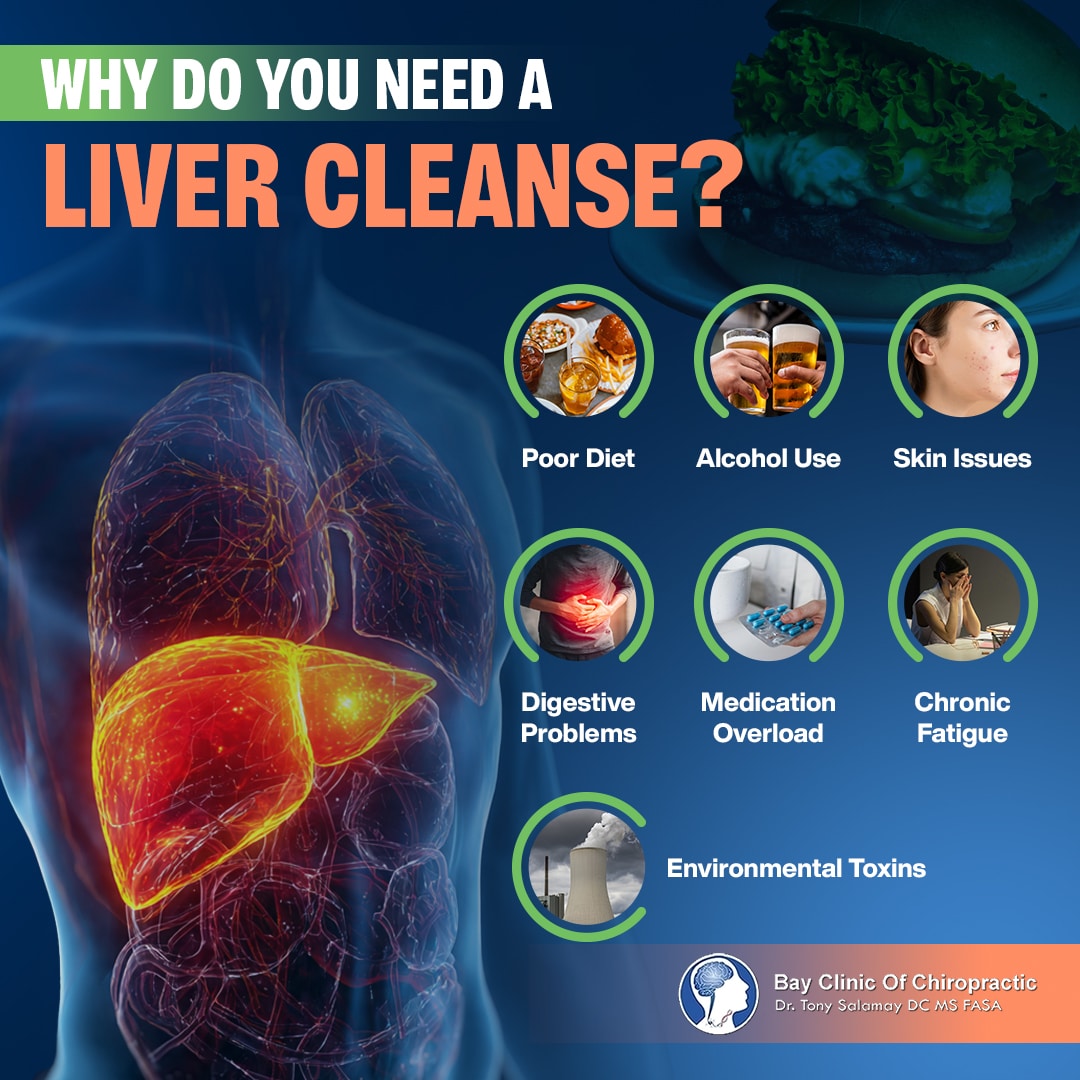
- Poor diet: Eating processed foods, sugar, and unhealthy fats stresses your liver. These can lead to fat buildup in the liver and reduce its efficiency. According to Dr. Ronald L. Koretz from the UCLA School of Medicine, Sylmar and Los Angeles, California, USA, “Dietary interventions may reduce the impact of hepatic diseases and could be useful in the treatment and prevention of progression to more severe disease.”
- Alcohol use: Even moderate drinking can inflame the liver. Over time, this increases your risk for fatty liver disease.
- Environmental toxins: Air pollution, pesticides, and household chemicals can add to your liver’s workload. Detoxing helps reduce ongoing exposure.
- Medication overload: Common drugs like acetaminophen and some antibiotics can strain your liver. Taking breaks or detox periods may support recovery.
- Chronic fatigue: If your liver is overwhelmed, energy levels can drop. Detoxing may help by improving metabolic waste removal.
- Skin issues: Acne or dull skin can reflect poor liver function. A detox supports better skin through improved toxin elimination.
- Digestive problems: Bloating or constipation might signal that your liver isn’t processing waste efficiently. Detoxing may help restore digestive balance.
What Are The Benefits Of A Liver Cleanse?
When your liver runs more efficiently, your whole body can feel the difference. Here are the benefits of cleansing your liver:
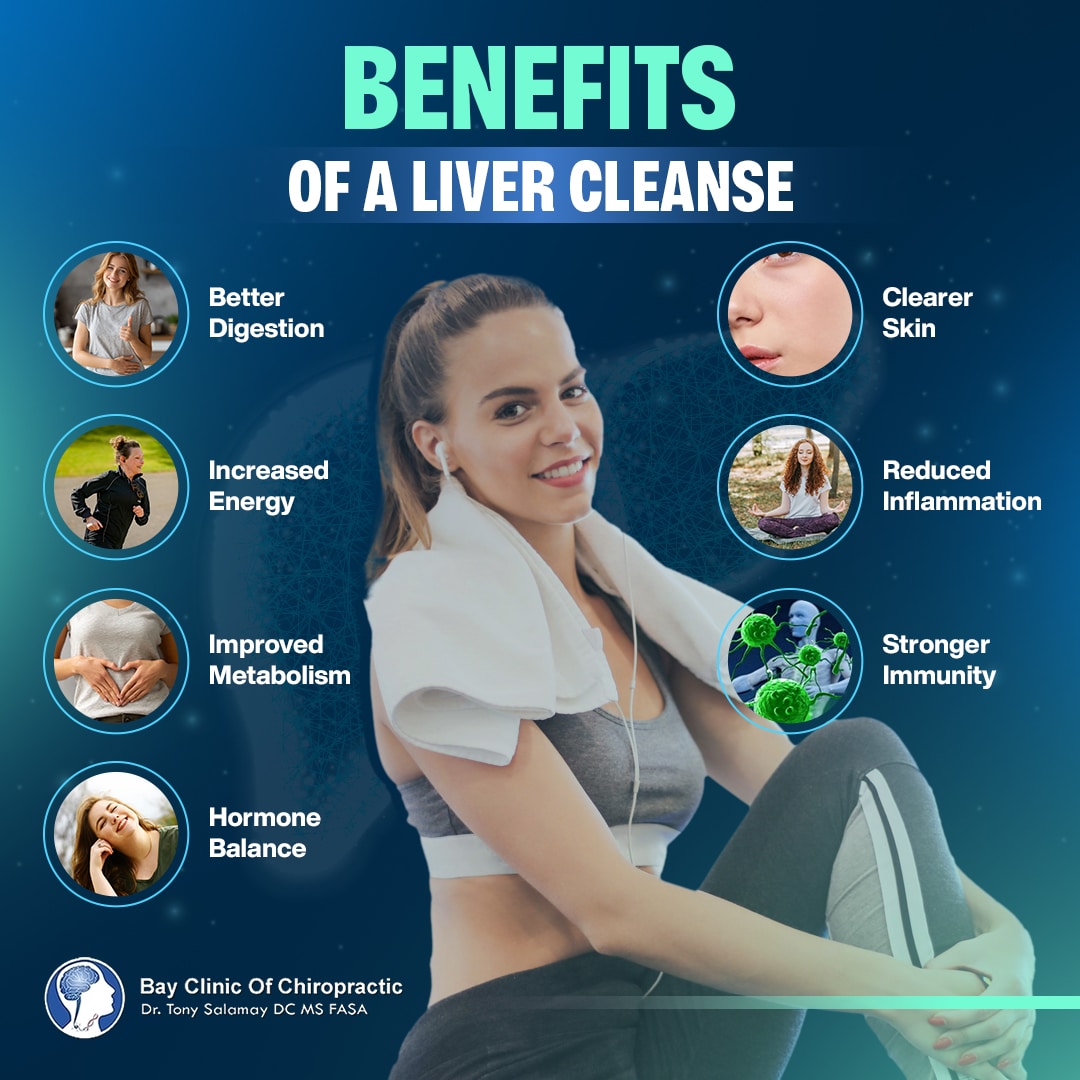
- Improved digestion: A clean liver produces more bile, which helps break down fats. This can ease bloating and improve regularity. You may also notice less indigestion after meals.
- Increased energy: Detoxing removes waste more efficiently. This may reduce fatigue and help you feel more alert. When your liver isn’t overworked, your body uses energy more effectively.
- Clearer skin: A study by Dr. Stacey E. Anderson from the National Institute for Occupational Safety and Health, Morgantown, WV, USA, found that many workplace chemicals can enter the body through the skin, contributing to systemic toxicity. This potentially increases the burden on the liver’s detox pathways. By reducing toxin buildup, your skin can appear healthier. You might see fewer breakouts or dull patches. Your skin often reflects how well your body is handling internal waste.
- Better metabolism: A healthy liver supports how your body uses carbs, proteins, and fats. This can help stabilize your weight. It may also make it easier to burn fat and build muscle.
- Reduced inflammation: Some liver-supporting foods fight inflammation. This can benefit your joints, gut, and immune system. Less inflammation can also reduce your risk for chronic disease.
- Stronger immunity: Your liver filters out viruses and bacteria. Supporting it may reduce how often you get sick. It also helps process immune-related proteins that defend your body.
- Hormone balance: The liver helps process estrogen and other hormones. Detoxing may ease PMS or mood swings related to hormone imbalance. Hormonal shifts often improve when the liver is less burdened.
7 Ways To Detox Your Liver Naturally
Supporting your liver starts with simple, daily habits. Your liver already works nonstop to filter toxins, process nutrients, and break down substances like alcohol and medications. Giving it the right tools makes that job easier.
Natural detox methods focus on reducing harmful exposures and increasing nutrients that help your liver regenerate. You don’t need harsh cleanses. Instead, steady changes in your routine can improve how your liver handles stress, inflammation, and waste.
These 7 strategies are straightforward and effective. Each one targets a key part of liver health and can help your body feel and function better.
- Drink Plenty Of Water
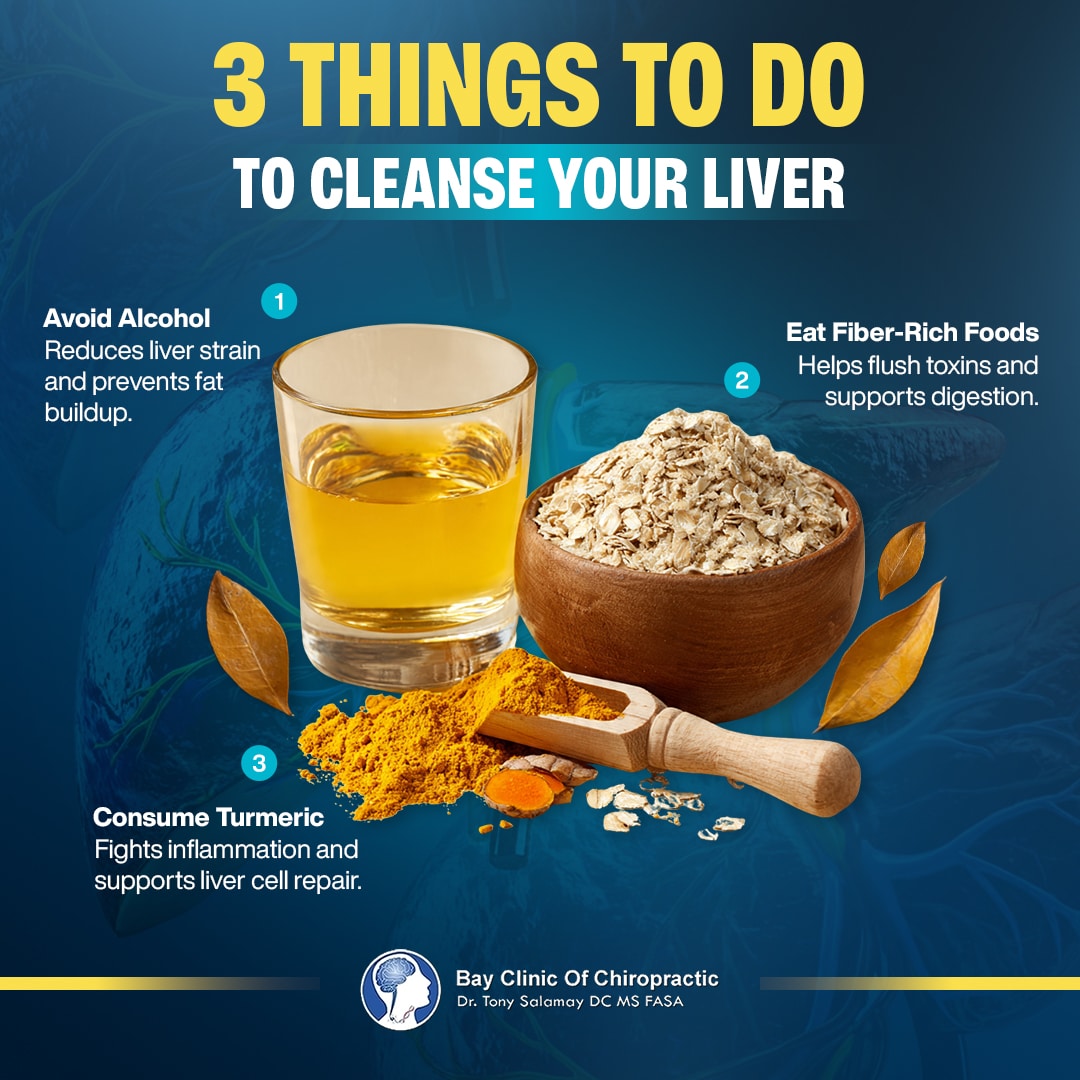
- Avoid Alcohol
- Avoid Processed Foods
- Consume Turmeric
- Eat High-Fiber Foods
- Exercise Regularly
- Avoid Environmental Toxins
1. Drink Plenty Of Water
Water plays a critical role in liver function and overall detox. Your liver needs enough fluids to help flush out waste products through urine and sweat. Without proper hydration, toxins can build up and make your liver’s job harder.
A study by Dr. Xing Wang from the Tianjin Medical University General Hospital, Tianjin, China, found that higher plain water intake is associated with a lower risk of newly diagnosed non-alcoholic fatty liver disease (NAFLD) in males.
Staying hydrated supports bile production, which helps digest fats and carry waste out of the body. It also keeps blood volume stable, allowing your liver to efficiently filter what flows through it. Aim for at least eight 8-ounce glasses of water a day, or more if you’re active or live in a hot climate.
Avoid relying on sugary drinks or caffeine to meet your fluid needs. These can stress your liver rather than help it. Stick with water, herbal teas, or lemon water for the best results.
2. Avoid Alcohol
Your liver is the main organ responsible for breaking down alcohol. Every time you drink, it has to work harder to filter and process the alcohol into less harmful substances. This process produces toxins that can damage liver cells over time, especially with frequent or heavy drinking.
Even moderate alcohol use can contribute to fat buildup in the liver, leading to non-alcoholic fatty liver disease or alcoholic liver disease. When alcohol is present, your liver prioritizes processing it over other tasks like metabolizing nutrients or filtering waste. This can slow down detox and interfere with digestion and hormone regulation.
Taking regular breaks from alcohol gives your liver a chance to recover. If you drink, limit it to occasional use and stick to recommended guidelines: no more than one drink per day for women and two for men. For better liver health, complete avoidance or long-term reduction offers the most benefit.
A study by Dr. Sang Yi Moon from the Dong-A University College of Medicine, Busan, Republic of Korea, found that drinking more than about 11 standard drinks per week can significantly raise your risk of developing liver disease. To protect your liver and reduce that risk, it’s wise to keep your alcohol intake well below common limits, even if you’re otherwise healthy.
3. Avoid Processed Foods
Processed foods often contain added sugars, unhealthy fats, preservatives, and artificial ingredients that can burden your liver. These ingredients are harder for your body to break down and can lead to fat buildup and inflammation in liver tissue over time.
Many packaged snacks, fast food items, frozen meals, and sugary drinks promote insulin resistance and non-alcoholic fatty liver disease. Your liver ends up spending more energy processing these harmful substances instead of filtering out natural toxins. This slows down detox and impacts digestion, metabolism, and hormone balance.
Focus on whole, minimally processed foods like fresh vegetables, fruits, lean proteins, and healthy fats. Reading labels and preparing meals at home can help you avoid hidden additives and give your liver the support it needs to function properly.
4. Consume Turmeric
Turmeric contains curcumin, a compound known for its anti-inflammatory and antioxidant properties. These effects can help protect liver cells from damage caused by toxins, alcohol, or processed foods. Curcumin also boosts the production of bile, which aids in digestion and waste removal.
Research shows turmeric may reduce liver enzyme levels in people with liver disease. Lower enzyme levels suggest less inflammation and better liver function. A study by Dr. Mohammad Jafar Dehzad from the Shiraz University of Medical Sciences, Shiraz, Iran, indicates that turmeric/curcumin supplementation significantly improved blood levels of alanine aminotransferase (ALT) and aspartate aminotransferase (AST), which are key liver enzymes.
It may also slow the progression of liver fibrosis (scarring), making it a useful addition to a liver-friendly diet.
You can add turmeric to food, tea, or take it as a supplement. Pair it with black pepper to increase absorption. Talk to your doctor before starting any supplement, especially if you take medications.
5. Eat High-Fiber Foods
Fiber plays a direct role in supporting your liver’s detox function. It binds to toxins and excess hormones in the digestive tract, helping move them out of your body through stool. This keeps your liver from having to reprocess waste that should already be gone.
A high-fiber diet also promotes the growth of healthy gut bacteria, which supports the gut-liver axis. This connection between your digestive system and liver helps regulate inflammation, nutrient absorption, and immune responses. When your gut is healthy, your liver deals with fewer harmful substances.
According to a study by Dr. Yu Zhu from the Anhui Medical University, Hefei, Anhui, China, dietary fiber consumption is associated with a lower risk of NAFLD. The study suggests that dietary fiber may exert its protective effects through mechanisms involving obesity reduction and improved insulin sensitivity, both of which are key factors in NAFLD development. It helps control appetite, making weight management easier- another key factor in liver health.
Soluble fiber, found in oats, beans, apples, and carrots, helps lower cholesterol and stabilize blood sugar. Insoluble fiber, found in whole grains, nuts, and vegetables, adds bulk to stool and speeds up waste elimination. Both types are essential for liver support.
Aim for 25 grams of fiber per day for women and 30 to 38 grams for men. Increase your intake slowly and drink plenty of water to keep digestion comfortable and effective.
6. Exercise Regularly
Physical activity helps reduce fat buildup in the liver and improves how your body processes glucose and insulin. This lowers your risk for non-alcoholic fatty liver disease and supports healthy liver function. Even moderate activity helps your liver filter toxins more efficiently.
A meta-analysis by Dr. Jonathan G. Stine from the Pennsylvania State University, Pennsylvania, USA, found that exercise training is associated with a significant reduction in liver fat, independent of weight loss. Participants who engaged in at least 150 minutes per week of moderate-intensity exercise, such as brisk walking, were 3.5 times more likely to achieve a clinically meaningful reduction in liver fat compared to those who did not exercise.
Exercise also boosts blood flow, which supports oxygen delivery to liver cells. Better circulation helps your liver heal and regenerate more effectively. Regular movement can also lower inflammation, which protects your liver from long-term damage.
Aim for at least 30 minutes of moderate exercise, like brisk walking, five days a week. Strength training a few times a week adds even more benefit. Find activities you enjoy so you’re more likely to stick with it.
7. Avoid Environmental Toxins
Your liver constantly filters out chemicals from the air you breathe, the products you use, and the food you eat. Over time, repeated exposure to pesticides, household cleaners, plastics, and pollutants can overload your liver and slow down its detox function.
A study by Dr. Robert Barouki from the Paris Cité University, Paris, France, found that exposure to pollutants such as pesticides, air pollution, and industrial chemicals can lead to liver damage, including fatty liver disease and hepatocellular carcinoma.
Reducing exposure lightens the toxic load and allows your liver to focus on processing waste from your body instead of your environment.
Common sources of toxins include non-organic produce, synthetic air fresheners, plastic containers, and personal care products with harsh chemicals. These substances can disrupt hormone balance, increase inflammation, and contribute to liver damage. Limiting contact with them helps protect liver cells and prevent toxin buildup.
Choose natural or fragrance-free products when possible. Store food in glass containers instead of plastic, especially when heating. Wash produce thoroughly, or buy organic when budget allows. These small steps add up and create a cleaner internal and external environment for your liver to function better.
Frequently Asked Questions
Is Liver Cleanse Effective For Weight Loss?
Liver cleanses alone do not lead to lasting weight loss. A 2015 review by Dr. A. V. Klein from Macquarie University, Sydney, NSW, Australia, found no clinical evidence that detox diets promote real fat loss. However, a balanced diet while eating in a calorie deficit will help you lose weight. If these strategies are a part of your liver cleanse you may notice weight loss too.
Can A Liver Cleanse Help With Acne?
Liver cleanses may have limited impact on acne, but improving liver function may aid in reducing acne, especially hormonal types. A study by Dr. Yun Wang from the Hunan University of Chinese Medicine, Changsha, People’s Republic of China, linked acne to hormonal and metabolic imbalances, which the liver helps regulate. However, no direct evidence confirms liver detox improves acne outcomes. Supportive care like a healthy diet may help indirectly.
Will A Liver Detox Improve Energy Levels?
Yes, some people report increased energy after liver detoxes, but scientific evidence is limited. A study by Dr. Chinmayee Panda from the Nutrition Innovation Center, Standard Process Inc., NC, USA, on a 28-day metabolic detox program noted improvements in energy and well-being among participants. However, these effects may also result from overall healthier lifestyle changes during the detox period.
Can Liver Cleansing Improve Sleep Quality?
Yes, there is some evidence that liver detoxification may enhance sleep quality. A study by Dr. Peter Neu from the Freie University Berlin, Germany, found that patients undergoing detoxification treatment experienced improved sleep after two weeks. However, more extensive research is needed to confirm this connection.
Conclusion
Your liver handles a heavy workload every day. From filtering toxins to processing nutrients, it plays a central role in how you feel and function. Supporting it through hydration, clean eating, regular movement, and reducing exposure to alcohol and toxins gives your body a better shot at long-term health.
Simple steps like adding fiber or turmeric, and avoiding processed foods, can go a long way. While liver cleanses may not be miracle cures, steady lifestyle choices can help your liver work more efficiently.
Think of your liver like a filter that never stops running- it only works well when kept clean.
At the Bay Clinic of Chiropractic in Panama City, Florida, we don’t just talk about health- we build real, sustainable strategies around it. Dr. Tony Salamay understands the connection between spinal health, nerve function, and organ performance, including how a healthy nervous system supports detox pathways.
If your body feels worn down, don’t wait for it to crash. Reach out to the Bay Clinic of Chiropractic today to get a personalized plan for better health!
References
- Grant DM. Detoxification pathways in the liver. Journal of Inherited Metabolic Disease [Internet]. 1991 Jul 1;14(4):421–30. Available from: https://onlinelibrary.wiley.com/doi/10.1007/BF01797915
- Institute for Quality and Efficiency in Health Care (IQWiG). In brief: How does the liver work? [Internet]. InformedHealth.org – NCBI Bookshelf. 2023. Available from: https://www.ncbi.nlm.nih.gov/books/NBK279393/
- Arlinghaus KR, Johnston CA. The importance of creating habits and routine. American Journal of Lifestyle Medicine [Internet]. 2018 Dec 29;13(2):142–4. Available from: https://pmc.ncbi.nlm.nih.gov/articles/PMC6378489/
- Arrigo T. Role of the diet as a link between oxidative stress and liver diseases. World Journal of Gastroenterology [Internet]. 2015 Jan 1;21(2):384. Available from: https://pmc.ncbi.nlm.nih.gov/articles/PMC4292270/
- Diaz S, Bittar K, Hashmi MF, Mendez MD. Constipation [Internet]. StatPearls – NCBI Bookshelf. 2023. Available from: https://www.ncbi.nlm.nih.gov/books/NBK513291/
- Boyer JL. Bile formation and secretion. Comprehensive Physiology [Internet]. 2013 Jul 1;3(3):1035–78. Available from: https://pmc.ncbi.nlm.nih.gov/articles/PMC4091928/
- Anderson SE, Meade BJ. Potential Health Effects Associated with Dermal Exposure to Occupational Chemicals. Environmental Health Insights [Internet]. 2014 Jan 1;8s1(Suppl 1):EHI.S15258. Available from: https://pmc.ncbi.nlm.nih.gov/articles/PMC4270264/
- Portius D. Anti-Inflammatory dietary approach to prevent the development and progression of Non-Alcoholic fatty liver diseases. Livers [Internet]. 2022 Mar 2;2(1):78–84. Available from: https://www.mdpi.com/2673-4389/2/1/5
- Wang X, Lin S, Gan S, Gu Y, Yang Y, Zhang Q, et al. Higher plain water intake is related to lower newly diagnosed nonalcoholic fatty liver disease risk: a population-based study. European Journal of Clinical Nutrition [Internet]. 2021 Apr 9;75(12):1801–8. Available from: https://www.nature.com/articles/s41430-021-00891-9
- Water Transport into Bile and Role in Bile Formation [Internet]. ResearchGate. Available from: https://www.researchgate.net/publication/7671704_Water_Transport_into_Bile_and_Role_in_Bile_Formation
- Singal AK, Kamath PS, Gores GJ, Shah VH. Alcoholic hepatitis: current challenges and future directions. Clinical Gastroenterology and Hepatology [Internet]. 2013 Jun 28;12(4):555–64. Available from: https://pmc.ncbi.nlm.nih.gov/articles/PMC3883924/
- Moon SY, Son M, Kang YW, Koh M, Lee JY, Baek YH. Alcohol consumption and the risk of liver disease: a nationwide, population-based study. Frontiers in Medicine [Internet]. 2023 Nov 28;10:1290266. Available from: https://www.frontiersin.org/journals/medicine/articles/10.3389/fmed.2023.1290266/full
- Freeman AM, Acevedo LA, Pennings N. Insulin resistance [Internet]. StatPearls – NCBI Bookshelf. 2023. Available from: https://www.ncbi.nlm.nih.gov/books/NBK507839/
- Nicoliche T, Bartolomeo CS, Lemes RMR, Pereira GC, Nunes TA, Oliveira RB, et al. Antiviral, anti-inflammatory and antioxidant effects of curcumin and curcuminoids in SH-SY5Y cells infected by SARS-CoV-2. Scientific Reports [Internet]. 2024 May 10;14(1):10696. Available from: https://www.nature.com/articles/s41598-024-61662-7
- Dehzad MJ, Ghalandari H, Amini MR, Askarpour M. Effects of curcumin/turmeric supplementation on liver function in adults: A GRADE-assessed systematic review and dose–response meta-analysis of randomized controlled trials. Complementary Therapies in Medicine [Internet]. 2023 May 11;74:102952. Available from: https://www.sciencedirect.com/science/article/pii/S0965229923000390
- Yao QY, Xu BL, Wang JY, Liu HC, Zhang SC, Tu CT. Inhibition by curcumin of multiple sites of the transforming growth factor-beta1 signalling pathway ameliorates the progression of liver fibrosis induced by carbon tetrachloride in rats. BMC Complementary and Alternative Medicine [Internet]. 2012 Sep 16;12(1):156. Available from: https://link.springer.com/article/10.1186/1472-6882-12-156
- Kieffer DA, Martin RJ, Adams SH. Impact of dietary fibers on nutrient management and detoxification organs: gut, liver, and kidneys. Advances in Nutrition [Internet]. 2016 Nov 1;7(6):1111–21. Available from: https://pmc.ncbi.nlm.nih.gov/articles/PMC5105045/
- Zhu Y, Yang H, Zhang Y, Rao S, Mo Y, Zhang H, et al. Dietary fiber intake and non-alcoholic fatty liver disease: The mediating role of obesity. Frontiers in Public Health [Internet]. 2023 Jan 6;10:1038435. Available from: https://pmc.ncbi.nlm.nih.gov/articles/PMC9853063/
- Stine JG, DiJoseph K, Pattison Z, Harrington A, Chinchilli VM, Schmitz KH, et al. Exercise training is associated with treatment response in liver fat content by magnetic resonance imaging independent of clinically significant body weight loss in patients with nonalcoholic fatty liver disease: A Systematic Review and Meta-Analysis. The American Journal of Gastroenterology [Internet]. 2022 Dec 23;118(7):1204–13. Available from: https://pmc.ncbi.nlm.nih.gov/articles/PMC10287833/
- Barouki R, Samson M, Blanc EB, Colombo M, Zucman-Rossi J, Lazaridis KN, et al. The exposome and liver disease – how environmental factors affect liver health. Journal of Hepatology [Internet]. 2023 Mar 6;79(2):492–505. Available from: https://pmc.ncbi.nlm.nih.gov/articles/PMC10448911/
- Klein AV, Kiat H. Detox diets for toxin elimination and weight management: a critical review of the evidence. Journal of Human Nutrition and Dietetics [Internet]. 2014 Dec 18;28(6):675–86. Available from: https://onlinelibrary.wiley.com/doi/10.1111/jhn.12286
- Wang Y, Zhu M, Wu S, Zheng H. Acne comorbidities. Clinical Cosmetic and Investigational Dermatology [Internet]. 2022 Nov 1;Volume 15:2415–20. Available from: https://pmc.ncbi.nlm.nih.gov/articles/PMC9661895/
- Panda C, Komarnytsky S, Fleming MN, Marsh C, Barron K, Brun-Blashka SL, et al. Guided Metabolic Detoxification program supports phase II detoxification enzymes and antioxidant balance in healthy participants. Nutrients [Internet]. 2023 May 6;15(9):2209. Available from: https://pmc.ncbi.nlm.nih.gov/articles/PMC10181083/
- Neu P, Sofin Y, Danker-Hopfe H. The Effect of Detoxification on Sleep: How Does Sleep Quality Change during Qualified Detoxification Treatment? Journal of Addiction [Internet]. 2018 Dec 20;2018:1–7. Available from: https://pmc.ncbi.nlm.nih.gov/articles/PMC6317108/