Chronic fatigue, bloating, and brain fog that never lifts? These may not be random- they could be signs of glyphosate toxicity.
These nagging symptoms might not be random. They could point to glyphosate toxicity. Glyphosate, the main chemical in Roundup weed killer, shows up in non-organic food, tap water, and even rain. Over time, it builds up in your body, damaging your gut, hormones, and detox systems.
According to Dr. Marina de Barros Rodrigues from the Federal University of Paraná, Curitiba, Paraná, Brazil, “Pesticide exposure is a significant public health problem, with evidence associating it with acute and chronic effects on the health of individuals.”
In this article, you’ll learn exactly what glyphosate toxicity is and how it affects your health. You’ll get a clear breakdown of symptoms to watch for- many of which mimic everyday issues.
Most importantly, you’ll find 6 proven ways to detox glyphosate naturally, using affordable tools like minerals, herbs, hydration, and gut support. If you’re wondering whether brain fog, joint pain, or sleep problems could be connected, we’ll also cover what the research says in a simple, no-nonsense way.
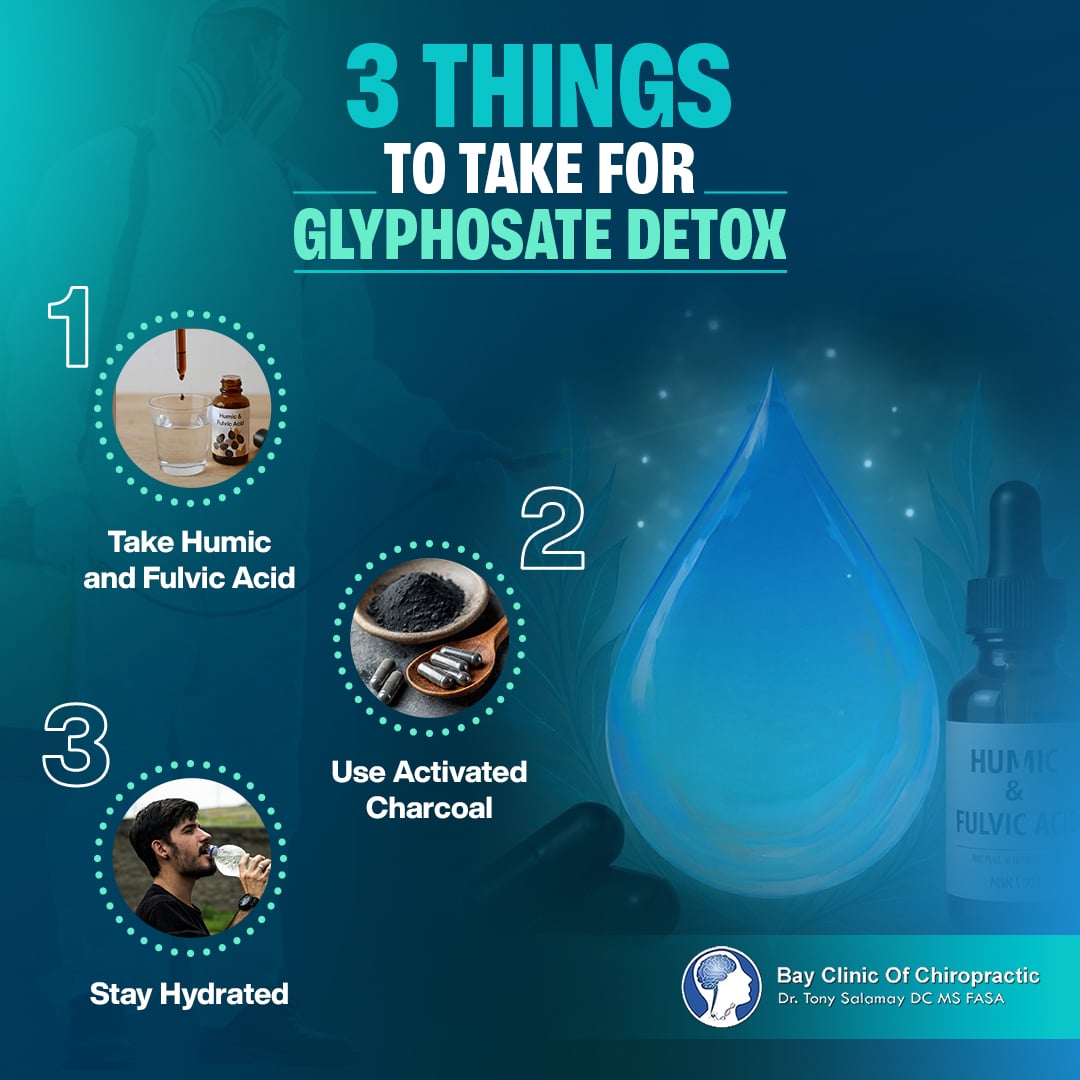
Your body’s trying to tell you something. Keep reading to learn more about what you can do about it using these natural options:
- Take Humic and Fulvic Acid
- Support Liver Function
- Stay Hydrated
- Sweat
- Use Activated Charcoal
- Support Gut Health
What Is Glyphosate Toxicity?
Glyphosate is the active ingredient in Roundup, the most widely used herbicide in the world. It is commonly sprayed on crops like corn, soy, and wheat to kill weeds.
In one study Dr. Hugh J. Beckie from the University of Western Australia, Perth, Australia, explores the possibility of maintaining profitable agricultural systems without relying on glyphosate. The study suggests that through consistent implementation of non-herbicidal weed management practices, coupled with effective pre-emergence soil residual herbicides, farmers can achieve sustainable and economically viable farming outcomes.
However, it is still one of the most used products in agriculture.
When you eat foods treated with glyphosate, or drink water contaminated by it, the chemical can build up in your body. Glyphosate toxicity happens when this buildup begins to interfere with your health.
This chemical works by blocking a plant-specific enzyme pathway called the shikimate pathway. Humans do not have this pathway, but your gut bacteria do. Glyphosate can disrupt your gut microbiome, lower beneficial bacteria, and trigger inflammation.
Over time, exposure may affect your digestion, immune system, hormones, and detox organs like your liver and kidneys.
Glyphosate can also bind to minerals like calcium, magnesium, and zinc, making them harder for your body to absorb. This may lead to nutrient deficiencies and make symptoms worse.
What Are The Symptoms of Glyphosate Toxicity?
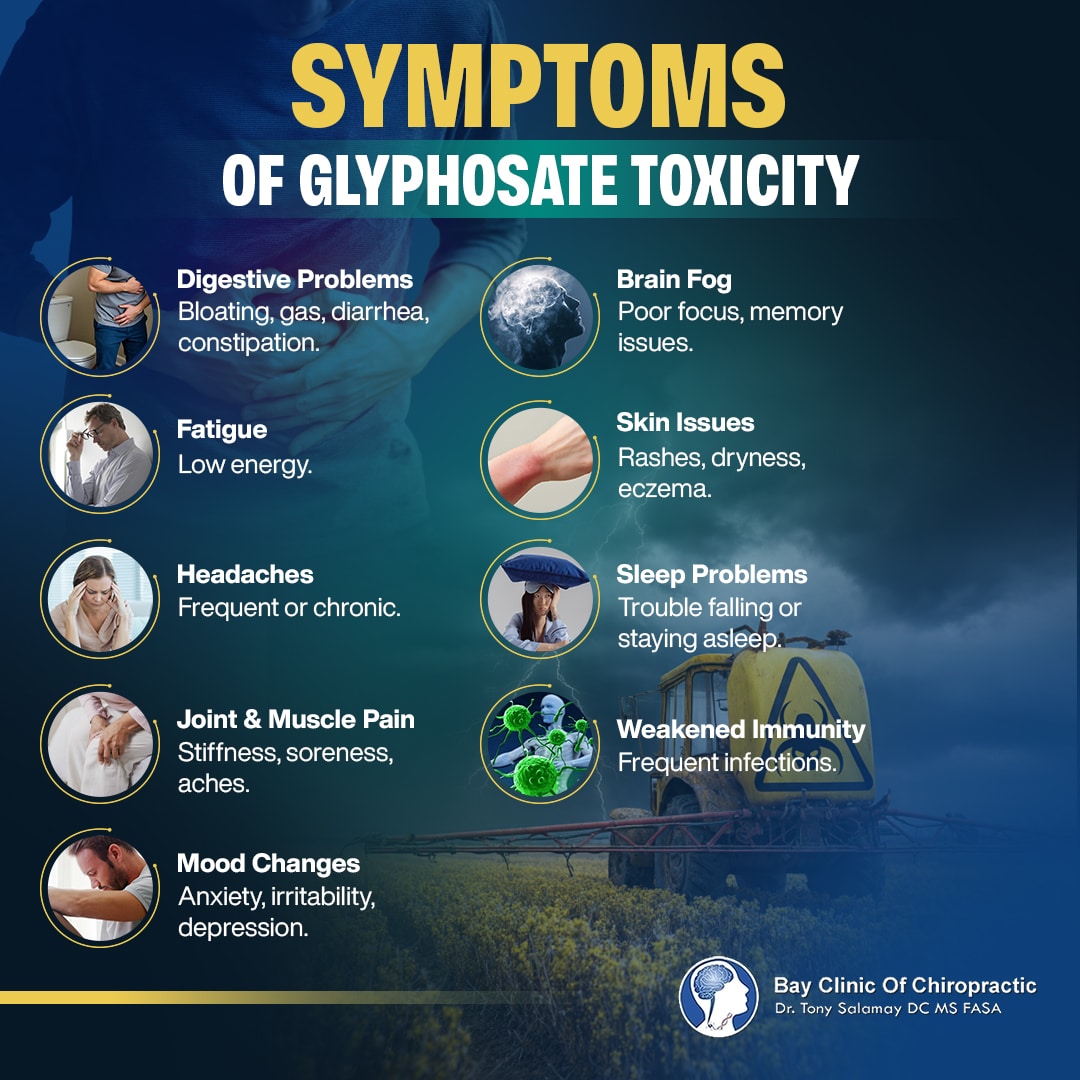
Symptoms vary based on how much exposure you’ve had and for how long. These are some of the most commonly reported issues linked to glyphosate toxicity:
- Digestive problems: Bloating, gas, diarrhea, or constipation may result from gut bacteria imbalance. Glyphosate can damage your intestinal lining and weaken digestion.
- Fatigue: Constant tiredness may happen when your liver and mitochondria struggle to detox and produce energy efficiently.
- Headaches: Glyphosate may increase inflammation or trigger reactions in sensitive individuals, leading to frequent or chronic headaches.
- Joint and muscle pain: Inflammation and mineral deficiencies from glyphosate exposure can contribute to stiffness, soreness, or aches.
- Brain fog or memory issues: Disruption in gut health and toxin overload can affect brain function and focus.
- Skin issues: Rashes, dryness, or eczema may occur as your body tries to eliminate toxins through the skin.
- Sleep problems: Hormone imbalance and liver stress can make it harder to fall or stay asleep.
- Mood changes: Anxiety, irritability, or depression may link to changes in gut bacteria and inflammation.
- Weakened immune system: Ongoing exposure may suppress immune response, making you more prone to infections.
6 Ways To Detox From Glyphosate?
Your body can detox glyphosate, but it needs the right support. These methods focus on clearing toxins, reducing inflammation, and restoring gut and liver health.
Glyphosate affects multiple systems, so detoxing requires a whole-body approach. The goal is to lower your toxic load while strengthening your natural detox pathways. With consistent effort, these steps can help reduce symptoms and improve how you feel overall.
Each of the methods below plays a different role in helping you recover from glyphosate exposure.
- Take Humic And Fulvic Acid
Humic and fulvic acids are natural compounds found in rich, organic soil. They form when plant matter breaks down over time and are known for their strong detox abilities.
Fulvic acid improves how nutrients enter your cells and helps remove waste products. It also supports your mitochondria, which produce energy and play a role in detox.
Humic acid binds to toxins like glyphosate, heavy metals, and other chemicals, carrying them safely out of your body through urine or stool.
These compounds also support gut health by helping balance bacteria and reducing inflammation in the intestinal lining. This makes your digestive tract more resilient to future toxin exposure.
Use high-quality supplements that are free from added metals or preservatives. Liquid forms often absorb better, but powder and capsule options can work too if sourced properly. Start with a low dose and increase slowly to avoid initial detox symptoms like fatigue or mild stomach upset.
- Support Liver Function
Your liver filters your blood and breaks down toxins, including glyphosate. When glyphosate accumulates, it can disrupt liver enzymes, reduce bile flow, and increase oxidative stress. A sluggish liver makes it harder for your body to keep up with daily detox demands.
Eating liver-friendly foods is one of the easiest ways to support this organ. Cruciferous vegetables like broccoli, cauliflower, kale, and Brussels sprouts contain sulforaphane, which activates detox enzymes. Beets increase bile production and blood flow to the liver. Garlic and onions provide sulfur, a key mineral for phase 2 detox.
Herbs like milk thistle can help repair liver cells and protect them from further damage. Dandelion root supports bile flow, while NAC (N-acetylcysteine) boosts glutathione, your liver’s main antioxidant. Turmeric is another helpful option due to its anti-inflammatory effects and ability to support liver enzyme function.
To reduce liver stress, avoid alcohol, processed meats, seed oils, and artificial additives. Drink at least half your body weight in ounces of clean, filtered water daily. Consistent support helps your liver recovery detox and process toxins more effectively.
- Stay Hydrated
Hydration plays a major role in flushing glyphosate from your body. Your kidneys, bowels, and lymphatic system all depend on water to move waste and toxins out efficiently.
According to the National Academy of Medicine, men typically need about 125 ounces (3.7 liters) of fluids per day, and women around 91 ounces (2.7 liters), depending on activity level and climate. As a simple rule, aim for 8 to 10 cups a day, and increase if you’re sweating more or taking detox supplements.
Choose filtered water to avoid added chemicals like chlorine or fluoride. Adding a pinch of sea salt or trace mineral drops can improve absorption and help maintain electrolyte balance.
Herbal teas such as dandelion or nettle offer hydration along with mild detox support. Avoid drinking from plastic bottles, especially if they’ve been in the heat, since plastic chemicals can add to your toxin load. Glass or stainless steel is a better choice for daily use.
- Sweat Regularly
Sweating is one of your body’s natural ways to eliminate toxins, including glyphosate and other environmental chemicals. Your skin acts as a secondary detox organ, helping to ease the burden on your liver and kidneys.
Regular sweating through exercise, saunas, or hot baths can support detox and improve circulation. Infrared saunas are especially effective, as they raise your core temperature and promote deep, steady sweating without high heat stress. Aim for 20 to 40 minutes per session, a few times per week.
If you’re using a sauna, drink water before and after to stay hydrated and replace lost minerals. Add electrolytes or trace minerals if you sweat heavily. Consult a functional medicine practitioner for correct doses.
Even moderate physical activity like walking or cycling increases circulation and encourages sweating. Consistent movement helps move lymphatic fluid and pushes toxins out more effectively. Always shower afterward to rinse toxins off your skin and avoid reabsorption.

- Use Activated Charcoal
Activated charcoal is a highly porous substance that traps toxins like glyphosate in your digestive tract. Once bound, these toxins are carried out through your stool instead of being absorbed into your bloodstream. It’s often used in emergency medicine to treat poisoning and works similarly during detox.
Glyphosate can recirculate through your system during elimination. Activated charcoal helps stop that process by binding toxins in the gut before they re-enter your bloodstream. This lowers the overall toxic load and may reduce symptoms like headaches, bloating, or brain fog.
For best results, take activated charcoal on an empty stomach or at least 1 to 2 hours away from meals, supplements, and medications. It can interfere with absorption if taken too close to anything else. Start with 250 to 500 mg, and increase slowly if your body responds well.
Look for charcoal sourced from organic coconut shells or hardwood with no added fillers. Powder or capsule forms are both effective. Use it occasionally, especially after suspected exposure, or under supervision if using long-term. Always drink extra water to support your bowels and prevent constipation, which can slow detox. Consult a healthcare provider before long-term use, especially if you take regular medications.
- Support Gut Health
Glyphosate disrupts your gut microbiome by killing off beneficial bacteria and promoting the growth of harmful ones. Over time, this can lead to digestive issues, inflammation, and conditions like leaky gut or irritable bowel syndrome.
To support gut repair, start by eating more fiber-rich, whole foods. Vegetables, fruits, legumes, and seeds feed your good bacteria and help them thrive. Fermented foods like sauerkraut, kimchi, kefir, and unsweetened yogurt provide natural probiotics that help rebalance your microbiome.
Consider taking a high-quality probiotic supplement with multiple strains, including Lactobacillus and Bifidobacterium. These strains are often depleted by glyphosate exposure and play a key role in digestion and immune health.
Bone broth, collagen, and L-glutamine can help rebuild the gut lining and reduce inflammation. Avoid processed foods, refined sugar, and artificial additives that feed harmful bacteria and disrupt healing.
A healthy gut improves nutrient absorption, immune defense, and even brain function. Restoring balance here is one of the most important steps in recovering from glyphosate toxicity.
Frequently Asked Questions
Can Glyphosate Exposure Cause Gut Problems Like Leaky Gut Or Ibs?
Yes, glyphosate exposure can disrupt gut bacteria and damage the intestinal lining, contributing to leaky gut and IBS symptoms. A 2013 study by Dr. Anthony Samsel, an Independent Scientist and Consultant, Deerfield, NH, USA, discusses how glyphosate inhibits beneficial gut microbes and impairs tight junction proteins, leading to increased intestinal permeability.
Can Glyphosate Affect Hormones?
Yes, glyphosate can interfere with hormone function by disrupting the endocrine system and altering hormone-related gene expression. A review by Dr. Juan P. Muñoz from the University of Tarapacá, Antofagasta Street, Arica, Chile, found evidence on glyphosate as an endocrine-disrupting chemical (EDC). The study discusses how glyphosate can interact with hormone receptors, alter hormone receptor expression, and induce epigenetic modifications in hormone-producing or hormone-responsive cells. These disruptions can affect estrogen, testosterone, and thyroid hormone pathways, potentially leading to reproductive and developmental issues.
Does Glyphosate Detox Help With Brain Fog Or Neurological Symptoms?
Yes, detoxing glyphosate may reduce brain fog and some neurological symptoms by lowering inflammation and restoring gut-brain balance. A 2024 study by Dr. Samantha K. Bartholomew from the Arizona State University, Tempe, AZ, USA, found that mice exposed to glyphosate showed persistent brain inflammation, Alzheimer’s-like pathology, and anxiety-like behaviors even after a six-month recovery period. The study revealed that glyphosate and its metabolite, aminomethylphosphonic acid (AMPA), remained in brain tissue long after exposure ceased, leading to elevated levels of pro-inflammatory cytokines and exacerbated neurodegenerative changes.
How Is Glyphosate Connected To Cancer Risk?
Glyphosate is linked to increased cancer risk, especially non-Hodgkin lymphoma, through its potential to cause DNA damage and oxidative stress. In 2015, the International Agency for Research on Cancer (IARC), part of the World Health Organization, classified glyphosate as “probably carcinogenic to humans” (Group 2A). A 2019 meta-analysis by Dr. Luoping Zhang from the University of California Berkeley, Berkeley, USA, found a 41% increased risk of non-Hodgkin lymphoma in individuals with high glyphosate exposure.
Conclusion
Glyphosate toxicity can quietly affect nearly every part of your health- from your gut and brain to your energy and hormones. This article walked you through the basics of what glyphosate is, how it disrupts your body, and the most common symptoms to look out for. You also learned six targeted ways to help your body detox using natural tools like humic and fulvic acids, liver support, hydration, and gut healing strategies.
When your symptoms keep circling back no matter what you try, it’s time to ask what’s really driving them underneath it all.
At the Bay Clinic of Chiropractic in Panama City, Florida, Dr. Tony Salamay takes a personalized, functional approach to chronic issues like toxicity, inflammation, and digestive dysfunction. He uses advanced testing to uncover hidden triggers like glyphosate, and creates tailored plans that actually get results. Whether you’re dealing with fatigue, joint pain, or brain fog, this is the place to get answers that make sense.
Ready to see what your body feels like without the chemical overload? Reach out to the Bay Clinic of Chiropractic and start getting your clarity and energy back by addressing the root causes.
References
- De Barros Rodrigues M, Da Silva CAM, Chong-Silva DC, Chong-Neto HJ. Pesticides and human health. Jornal De Pediatria [Internet]. 2024 Dec 24;101:S70–6. Available from: https://pmc.ncbi.nlm.nih.gov/articles/PMC11962559/
- Novotny E. Glyphosate, Roundup and the failures of regulatory assessment. Toxics [Internet]. 2022 Jun 13;10(6):321. Available from: https://pmc.ncbi.nlm.nih.gov/articles/PMC9229215/
- Beckie HJ, Flower KC, Ashworth MB. Farming without Glyphosate? Plants [Internet]. 2020 Jan 11;9(1):96. Available from: https://pmc.ncbi.nlm.nih.gov/articles/PMC7020467/
- Soares D, Silva L, Duarte S, Pena A, Pereira A. Glyphosate use, toxicity and occurrence in food. Foods [Internet]. 2021 Nov 12;10(11):2785. Available from: https://pmc.ncbi.nlm.nih.gov/articles/PMC8622992/
- Shende VV, Bauman KD, Moore BS. The shikimate pathway: gateway to metabolic diversity. Natural Product Reports [Internet]. 2024 Jan 1;41(4):604–48. Available from: https://pmc.ncbi.nlm.nih.gov/articles/PMC11043010/
- Puigbò P, Leino LI, Rainio MJ, Saikkonen K, Saloniemi I, Helander M. Does glyphosate affect the human microbiota? Life [Internet]. 2022 May 9;12(5):707. Available from: https://pmc.ncbi.nlm.nih.gov/articles/PMC9145961/
- Buchenauer L, Junge KM, Haange SB, Simon JC, Von Bergen M, Hoh AL, et al. Glyphosate differentially affects the allergic immune response across generations in mice. The Science of the Total Environment [Internet]. 2022 Aug 10;850:157973. Available from: https://www.sciencedirect.com/science/article/abs/pii/S0048969722050720?via%3Dihub
- Visser SA. Effect of humic substances on mitochondrial respiration and oxidative phosphorylation. The Science of the Total Environment [Internet]. 1987 Jan 1;62:347–54. Available from: https://www.sciencedirect.com/science/article/abs/pii/0048969787905213
- Vašková J, Stupák M, Ugurbaş MV, Žatko D, Vaško L. Therapeutic efficiency of humic acids in intoxications. Life [Internet]. 2023 Apr 9;13(4):971. Available from: https://pmc.ncbi.nlm.nih.gov/articles/PMC10143271/
- Riechelmann-Casarin L, Valente LC, Otton R, Barbisan LF, Romualdo GR. Are glyphosate or glyphosate-based herbicides linked to metabolic dysfunction-associated steatotic liver disease (MASLD)? The weight of current evidence. Environmental Toxicology and Pharmacology [Internet]. 2025 Apr 29;116:104705. Available from: https://www.sciencedirect.com/science/article/abs/pii/S1382668925000808?via%3Dihub
- Hodges RE, Minich DM. Modulation of Metabolic Detoxification Pathways Using Foods and Food-Derived Components: A Scientific Review with Clinical Application. Journal of Nutrition and Metabolism [Internet]. 2015 Jan 1;2015:1–23. Available from: https://pmc.ncbi.nlm.nih.gov/articles/PMC4488002/
- Fan M, Zhang X, Song H, Zhang Y. Dandelion (Taraxacum genus): A review of chemical constituents and pharmacological effects. Molecules [Internet]. 2023 Jun 27;28(13):5022. Available from: https://pmc.ncbi.nlm.nih.gov/articles/PMC10343869/
- Popkin BM, D’Anci KE, Rosenberg IH. Water, hydration, and health. Nutrition Reviews [Internet]. 2010 Jul 20;68(8):439–58. Available from: https://pmc.ncbi.nlm.nih.gov/articles/PMC2908954/
- Nationalacademies.org. 2026 [cited 2026 Jan 29]. Available from: https://www.nationalacademies.org/read/10925/chapter/6#79
- Kuan WH, Chen YL, Liu CL. Excretion of Ni, Pb, Cu, As, and Hg in Sweat under Two Sweating Conditions. International Journal of Environmental Research and Public Health [Internet]. 2022 Apr 4;19(7):4323. Available from: https://pmc.ncbi.nlm.nih.gov/articles/PMC8998800/
- Hussain J, Cohen M. Clinical Effects of regular dry sauna bathing: A Systematic review. Evidence-based Complementary and Alternative Medicine [Internet]. 2018 Jan 1;2018(1):1857413. Available from: https://pmc.ncbi.nlm.nih.gov/articles/PMC5941775/
- Silberman J, Galuska MA, Taylor A. Activated charcoal [Internet]. StatPearls – NCBI Bookshelf. 2023. Available from: https://www.ncbi.nlm.nih.gov/books/NBK482294/
- Zellner T, Prasa D, Färber E, Hoffmann-Walbeck P, Genser D, Eyer F. The use of activated charcoal to treat intoxications. Deutsches Ärzteblatt International [Internet]. 2019 Apr 29;116(18):311–7. Available from: https://pmc.ncbi.nlm.nih.gov/articles/PMC6620762/
- Lehman PC, Cady N, Ghimire S, Shahi SK, Shrode RL, Lehmler HJ, et al. Low-dose glyphosate exposure alters gut microbiota composition and modulates gut homeostasis. Environmental Toxicology and Pharmacology [Internet]. 2023 May 15;100:104149. Available from: https://www.sciencedirect.com/science/article/abs/pii/S1382668923000911
- Kechagia M, Basoulis D, Konstantopoulou S, Dimitriadi D, Gyftopoulou K, Skarmoutsou N, et al. Health benefits of Probiotics: A review. ISRN Nutrition [Internet]. 2013 Jan 2;2013:1–7. Available from: https://pmc.ncbi.nlm.nih.gov/articles/PMC4045285/
- Samsel A, Seneff S. Glyphosate’s suppression of cytochrome P450 enzymes and amino acid biosynthesis by the gut microbiome: Pathways to modern diseases. Entropy [Internet]. 2013 Apr 18;15(4):1416–63. Available from: https://www.mdpi.com/1099-4300/15/4/1416
- Muñoz JP, Bleak TC, Calaf GM. Glyphosate and the key characteristics of an endocrine disruptor: A review. Chemosphere [Internet]. 2020 Oct 19;270:128619. Available from: https://www.sciencedirect.com/science/article/abs/pii/S0045653520328149
- Bartholomew SK, Winslow W, Sharma R, Pathak KV, Tallino S, Judd JM, et al. Glyphosate exposure exacerbates neuroinflammation and Alzheimer’s disease-like pathology despite a 6-month recovery period in mice. Journal of Neuroinflammation [Internet]. 2024 Dec 4;21(1):316. Available from: https://link.springer.com/article/10.1186/s12974-024-03290-6
- Zhang L, Rana I, Shaffer RM, Taioli E, Sheppard L. Exposure to glyphosate-based herbicides and risk for non-Hodgkin lymphoma: A meta-analysis and supporting evidence. Mutation Research/Reviews in Mutation Research [Internet]. 2019 Feb 10;781:186–206. Available from: https://www.sciencedirect.com/science/article/abs/pii/S1383574218300887